Kraus H, Soltamov V A, Fuchs F, Simin D, Sperlich A, Baranov P G, Astakhov G V, Dyakonov V
Experimental Physics VI, Julius-Maximilian University of Würzburg, 97074 Würzburg, Germany.
Ioffe Physical-Technical Institute, 194021 St. Petersburg, Russia.
Sci Rep. 2014 Jul 4;4:5303. doi: 10.1038/srep05303.
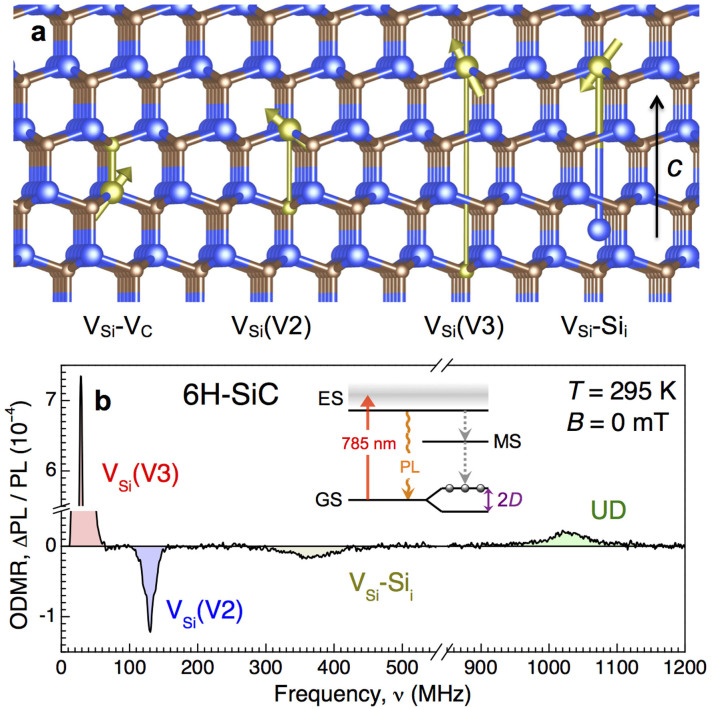
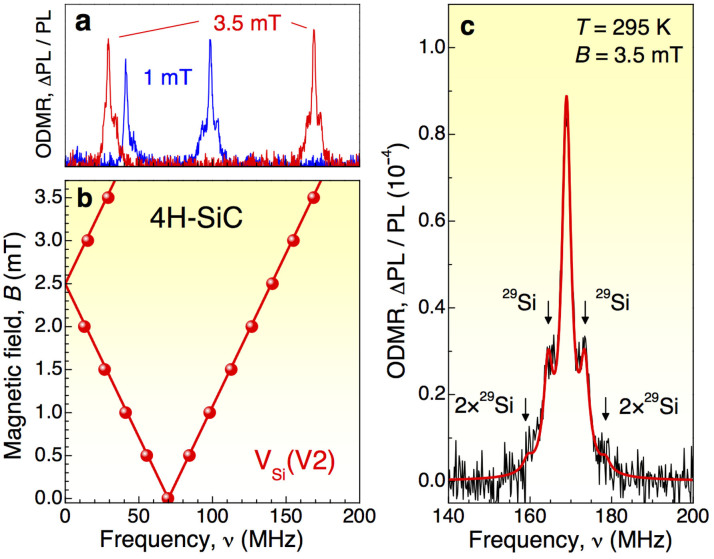
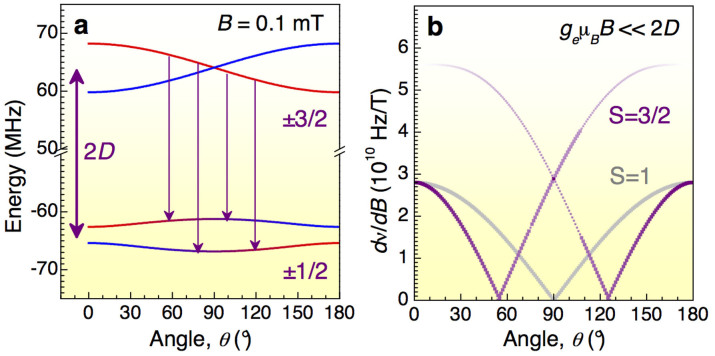
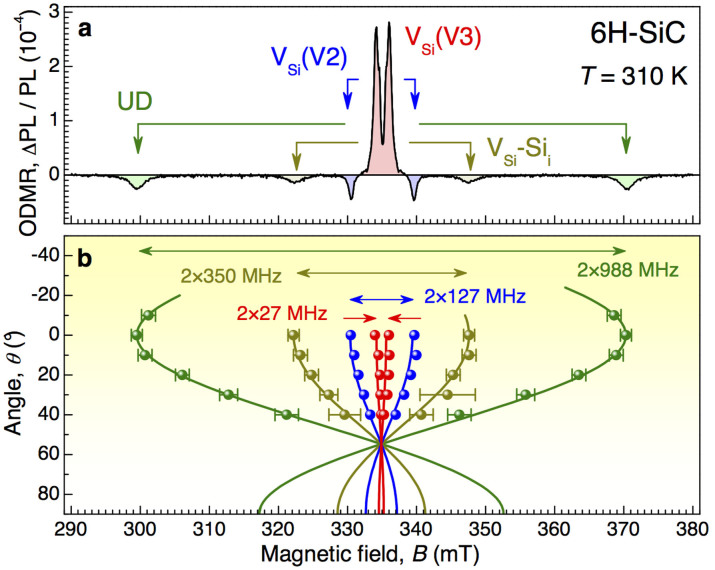
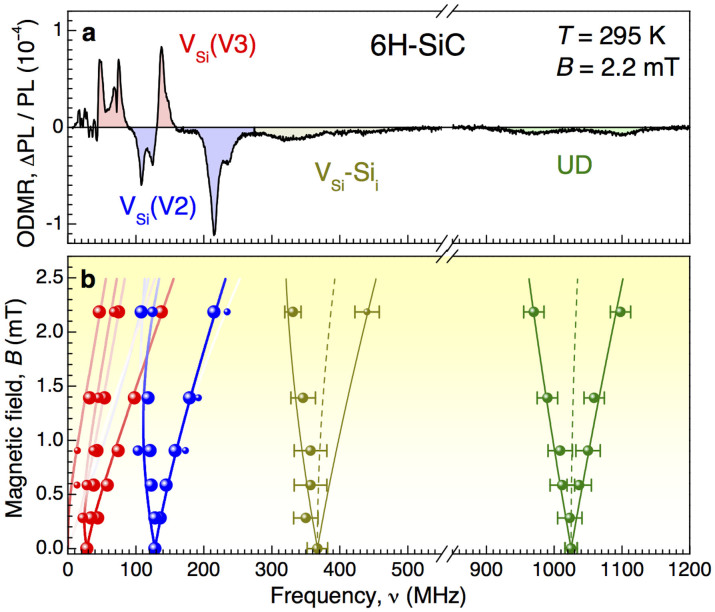
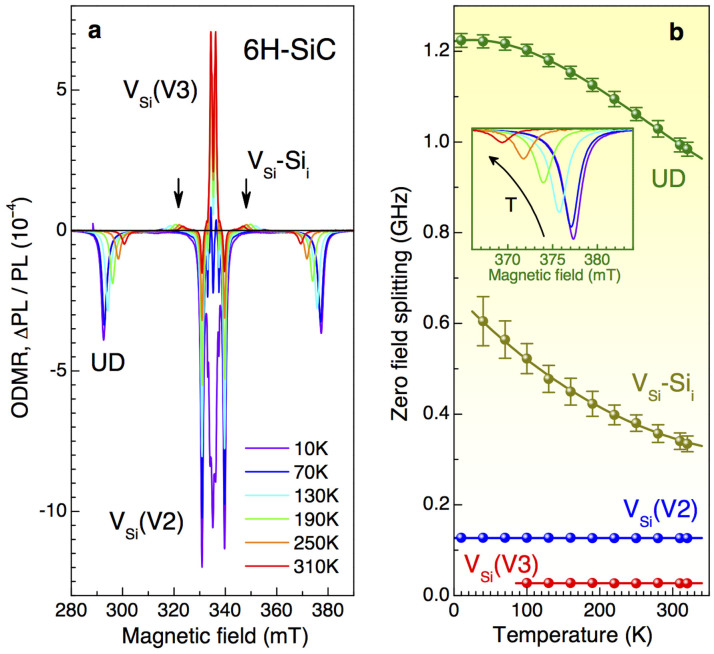
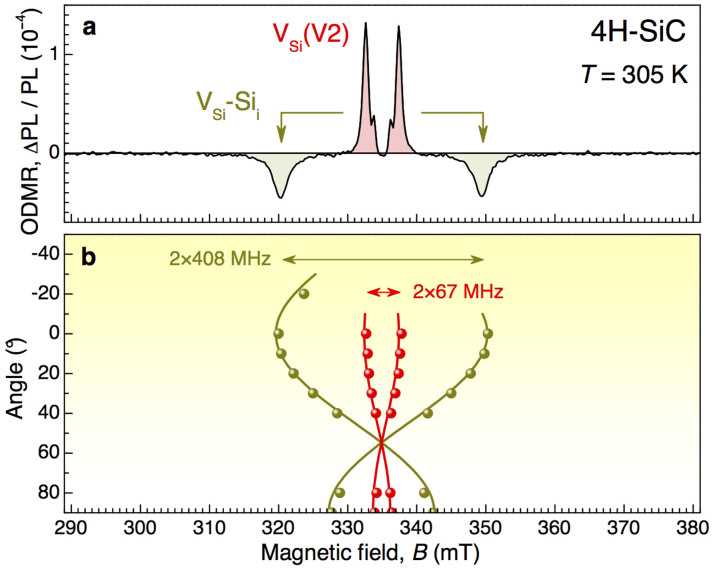
Quantum systems can provide outstanding performance in various sensing applications, ranging from bioscience to nanotechnology. Atomic-scale defects in silicon carbide are very attractive in this respect because of the technological advantages of this material and favorable optical and radio frequency spectral ranges to control these defects. We identified several, separately addressable spin-3/2 centers in the same silicon carbide crystal, which are immune to nonaxial strain fluctuations. Some of them are characterized by nearly temperature independent axial crystal fields, making these centers very attractive for vector magnetometry. Contrarily, the zero-field splitting of another center exhibits a giant thermal shift of -1.1 MHz/K at room temperature, which can be used for thermometry applications. We also discuss a synchronized composite clock exploiting spin centers with different thermal response.
量子系统在从生物科学到纳米技术的各种传感应用中都能提供出色的性能。碳化硅中的原子尺度缺陷在这方面非常有吸引力,这是由于这种材料的技术优势以及控制这些缺陷的有利光学和射频光谱范围。我们在同一碳化硅晶体中识别出了几个可单独寻址的自旋3/2中心,它们不受非轴向应变波动的影响。其中一些中心的特征是轴向晶体场几乎与温度无关,这使得这些中心对矢量磁力测量非常有吸引力。相反,另一个中心的零场分裂在室温下表现出-1.1 MHz/K的巨大热位移,可用于温度测量应用。我们还讨论了一种利用具有不同热响应的自旋中心的同步复合时钟。