Li Jing, Tan Qiang, Yan Mingxia, Liu Lei, Lin Hechun, Zhao Fangyu, Bao Guoliang, Kong Hanwei, Ge Chao, Zhang Fanglin, Yu Tao, Li Jinjun, He Xianghuo, Yao Ming
State Key Laboratory of Oncogenes and Related Genes, Shanghai Cancer Institute, Renji Hospital, Shanghai Jiao Tong University School of Medicine, 200032 Shanghai, China.
Mol Cancer. 2014 Jul 6;13:166. doi: 10.1186/1476-4598-13-166.
Growing evidence indicates that miR-200c is involved in carcinogenesis and tumor progression in non-small-cell lung cancer (NSCLC). However, its precise biological role remains largely elusive.
The functions of miR-200c and USP25 in migration/invasion and lung metastasis formation were determined by transwell and tail vein injection assays, respectively. The potential regulatory targets of miR-200c were determined by prediction tools, correlation with target protein expression, and luciferase reporter assay. The mRNA expression levels of miR-200c and USP25 were examined in NSCLC cell lines and patient specimens using quantitative reverse transcription-PCR. The protein expression levels of USP25 were examined in NSCLC cell lines and patient specimens using western blot and immunohistochemical staining.
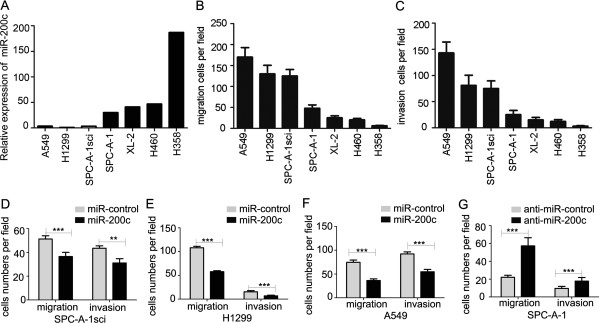
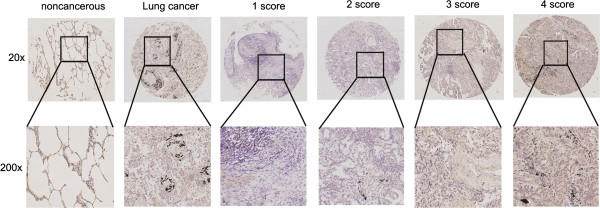
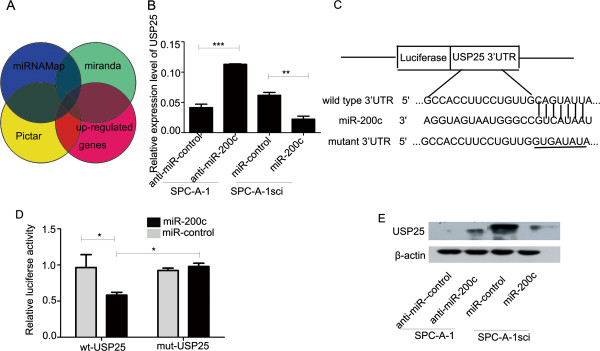
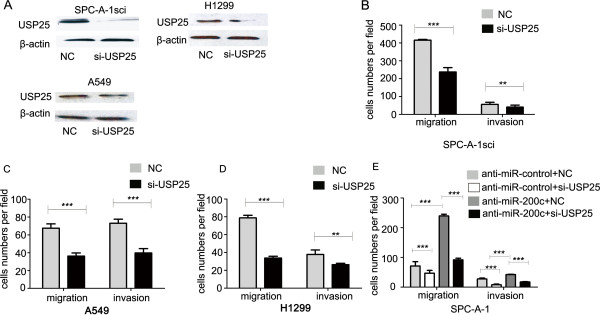
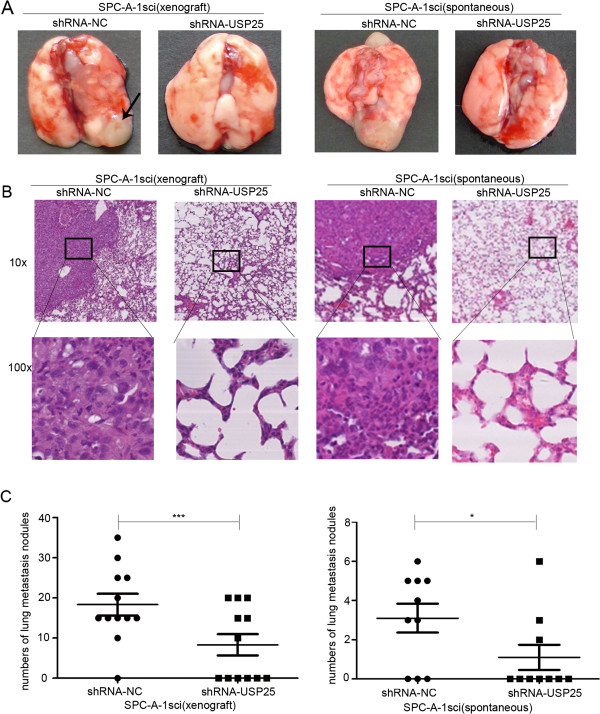
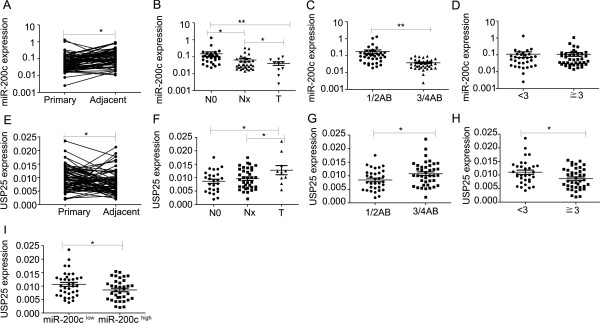
We demonstrated that over-expression of miR-200c inhibited NSCLC cells migration, invasion, epithelial-mesenchymal transition (EMT) in vitro and lung metastasis formation in vivo. Further studies revealed that USP25 was a downstream target of miR-200c in NSCLC cells as miR-200c bound directly to the 3'-untranslated region of USP25, thus reducing both the messenger RNA and protein levels of USP25. Silencing of the USP25 gene recapitulated the effects of miR-200c over-expression. Clinical analysis indicated that miR-200c was negatively correlated with clinical stage, lymph node metastasis in NSCLC patients. Moreover, USP25 protein and mRNA level expressions were higher in NSCLC patients, compared to healthy control, and correlated with clinical stage and lymphatic node metastasis.
These findings indicate that miR-200c exerts tumor-suppressive effects for NSCLC through the suppression of USP25 expression and suggests a new therapeutic application of miR-200c in the treatment of NSCLC.
越来越多的证据表明,miR-200c参与非小细胞肺癌(NSCLC)的致癌作用和肿瘤进展。然而,其确切的生物学作用仍不清楚。
分别通过Transwell实验和尾静脉注射实验确定miR-200c和USP25在迁移/侵袭及肺转移形成中的作用。通过预测工具、与靶蛋白表达的相关性以及荧光素酶报告基因实验确定miR-200c的潜在调控靶点。使用定量逆转录PCR检测NSCLC细胞系和患者标本中miR-200c和USP25的mRNA表达水平。使用蛋白质免疫印迹法和免疫组织化学染色检测NSCLC细胞系和患者标本中USP25的蛋白表达水平。
我们证明,miR-200c的过表达在体外抑制NSCLC细胞的迁移、侵袭和上皮-间质转化(EMT),在体内抑制肺转移形成。进一步研究表明,USP25是NSCLC细胞中miR-200c的下游靶点,因为miR-200c直接与USP25的3'非翻译区结合,从而降低USP25的信使RNA和蛋白水平。USP25基因的沉默重现了miR-200c过表达的效果。临床分析表明,miR-200c与NSCLC患者的临床分期、淋巴结转移呈负相关。此外,与健康对照相比,NSCLC患者中USP25蛋白和mRNA水平表达更高,且与临床分期和淋巴结转移相关。
这些发现表明,miR-200c通过抑制USP25表达对NSCLC发挥肿瘤抑制作用,并提示miR-200c在NSCLC治疗中的新治疗应用。