Boschker Henricus T S, Vasquez-Cardenas Diana, Bolhuis Henk, Moerdijk-Poortvliet Tanja W C, Moodley Leon
Department of Marine Microbiology, Royal Netherlands Institute for Sea Research (NIOZ), Yerseke, The Netherlands.
Marine Environment Group, International Research Institute of Stavanger (IRIS), Randaberg, Norway.
PLoS One. 2014 Jul 8;9(7):e101443. doi: 10.1371/journal.pone.0101443. eCollection 2014.
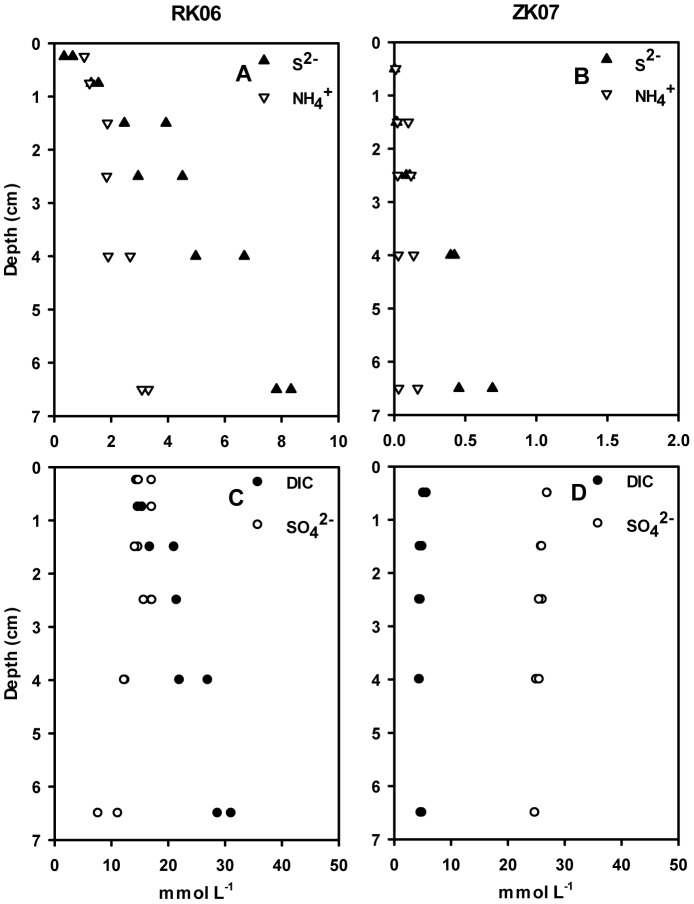
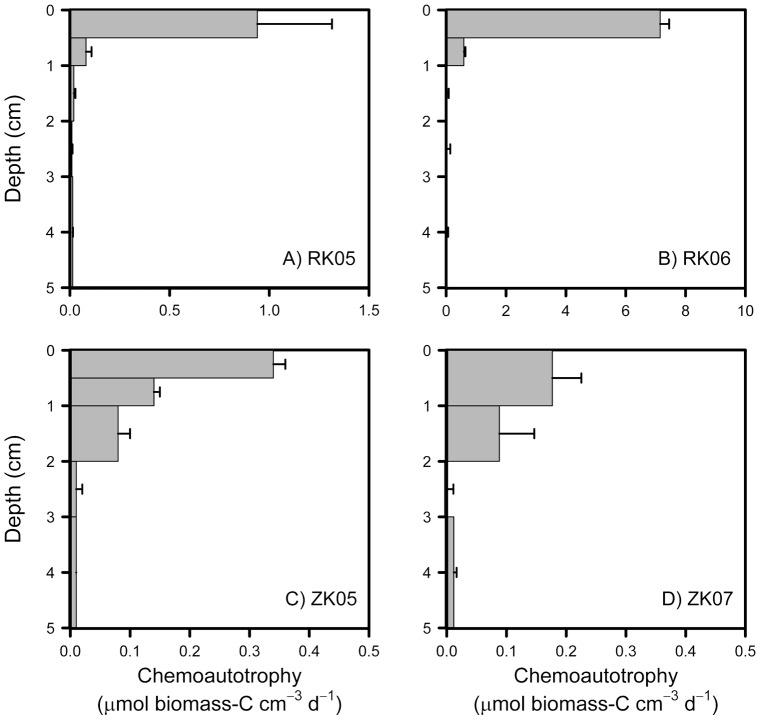
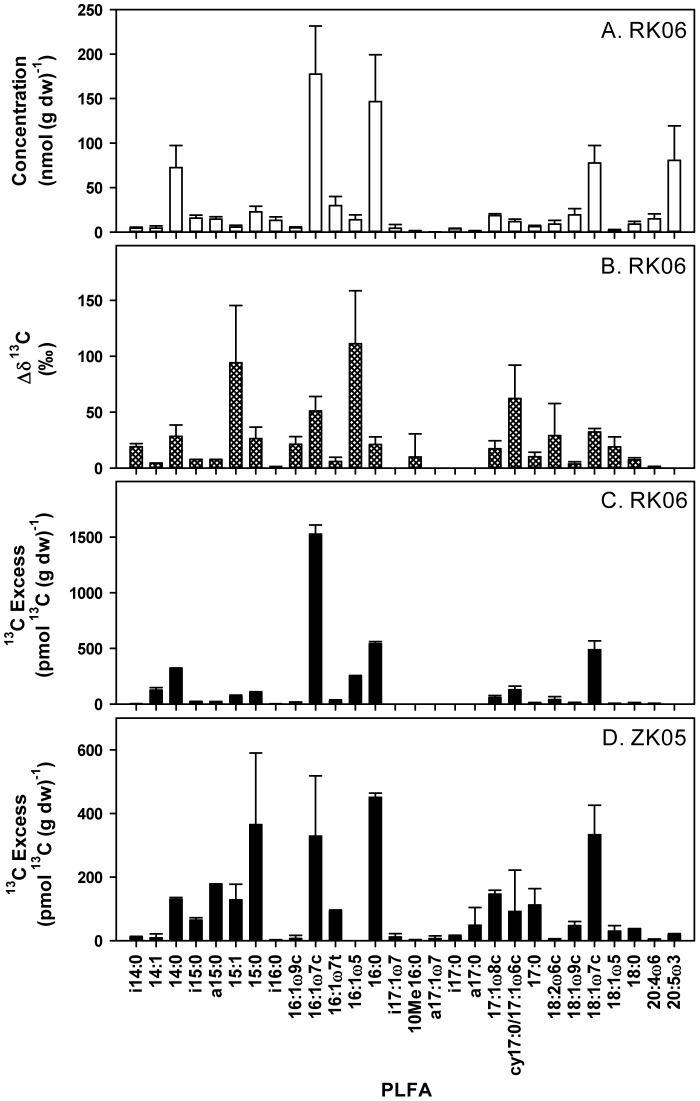
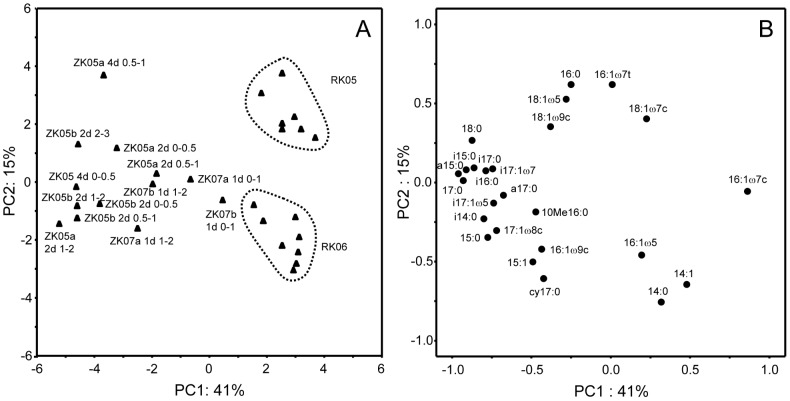
Chemoautotrophy has been little studied in typical coastal marine sediments, but may be an important component of carbon recycling as intense anaerobic mineralization processes in these sediments lead to accumulation of high amounts of reduced compounds, such as sulfides and ammonium. We studied chemoautotrophy by measuring dark-fixation of 13C-bicarbonate into phospholipid derived fatty acid (PLFA) biomarkers at two coastal sediment sites with contrasting sulfur chemistry in the Eastern Scheldt estuary, The Netherlands. At one site where free sulfide accumulated in the pore water right to the top of the sediment, PLFA labeling was restricted to compounds typically found in sulfur and ammonium oxidizing bacteria. At the other site, with no detectable free sulfide in the pore water, a very different PLFA labeling pattern was found with high amounts of label in branched i- and a-PLFA besides the typical compounds for sulfur and ammonium oxidizing bacteria. This suggests that other types of chemoautotrophic bacteria were also active, most likely Deltaproteobacteria related to sulfate reducers. Maximum rates of chemoautotrophy were detected in first 1 to 2 centimeters of both sediments and chemosynthetic biomass production was high ranging from 3 to 36 mmol C m(-2) d(-1). Average dark carbon fixation to sediment oxygen uptake ratios were 0.22±0.07 mol C (mol O2)(-1), which is in the range of the maximum growth yields reported for sulfur oxidizing bacteria indicating highly efficient growth. Chemoautotrophic biomass production was similar to carbon mineralization rates in the top of the free sulfide site, suggesting that chemoautotrophic bacteria could play a crucial role in the microbial food web and labeling in eukaryotic poly-unsaturated PLFA was indeed detectable. Our study shows that dark carbon fixation by chemoautotrophic bacteria is a major process in the carbon cycle of coastal sediments, and should therefore receive more attention in future studies on sediment biogeochemistry and microbial ecology.
在典型的沿海海洋沉积物中,化学自养作用的研究较少,但可能是碳循环的一个重要组成部分,因为这些沉积物中强烈的厌氧矿化过程会导致大量还原化合物的积累,如硫化物和铵。我们通过测量在荷兰东部斯海尔德河口两个硫化学性质不同的沿海沉积物站点,13C - 碳酸氢盐在磷脂衍生脂肪酸(PLFA)生物标志物中的暗固定来研究化学自养作用。在一个沉积物顶部孔隙水中积累了游离硫化物的站点,PLFA标记仅限于硫和铵氧化细菌中常见的化合物。在另一个孔隙水中未检测到游离硫化物的站点,除了硫和铵氧化细菌的典型化合物外,在支链i - 和a - PLFA中发现了大量标记,呈现出非常不同的PLFA标记模式。这表明其他类型的化学自养细菌也很活跃,最有可能是与硫酸盐还原菌相关的δ变形菌。在两种沉积物的前1至2厘米处检测到了化学自养作用的最大速率,化学合成生物量产量很高,范围为3至36 mmol C m(-2) d(-1)。平均暗碳固定与沉积物氧摄取率的比值为0.22±0.07 mol C (mol O2)(-1),这处于硫氧化细菌报道的最大生长产量范围内,表明生长效率很高。在游离硫化物站点顶部,化学自养生物量产量与碳矿化速率相似,这表明化学自养细菌可能在微生物食物网中发挥关键作用,并且在真核多不饱和PLFA中的标记确实可以检测到。我们的研究表明,化学自养细菌的暗碳固定是沿海沉积物碳循环中的一个主要过程,因此在未来关于沉积物生物地球化学和微生物生态学的研究中应受到更多关注。