Wei Kaifa, Chen Yanhui, Lin Yina, Pan Yutian
School of Biological Sciences and Biotechnology, Minnan Normal University, Zhangzhou, China.
School of Life Sciences, Tsinghua University, Beijing, China.
PLoS One. 2014 Jul 8;9(7):e101384. doi: 10.1371/journal.pone.0101384. eCollection 2014.
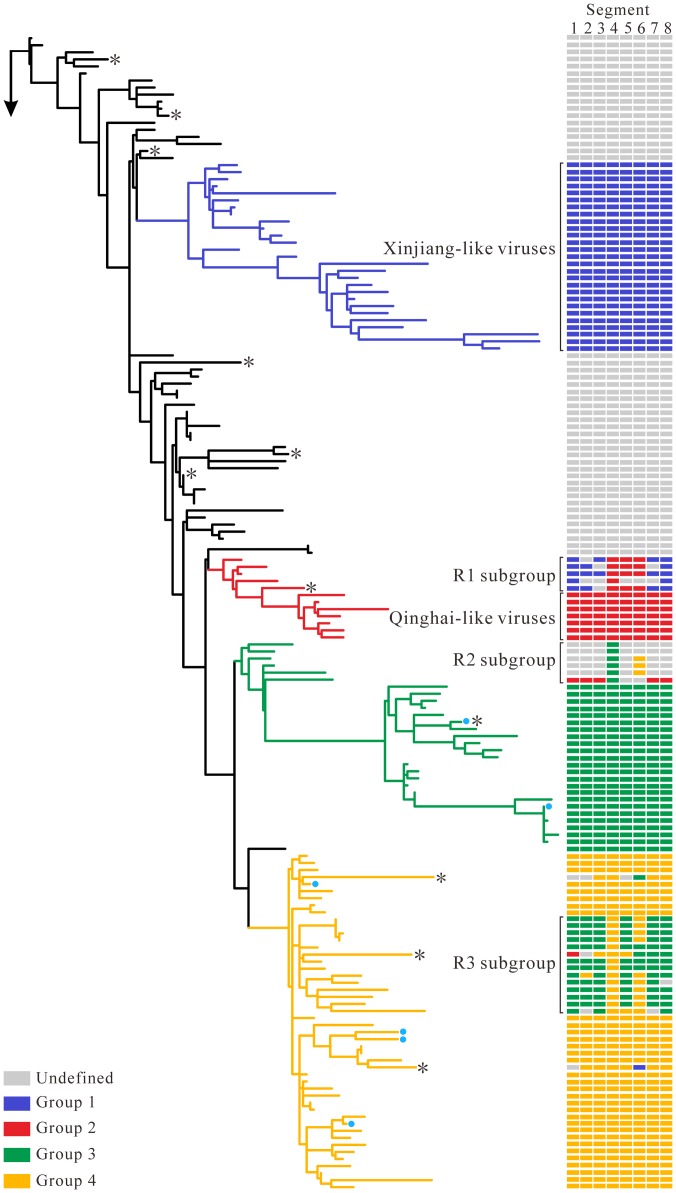
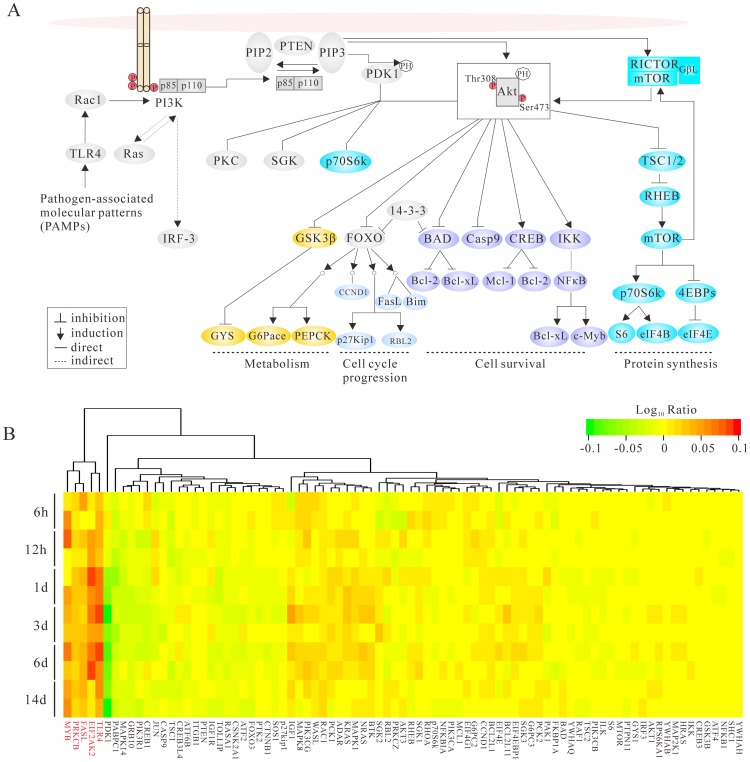
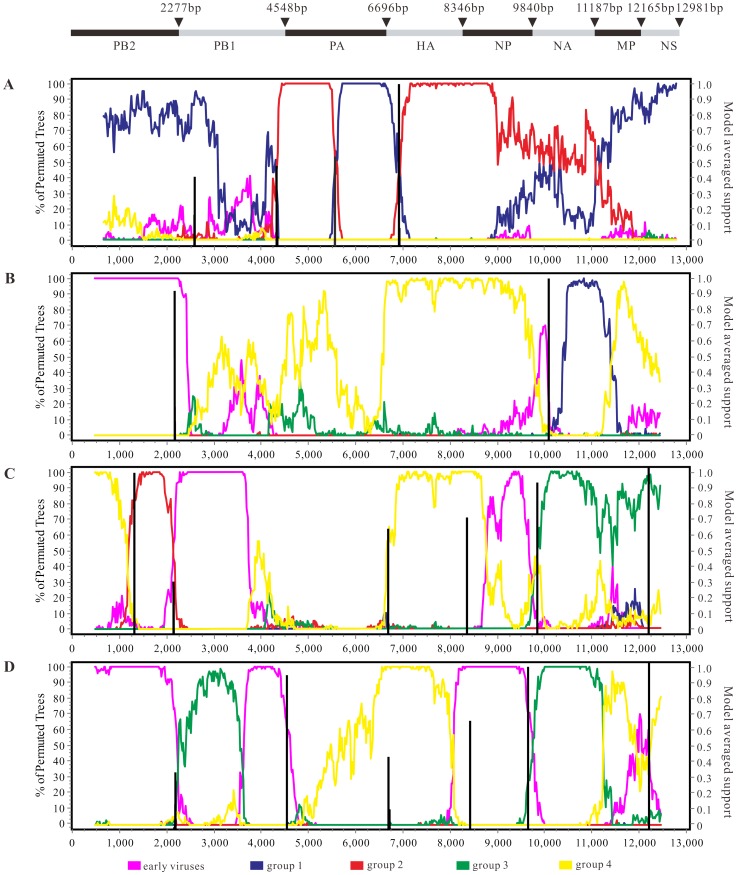
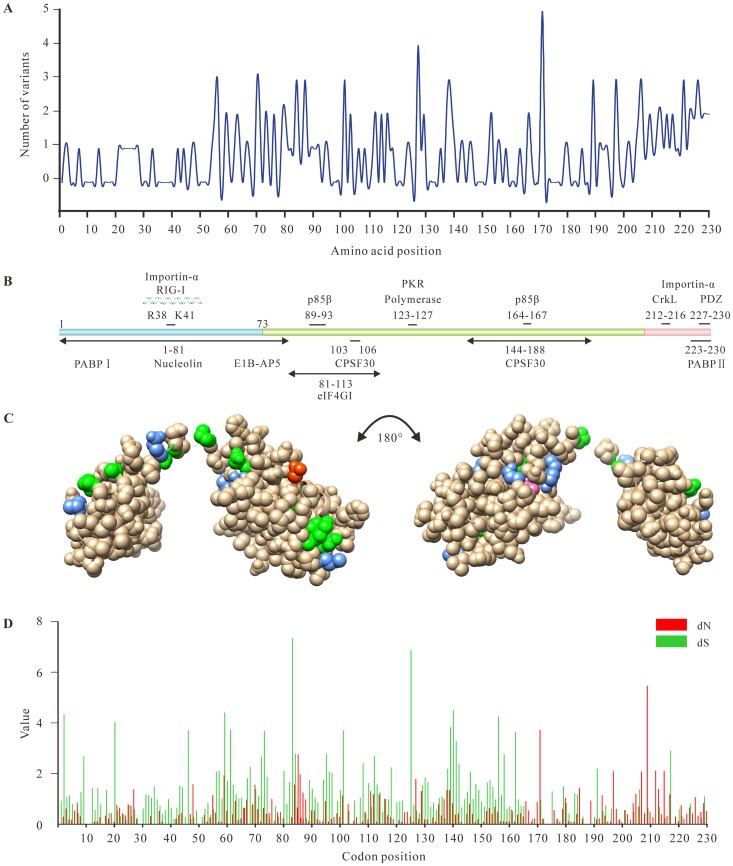
The direct precursors of the A/Goose/Guangdong/1/1996 (GS/GD) virus lineage and its reassortants have been established geographically and ecologically. To investigate the variation and evolutionary dynamics of H5N1 viruses, whole-genome viral sequences (n = 164) were retrieved from the NCBI Influenza Virus Resource. Here, we present phylogenetic evidence for intrasubtype reassortments among H5N1 viruses isolated from China during 1996-2012. On the basis of phylogenetic analysis, we identified four major groups and further classified the reassortant viruses into three subgroups. Putative mosaic structures were mostly found in the viral ribonucleoprotein (vRNP) complexes and 91.0% (10/11) mosaics were obtained from terrestrial birds. Sequence variability and selection pressure analyses revealed that both surface glycoproteins (HA and NA) and nonstructural protein 1 (NS1) have higher dN/dS ratio and variability than other internal proteins. Furthermore, we detected 47 positively selected sites in genomic segments with the exception of PB2 and M1 genes. Hemagglutinin (HA) and neuraminidase (NA) are considered highly variable due to host immune pressure, however, it is not known what drives NS1 variability. Therefore, we performed a thorough analysis of the genetic variation and selective pressure of NS1 protein (462 available NS1 sequences). We found that most of positively selected sites and variable amino acids were located in the C-terminal effector domain (ED) of NS1. In addition, we focused on the NS1-RNA and NS1-protein interactions that were involved in viral replication mechanisms and host immune response. Transcriptomic analysis of H5N1-infected monkey lungs showed that certain PI3K-related genes were up-regulated.
A/鹅/广东/1/1996(GS/GD)病毒谱系及其重配病毒的直接前体已在地理和生态方面得到确定。为了研究H5N1病毒的变异和进化动态,从NCBI流感病毒资源库中检索了全基因组病毒序列(n = 164)。在此,我们提供了1996 - 2012年期间从中国分离的H5N1病毒亚型内重配的系统发育证据。基于系统发育分析,我们确定了四个主要组,并将重配病毒进一步分为三个亚组。推测的镶嵌结构大多存在于病毒核糖核蛋白(vRNP)复合体中,91.0%(10/11)的镶嵌结构来自陆生鸟类。序列变异性和选择压力分析表明,表面糖蛋白(HA和NA)以及非结构蛋白1(NS1)的dN/dS比值和变异性均高于其他内部蛋白。此外,除PB2和M1基因外,我们在基因组片段中检测到47个正选择位点。血凝素(HA)和神经氨酸酶(NA)由于宿主免疫压力而被认为具有高度变异性,然而,尚不清楚是什么驱动了NS1的变异性。因此,我们对NS1蛋白(462个可用NS1序列)的遗传变异和选择压力进行了全面分析。我们发现大多数正选择位点和可变氨基酸位于NS1的C末端效应结构域(ED)。此外,我们关注了参与病毒复制机制和宿主免疫反应的NS1 - RNA和NS1 - 蛋白相互作用。对H5N1感染的猴肺进行转录组分析表明,某些PI3K相关基因上调。