Mienaltowski Michael J, Adams Sheila M, Birk David E
Stem Cell Res Ther. 2014 Jul 8;5(4):86. doi: 10.1186/scrt475.
Multipotent progenitor populations exist within the tendon proper and peritenon of the Achilles tendon. Progenitor populations derived from the tendon proper and peritenon are enriched with distinct cell types that are distinguished by expression of markers of tendon and vascular or pericyte origins, respectively. The objective of this study was to discern the unique tenogenic properties of tendon proper- and peritenon-derived progenitors within an in vitro model. We hypothesized that progenitors from each region contribute differently to tendon formation; thus, when incorporated into a regenerative model, progenitors from each region will respond uniquely. Moreover, we hypothesized that cell populations like progenitors were capable of stimulating tenogenic differentiation, so we generated conditioned media from these cell types to analyze their stimulatory potentials.
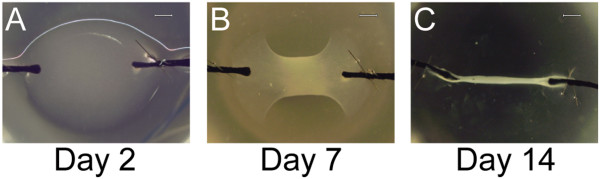
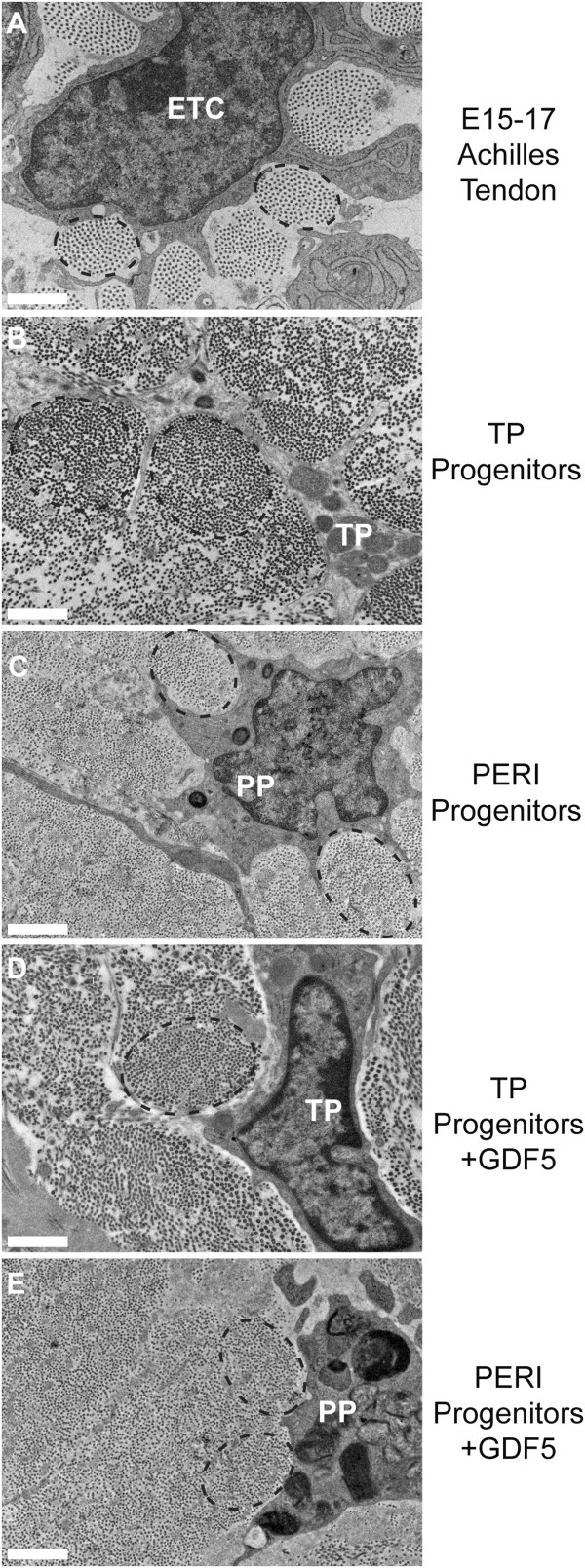
Isolated progenitors were seeded within fibrinogen/thrombin gel-based constructs with or without supplementation with recombinant growth/differentiation factor-5 (GDF5). Early and late in culture, gene expression of differentiation markers and matrix assembly genes was analyzed. Tendon construct ultrastructure was also compared after 45 days. Moreover, conditioned media from tendon proper-derived progenitors, peritenon-derived progenitors, or tenocytes was applied to each of the three cell types to determine paracrine stimulatory effects of the factors secreted from each of the respective cell types.
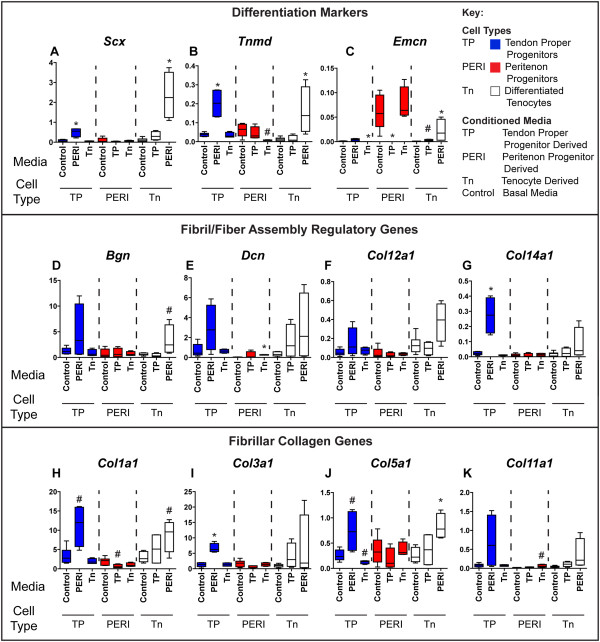
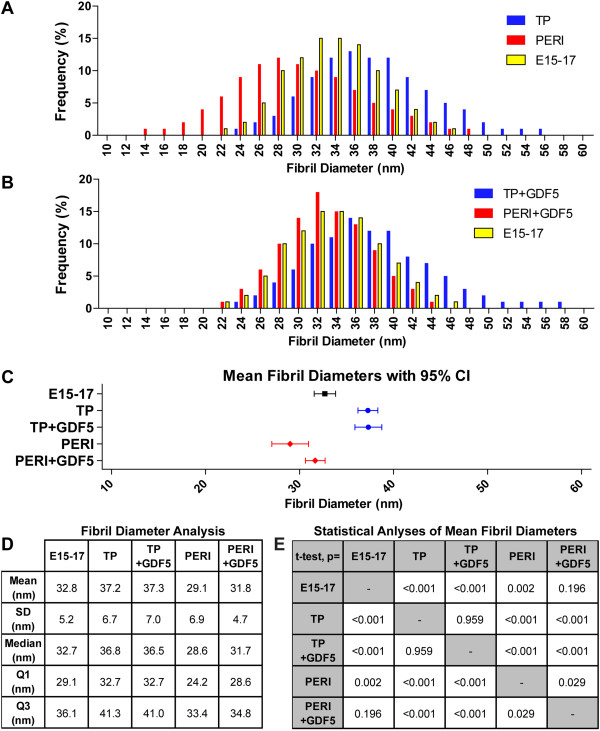
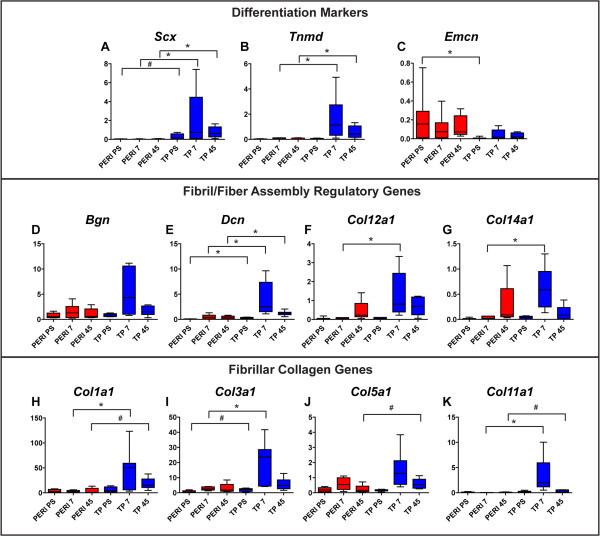
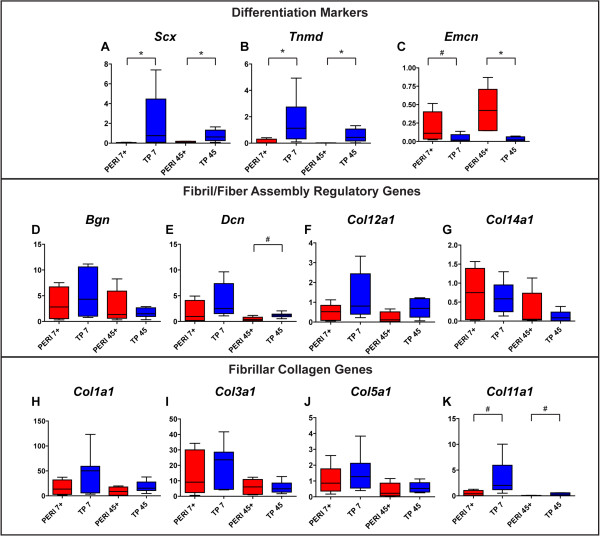
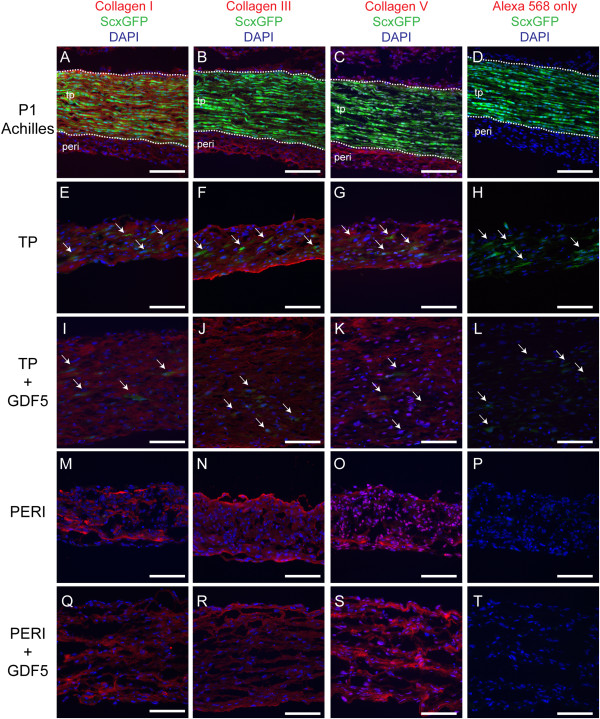
The cell orientation, extracellular domain and fibril organization of constructs were comparable to embryonic tendon. The tendon proper-derived progenitors produced a more tendon-like construct than the peritenon-derived progenitors. Seeded tendon proper-derived progenitors expressed greater levels of tenogenic markers and matrix assembly genes, relative to peritenon-derived progenitors. However, GDF5 supplementation improved expression of matrix assembly genes in peritenon progenitors and structurally led to increased mean fibril diameters. It also was found that peritenon-derived progenitors secrete factor(s) stimulatory to tenocytes and tendon proper progenitors.
Data demonstrate that, relative to peritenon-derived progenitors, tendon proper progenitors have greater potential for forming functional tendon-like tissue. Furthermore, factors secreted by peritenon-derived progenitors suggest a trophic role for this cell type as well. Thus, these findings highlight the synergistic potential of including these progenitor populations in restorative tendon engineering strategies.
在跟腱的腱实质和腱周组织中存在多能祖细胞群。源自腱实质和腱周组织的祖细胞群富含不同的细胞类型,分别通过肌腱、血管或周细胞起源标志物的表达来区分。本研究的目的是在体外模型中识别腱实质和腱周组织来源的祖细胞独特的成腱特性。我们假设每个区域的祖细胞对肌腱形成的贡献不同;因此,当整合到再生模型中时,每个区域的祖细胞将有独特的反应。此外,我们假设像祖细胞这样的细胞群能够刺激成腱分化,所以我们从这些细胞类型中生成条件培养基来分析它们的刺激潜力。
将分离的祖细胞接种在基于纤维蛋白原/凝血酶凝胶的构建物中,添加或不添加重组生长/分化因子-5(GDF5)。在培养早期和晚期,分析分化标志物和基质组装基因的基因表达。45天后还比较了肌腱构建物的超微结构。此外,将来自腱实质来源的祖细胞、腱周组织来源的祖细胞或肌腱细胞的条件培养基应用于三种细胞类型中的每一种,以确定每种相应细胞类型分泌的因子的旁分泌刺激作用。
构建物的细胞取向、细胞外结构域和纤维组织与胚胎肌腱相当。腱实质来源的祖细胞比腱周组织来源的祖细胞产生更类似肌腱的构建物。相对于腱周组织来源的祖细胞,接种的腱实质来源的祖细胞表达更高水平的成腱标志物和基质组装基因。然而,添加GDF5改善了腱周组织祖细胞中基质组装基因的表达,并在结构上导致平均纤维直径增加。还发现腱周组织来源的祖细胞分泌对肌腱细胞和腱实质祖细胞有刺激作用的因子。
数据表明,相对于腱周组织来源的祖细胞,腱实质祖细胞具有形成功能性肌腱样组织的更大潜力。此外,腱周组织来源的祖细胞分泌的因子也表明这种细胞类型具有营养作用。因此,这些发现突出了在修复性肌腱工程策略中纳入这些祖细胞群的协同潜力。