McMurray Matthew S, Amodeo Leslie R, Roitman Jamie D
Department of Psychology, University of Illinois at Chicago, Chicago, Illinois, United States of America.
Department of Psychology, University of Illinois at Chicago, Chicago, Illinois, United States of America; Laboratory of Integrative Neuroscience, University of Illinois at Chicago, Chicago, Illinois, United States of America.
PLoS One. 2014 Jul 9;9(7):e100697. doi: 10.1371/journal.pone.0100697. eCollection 2014.
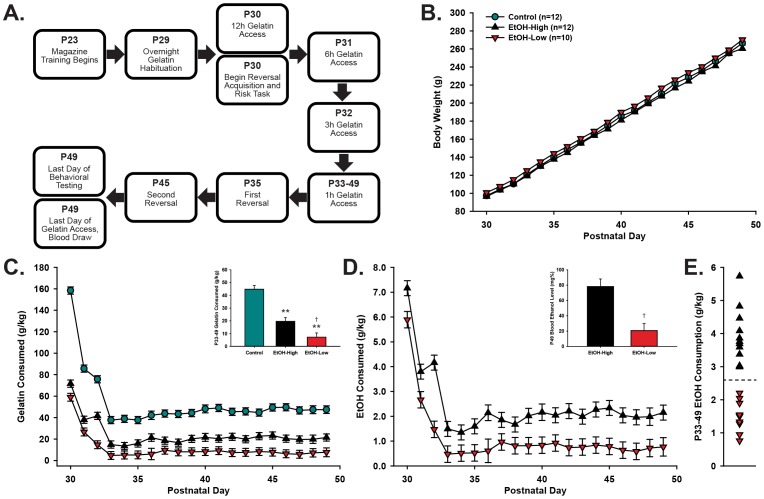
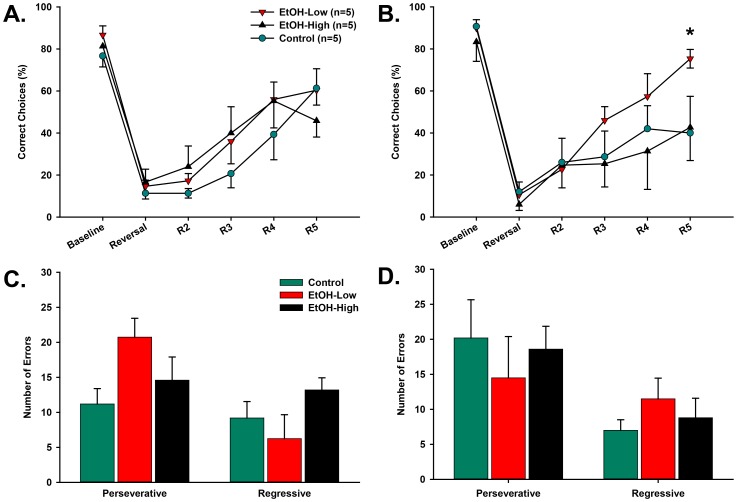
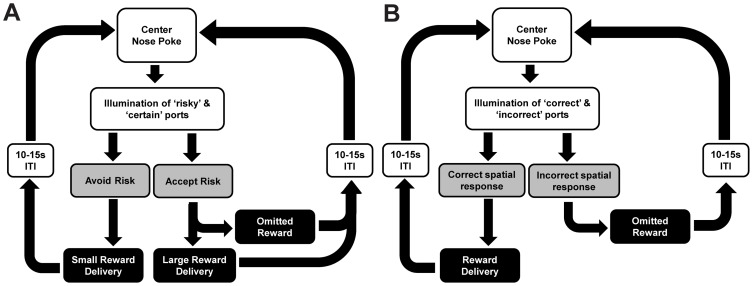
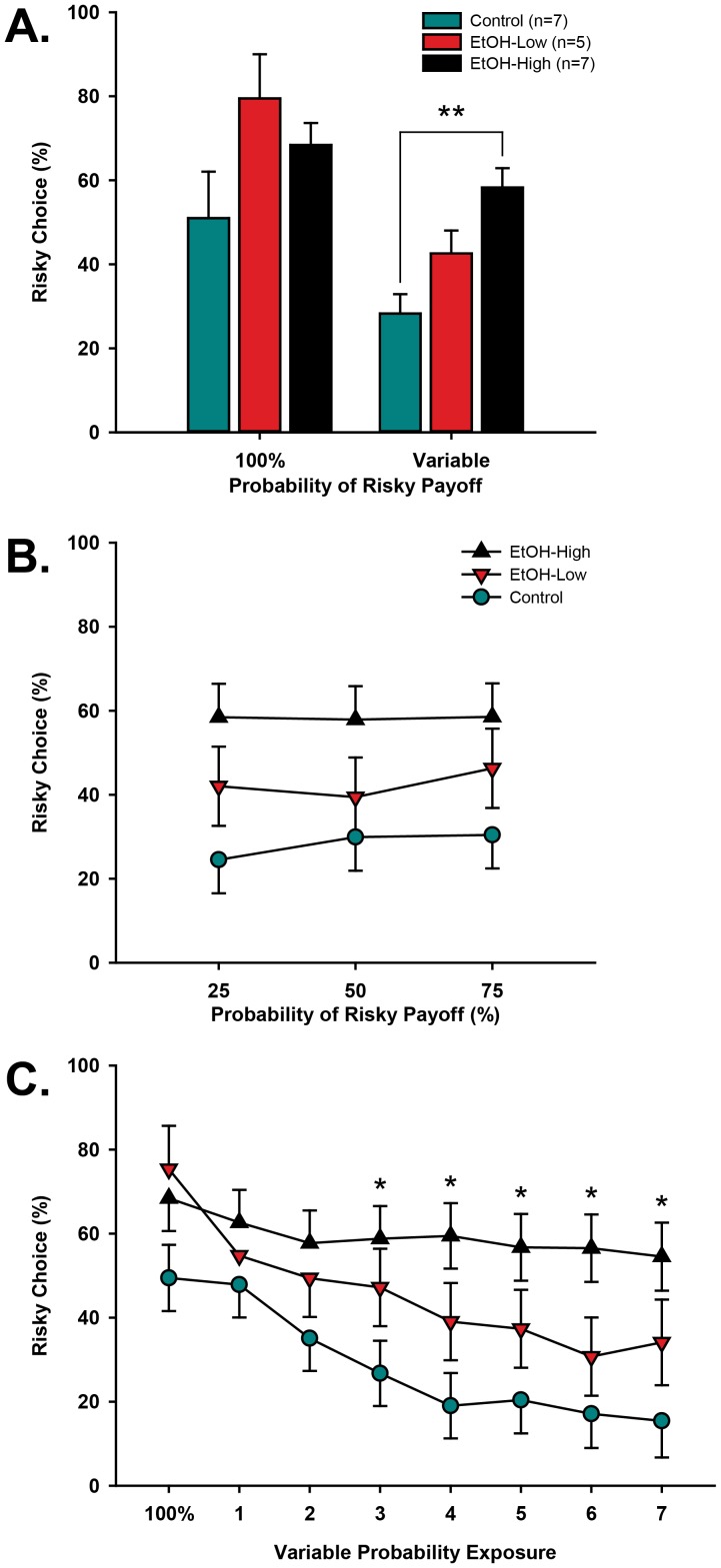
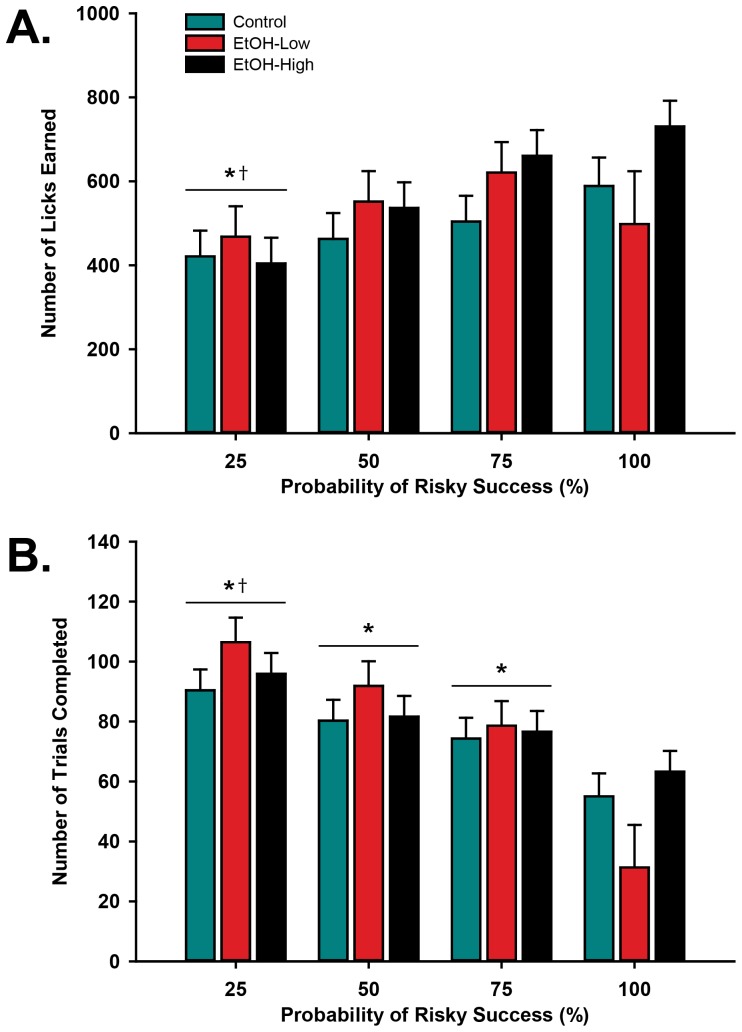
Alcohol use is common in adolescence, with a large portion of intake occurring during episodes of binging. This pattern of alcohol consumption coincides with a critical period for neurocognitive development and may impact decision-making and reward processing. Prior studies have demonstrated alterations in adult decision-making following adolescent usage, but it remains to be seen if these alterations exist in adolescence, or are latent until adulthood. Here, using a translational model of voluntary binge alcohol consumption in adolescents, we assess the impact of alcohol intake on risk preference and behavioral flexibility during adolescence. During adolescence (postnatal day 30-50), rats were given 1-hour access to either a 10% alcohol gelatin mixture (EtOH) or a calorie equivalent gelatin (Control) at the onset of the dark cycle. EtOH consuming rats were classified as either High or Low consumers based on intake levels. Adolescent rats underwent behavioral testing once a day, with one group performing a risk preference task, and a second group performing a reversal-learning task during the 20-day period of gelatin access. EtOH-High rats showed increases in risk preference compared to Control rats, but not EtOH-Low animals. However, adolescent rats did a poor job of matching their behavior to optimize outcomes, suggesting that adolescents may adopt a response bias. In addition, adolescent ethanol exposure did not affect the animals' ability to flexibly adapt behavior to changing reward contingencies during reversal learning. These data support the view that adolescent alcohol consumption can have short-term detrimental effects on risk-taking when examined during adolescence, which does not seem to be attributable to an inability to flexibly encode reward contingencies on behavioral responses.
饮酒在青少年中很常见,大部分饮酒行为发生在暴饮暴食期间。这种饮酒模式与神经认知发展的关键时期相吻合,可能会影响决策和奖励处理。先前的研究表明,青少年饮酒后成人的决策会发生改变,但这些改变是否在青少年期就已存在,或者直到成年期才会显现,仍有待观察。在这里,我们使用青少年自愿暴饮暴食的转化模型,评估饮酒对青少年期风险偏好和行为灵活性的影响。在青少年期(出生后第30 - 50天),在黑暗周期开始时,给予大鼠1小时接触10%酒精明胶混合物(乙醇)或热量相当的明胶(对照)的机会。根据摄入量,将饮用乙醇的大鼠分为高饮者或低饮者。在给予明胶的20天期间,青少年大鼠每天进行一次行为测试,一组执行风险偏好任务,另一组执行逆向学习任务。与对照大鼠相比,乙醇高饮组大鼠的风险偏好增加,但乙醇低饮组大鼠没有。然而,青少年大鼠在调整行为以优化结果方面表现不佳,这表明青少年可能存在反应偏差。此外,青少年期乙醇暴露并未影响动物在逆向学习过程中灵活调整行为以适应不断变化奖励条件的能力。这些数据支持这样一种观点,即在青少年期进行检查时,青少年饮酒会对冒险行为产生短期的有害影响,这似乎并非归因于无法灵活地将奖励条件编码到行为反应中。