Wimberly Hallie, Han Gang, Pinnaduwage Dushanthi, Murphy Leigh C, Yang Xiaohong Rose, Andrulis Irene L, Sherman Mark, Figueroa Jonine, Rimm David L
Department of Pathology, Yale University School of Medicine, BML116, 310 Cedar Street, PO Box 208023, New Haven, CT, 06520-8023, USA.
Breast Cancer Res Treat. 2014 Aug;146(3):657-67. doi: 10.1007/s10549-014-3050-3. Epub 2014 Jul 10.
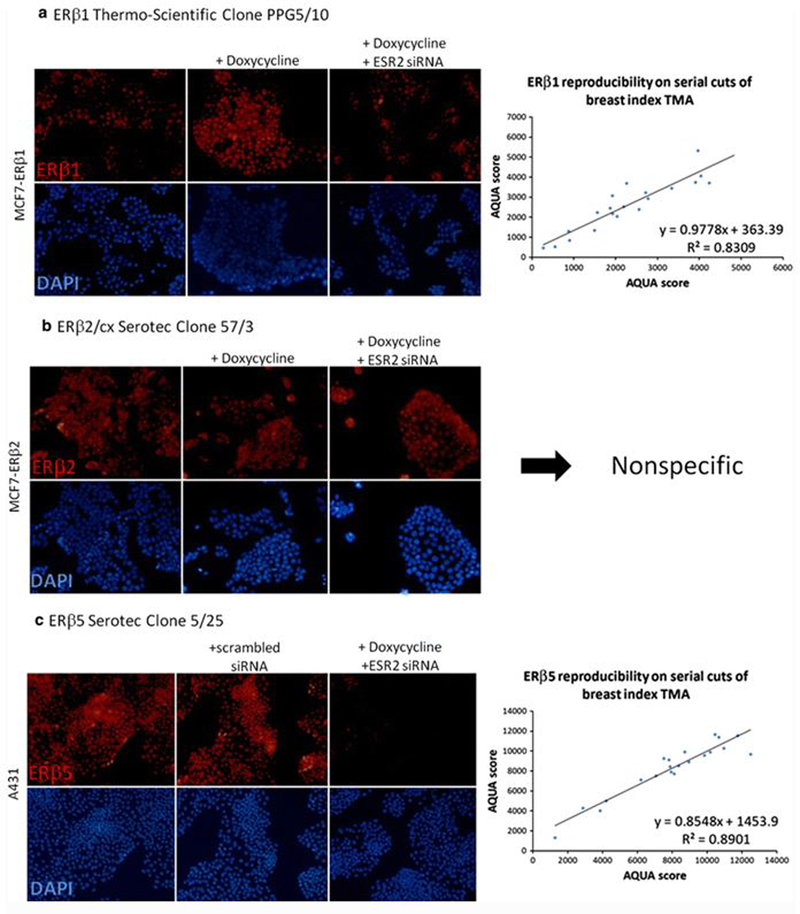
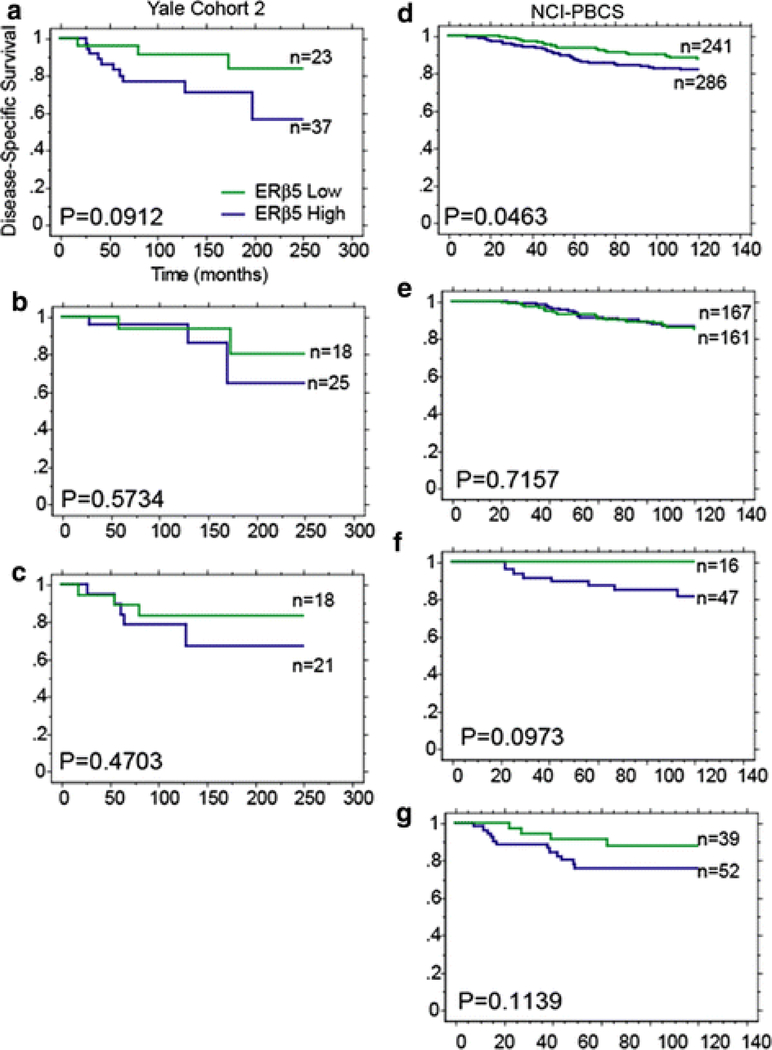
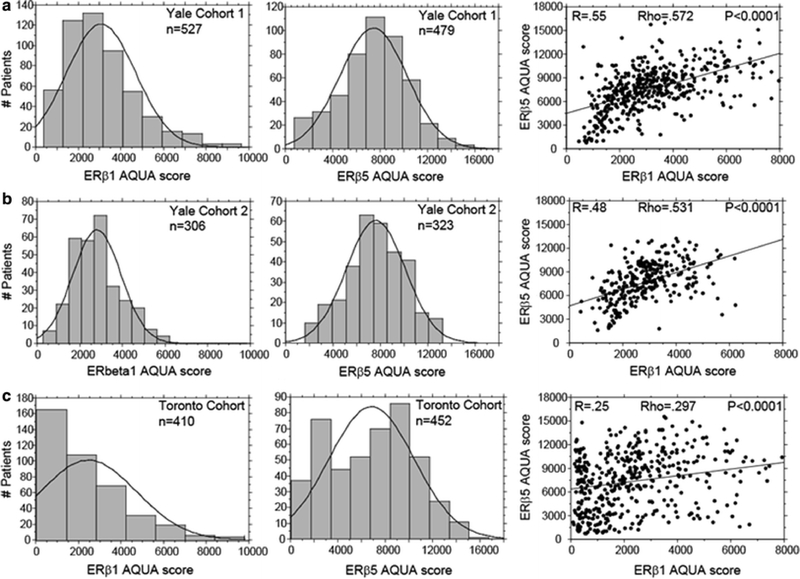
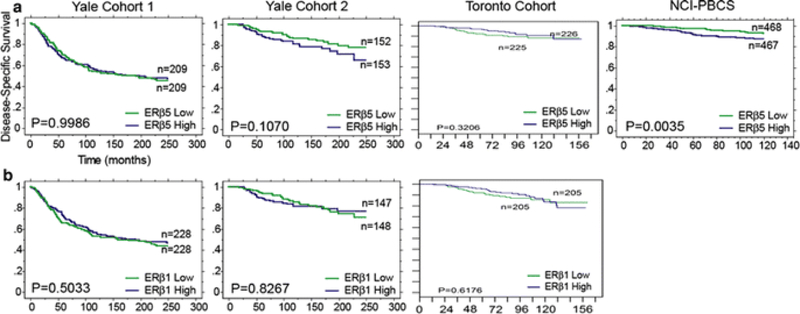
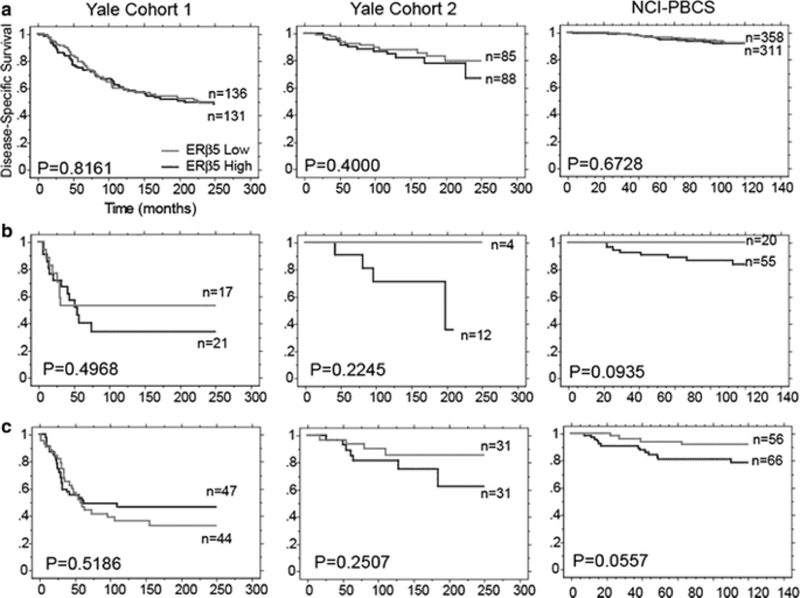
Though the role of Estrogen Receptor (ER)α in breast cancer has been studied extensively, there is little consensus about the role of alternative ER isoform ERβ in breast cancer biology. ERβ has significant sequence homology to ERα but is located on a different chromosome and maintains both overlapping and unique functional attributes. Five variants exist, resulting from alternative splicing of the C-terminal region of ERβ. The relevance of ERβ variants in breast cancer outcomes and response to therapy is difficult to assess because of conflicting reports in the literature, likely due to variable methods used to assess ERβ in patient tumors. Here, we quantitatively assess expression of ERβ splice variants on over 2,000 breast cancer patient samples. Antibodies against ERβ variants were validated for staining specificity in cell lines by siRNA knockdown of ESR2 and staining reproducibility on formalin-fixed paraffin-embedded tissue by quantitative immunofluorescence (QIF) using AQUA technology. We found antibodies against splice variants ERβ1 and ERβ5, but not ERβ2/cx, which were sensitive, specific, and reproducible. QIF staining of validated antibodies showed both ERβ1 and ERβ5 QIF scores, which have a normal (bell shaped) distribution on most cohorts assessed, and their expression is significantly associated with each other. Extensive survival analyses show that ERβ1 is not a prognostic or predictive biomarker for breast cancer. ERβ5 appears to be a context-dependent marker of worse outcome in HER2-positive and triple-negative patients, suggesting an unknown biological function in the absence of ERα.
尽管雌激素受体(ER)α在乳腺癌中的作用已得到广泛研究,但关于ER的替代亚型ERβ在乳腺癌生物学中的作用却几乎没有共识。ERβ与ERα具有显著的序列同源性,但位于不同的染色体上,并兼具重叠和独特的功能属性。ERβ存在五种变体,由ERβ C末端区域的可变剪接产生。由于文献报道相互矛盾,可能是由于在患者肿瘤中评估ERβ的方法不同,因此难以评估ERβ变体在乳腺癌预后和治疗反应中的相关性。在此,我们对2000多例乳腺癌患者样本中ERβ剪接变体的表达进行了定量评估。通过对ESR2进行siRNA敲低,验证了针对ERβ变体的抗体在细胞系中的染色特异性,并使用AQUA技术通过定量免疫荧光(QIF)在福尔马林固定石蜡包埋组织上验证了染色的可重复性。我们发现针对剪接变体ERβ1和ERβ5的抗体敏感、特异且可重复,而针对ERβ2/cx的抗体则不然。经验证抗体的QIF染色显示,ERβ1和ERβ5的QIF评分在大多数评估队列中呈正态(钟形)分布,且它们的表达彼此显著相关。广泛的生存分析表明,ERβ1不是乳腺癌的预后或预测生物标志物。ERβ5似乎是HER2阳性和三阴性患者中预后较差的一种依赖于背景的标志物,这表明在缺乏ERα的情况下存在未知的生物学功能。