Uskoković Vuk, Desai Tejal A
Therapeutic Micro and Nanotechnology Laboratory, Department of Bioengineering and Therapeutic Sciences, University of California, San Francisco , San Francisco, California 94158-2330, United States.
ACS Appl Mater Interfaces. 2014 Aug 13;6(15):13209-20. doi: 10.1021/am503043t. Epub 2014 Jul 23.
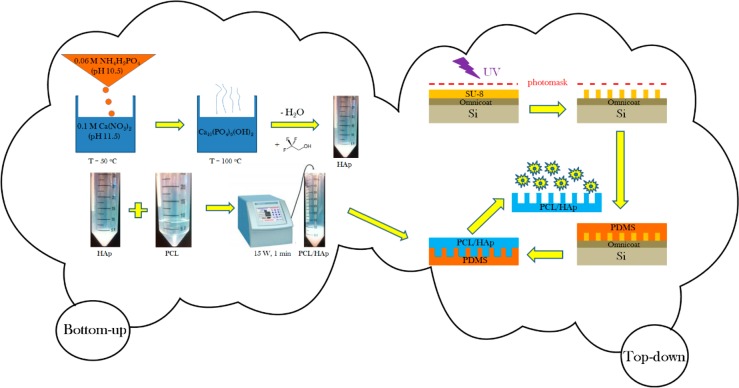
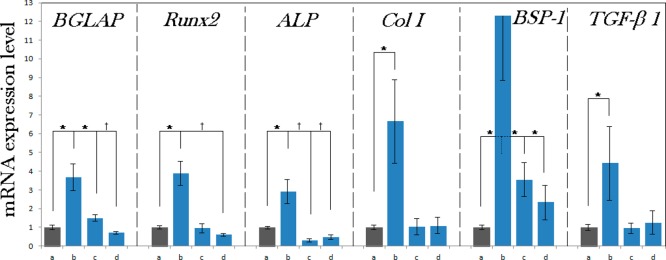
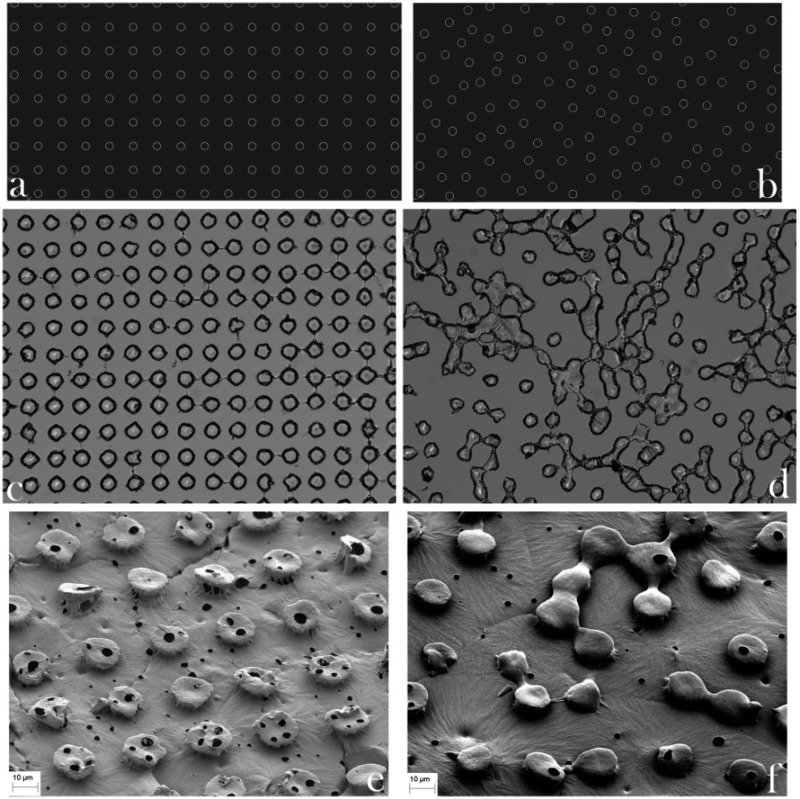
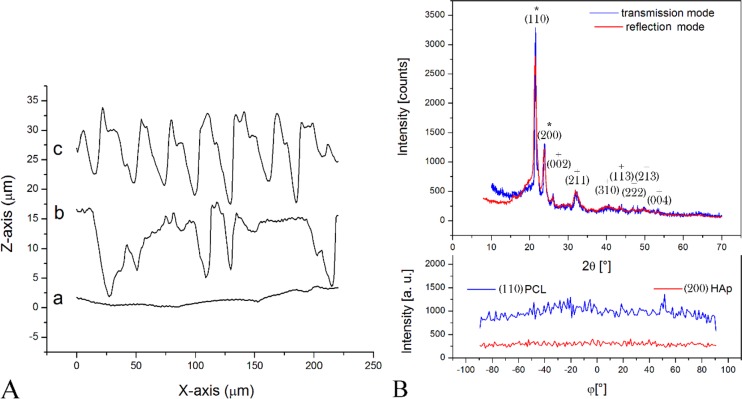
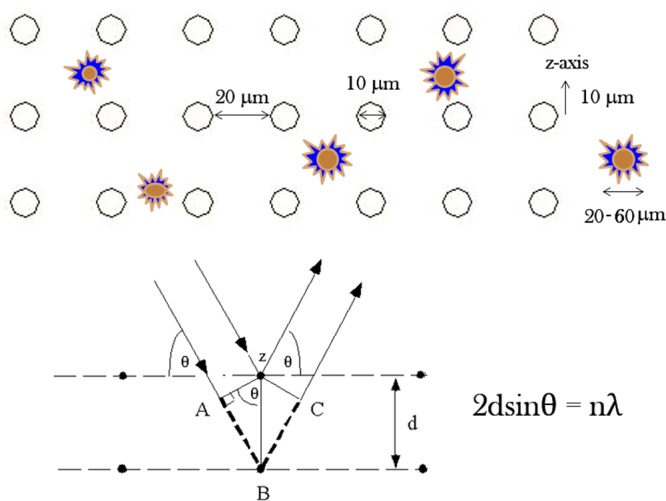
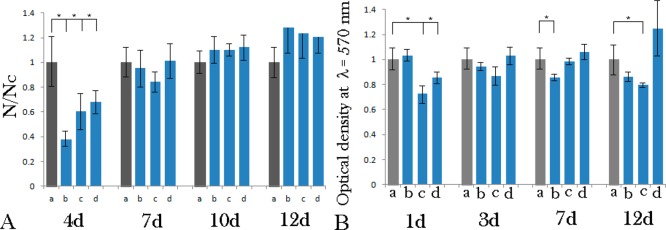
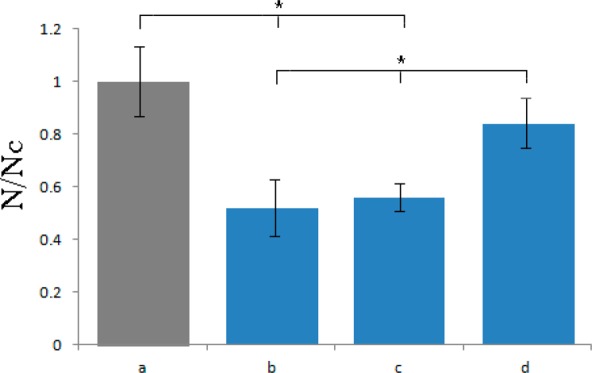
Material composition and topography of the cell-contacting material interface are important considerations in the design of biomaterials at the nano and micro scales. This study is one of the first to have assessed the osteoblastic response to micropatterned polymer-ceramic composite surfaces. In particular, the effect of topographic variations of composite poly(ε-caprolactone)/hydroxyapatite (PCL/HAp) films on viability, proliferation, migration and osteogenesis of fibroblastic and osteoblastic MC3T3-E1 cells was evaluated. To that end, three different micropatterned PCL/HAp films were compared: flat and textured, the latter of which included films comprising periodically arranged and randomly distributed oval topographic features 10 μm in diameter, 20 μm in separation and 10 μm in height, comparable to the dimensions of MC3T3-E1 cells. PCL/HAp films were fabricated by the combination of a bottom-up, soft chemical synthesis of the ceramic, nanoparticulate phase and a top-down, photolithographic technique for imprinting fine, microscale features on them. X-ray diffraction analysis indicated an isotropic orientation of both the polymeric chains and HAp crystallites in the composite samples. Biocompatibility tests indicated no significant decrease in their viability when grown on PCL/HAp films. Fibroblast proliferation and migration onto PCL/HAp films proceeded slower than on the control borosilicate glass, with the flat composite film fostering more cell migration activity than the films containing topographic features. The gene expression of seven analyzed osteogenic markers, including procollagen type I, osteocalcin, osteopontin, alkaline phosphatase, and the transcription factors Runx2 and TGFβ-1, was, however, consistently upregulated in cells grown on PCL/HAp films comprising periodically ordered topographic features, suggesting that the higher levels of symmetry of the topographic ordering impose a moderate mechanochemical stress on the adherent cells and thus promote a more favorable osteogenic response. The obtained results suggest that topography can be a more important determinant of the cell/surface interaction than the surface chemistry and/or stiffness as well as that the regularity of the distribution of topographic features can be a more important variable than the topographic features per se.
在纳米和微米尺度的生物材料设计中,细胞接触材料界面的材料组成和形貌是重要的考虑因素。本研究是最早评估成骨细胞对微图案化聚合物 - 陶瓷复合表面反应的研究之一。具体而言,评估了复合聚(ε - 己内酯)/羟基磷灰石(PCL / HAp)薄膜的形貌变化对成纤维细胞和成骨细胞MC3T3 - E1细胞的活力、增殖、迁移和成骨作用的影响。为此,比较了三种不同的微图案化PCL / HAp薄膜:平坦的和有纹理的,后者包括具有直径10μm、间距20μm和高度10μm的周期性排列和随机分布的椭圆形形貌特征的薄膜,其尺寸与MC3T3 - E1细胞相当。PCL / HAp薄膜是通过陶瓷纳米颗粒相的自下而上的软化学合成与自上而下的光刻技术相结合制备的,该光刻技术用于在其上 imprinting精细的微米级特征。X射线衍射分析表明复合样品中聚合物链和HAp微晶均呈各向同性取向。生物相容性测试表明,在PCL / HAp薄膜上生长时,它们的活力没有显著下降。成纤维细胞在PCL / HAp薄膜上的增殖和迁移比在对照硼硅酸盐玻璃上进行得慢,平坦的复合薄膜比含有形貌特征的薄膜促进更多的细胞迁移活性。然而,在具有周期性有序形貌特征的PCL / HAp薄膜上生长的细胞中,包括I型前胶原、骨钙素、骨桥蛋白、碱性磷酸酶以及转录因子Runx2和TGFβ - 1在内的七种分析的成骨标记物的基因表达持续上调,这表明形貌有序的更高对称性对贴壁细胞施加了适度的机械化学应力,从而促进了更有利的成骨反应。获得的结果表明,形貌可能比表面化学和/或硬度更重要地决定细胞/表面相互作用,并且形貌特征分布的规律性可能比形貌特征本身更重要。