Zhao Yu, Biggs Tyler D, Xian Ming
Department of Chemistry, Washington State University, Pullman, WA 99164, USA.
Chem Commun (Camb). 2014 Oct 14;50(80):11788-805. doi: 10.1039/c4cc00968a.
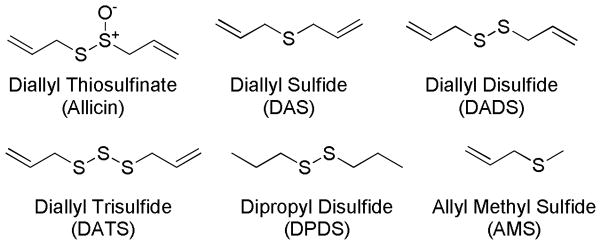
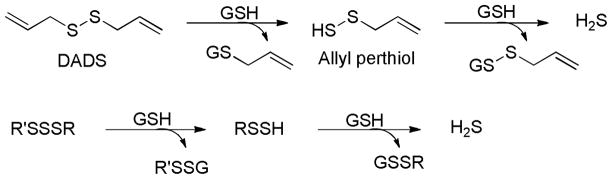
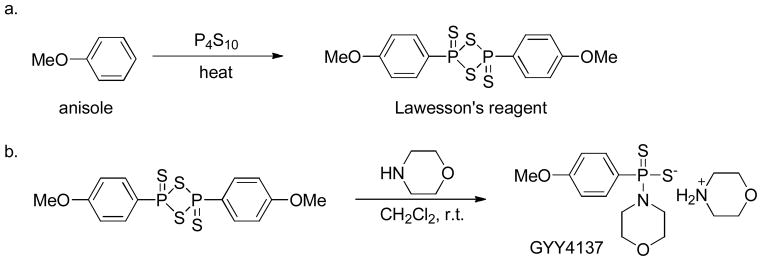
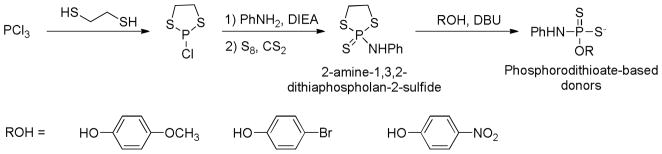
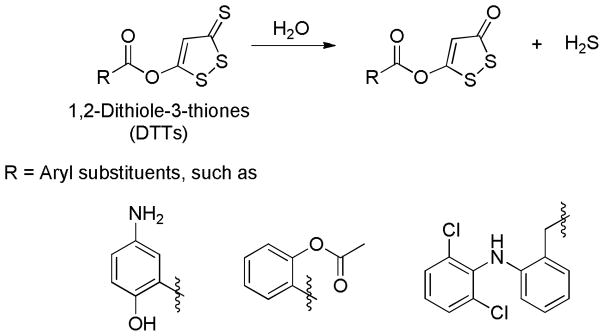
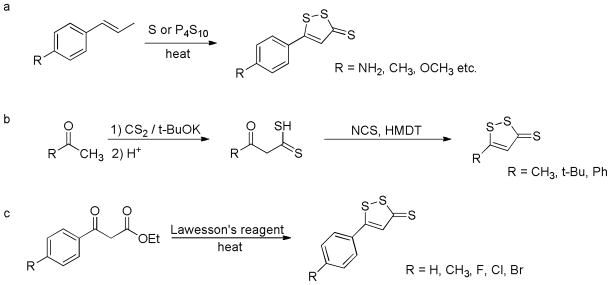
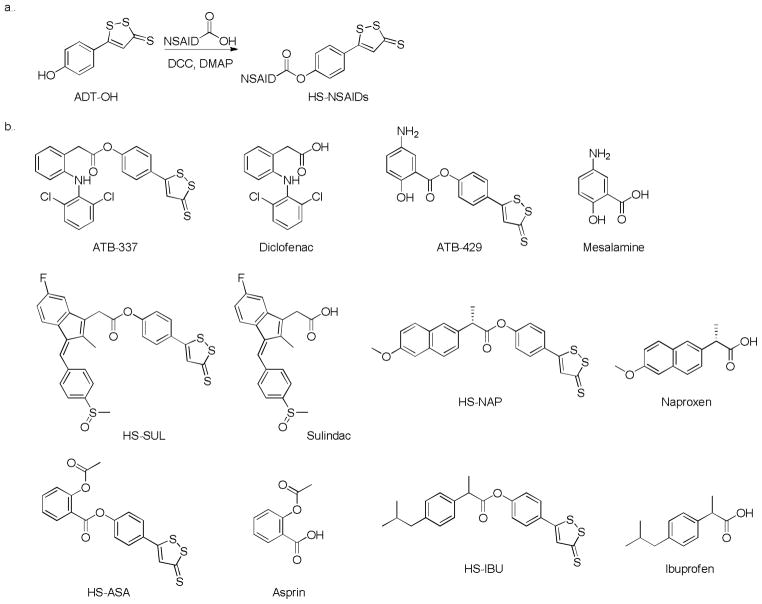
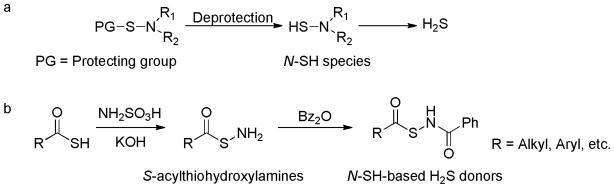
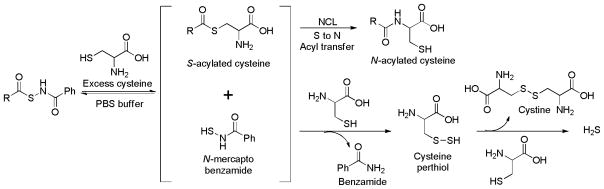
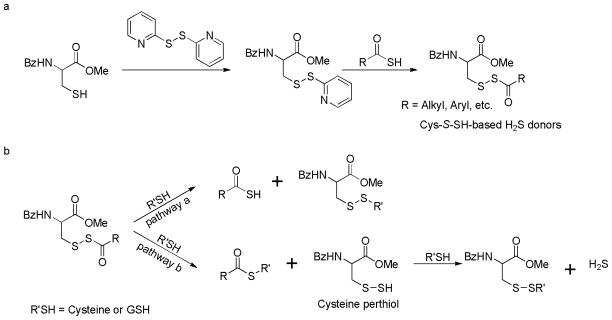
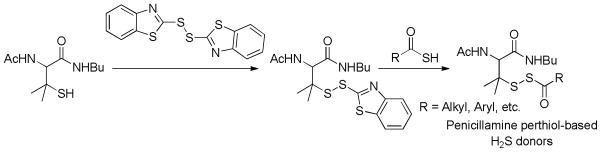
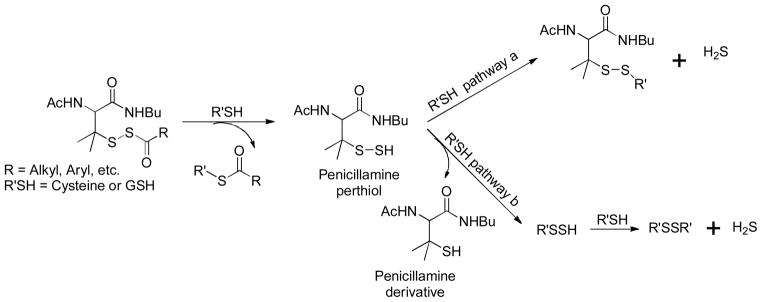
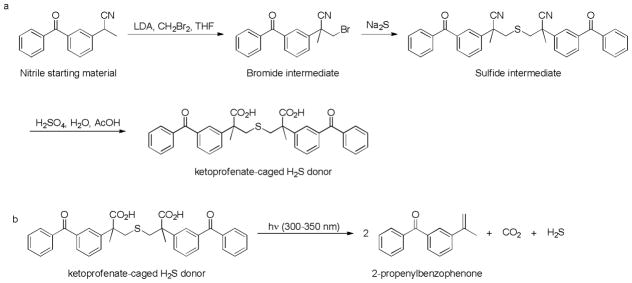
Hydrogen sulfide (H2S) is a newly recognized signaling molecule with very potent cytoprotective actions. The fields of H2S physiology and pharmacology have been rapidly growing in recent years, but a number of fundamental issues must be addressed to advance our understanding of the biology and clinical potential of H2S in the future. Hydrogen sulfide releasing agents (also known as H2S donors) have been widely used in these fields. These compounds are not only useful research tools, but also potential therapeutic agents. It is therefore important to study the chemistry and pharmacology of exogenous H2S and to be aware of the limitations associated with the choice of donors used to generate H2S in vitro and in vivo. In this review we summarized the developments and limitations of currently available donors including H2S gas, sulfide salts, garlic-derived sulfur compounds, Lawesson's reagent/analogs, 1,2-dithiole-3-thiones, thiol-activated donors, photo-caged donors, and thioamino acids. Some biological applications of these donors were also discussed.
硫化氢(H2S)是一种新发现的具有强大细胞保护作用的信号分子。近年来,H2S生理学和药理学领域发展迅速,但要在未来进一步深入了解H2S的生物学特性和临床潜力,仍需解决一些基本问题。硫化氢释放剂(也称为H2S供体)已在这些领域广泛应用。这些化合物不仅是有用的研究工具,也是潜在的治疗药物。因此,研究外源性H2S的化学性质和药理学,并了解在体外和体内用于生成H2S的供体选择所存在的局限性非常重要。在本综述中,我们总结了目前可用供体的进展和局限性,包括硫化氢气体、硫化物盐、大蒜衍生的硫化合物、劳森试剂/类似物、1,2-二硫杂环戊烯-3-硫酮、硫醇活化供体、光笼式供体和硫代氨基酸。还讨论了这些供体的一些生物学应用。