Becknell Brian, Eichler Tad E, Beceiro Susana, Li Birong, Easterling Robert S, Carpenter Ashley R, James Cindy L, McHugh Kirk M, Hains David S, Partida-Sanchez Santiago, Spencer John D
1] Division of Nephrology, The Research Institute at Nationwide Children's Hospital, Columbus, Ohio, USA [2] Center for Clinical and Translational Research, The Research Institute at Nationwide Children's Hospital, Columbus, Ohio, USA.
Center for Clinical and Translational Research, The Research Institute at Nationwide Children's Hospital, Columbus, Ohio, USA.
Kidney Int. 2015 Jan;87(1):151-61. doi: 10.1038/ki.2014.268. Epub 2014 Jul 30.
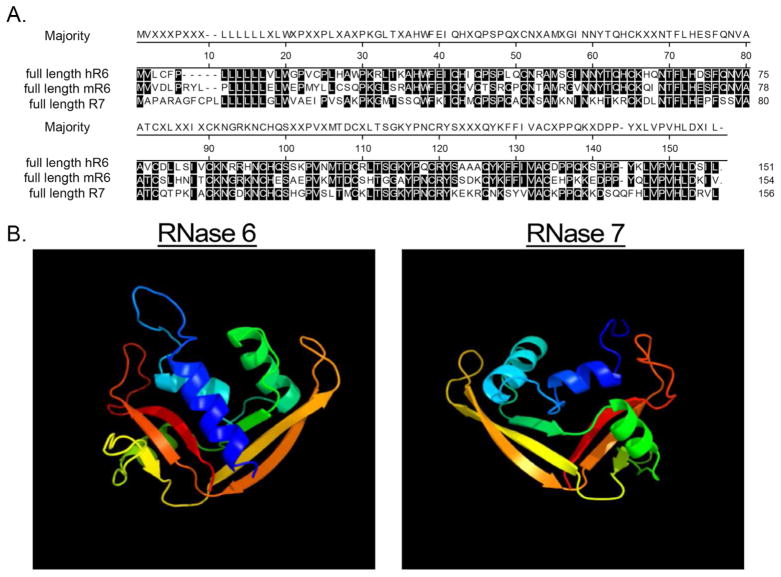
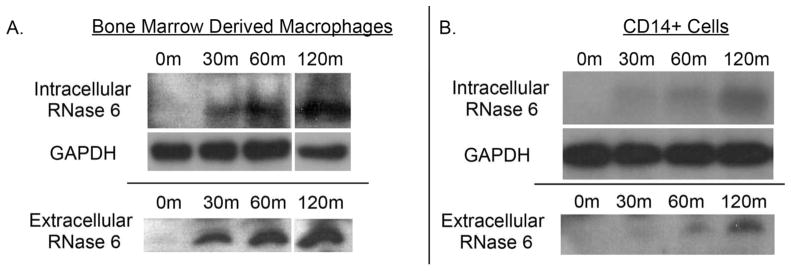
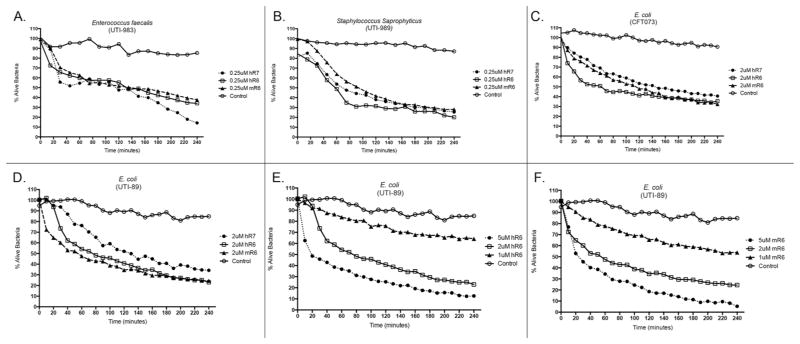
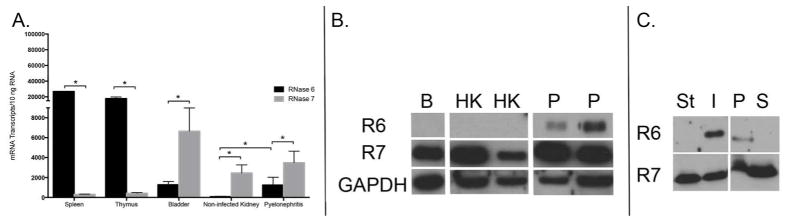
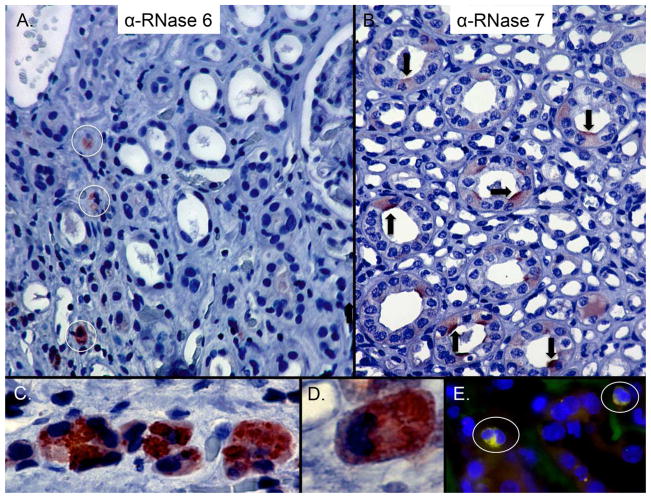
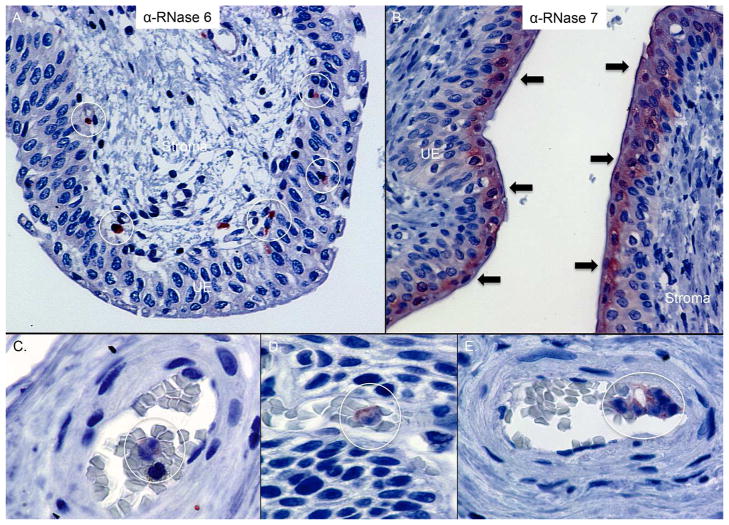
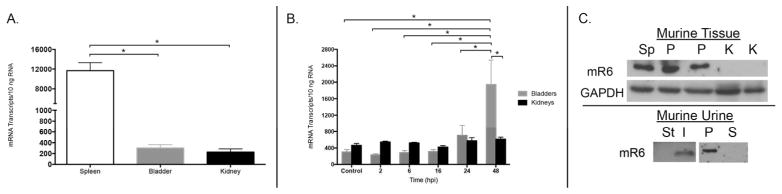
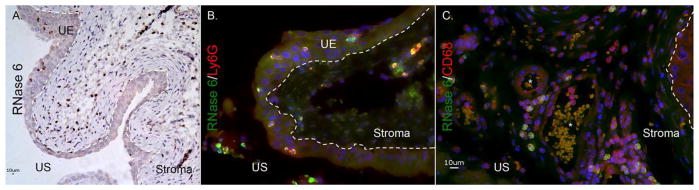
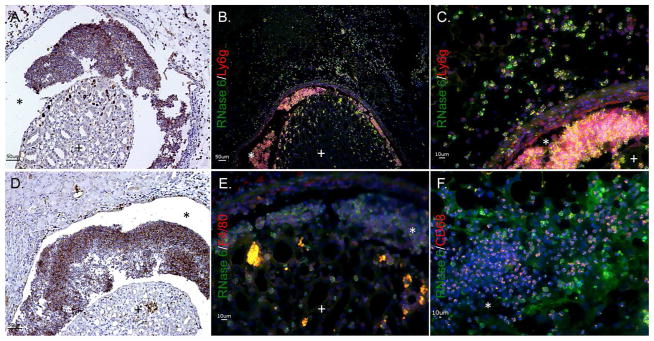
Recent evidence suggests antimicrobial peptides protect the urinary tract from infection. Ribonuclease 7 (RNase 7), a member of the RNase A superfamily, is a potent epithelial-derived protein that maintains human urinary tract sterility. RNase 7 expression is restricted to primates, limiting evaluation of its antimicrobial activity in vivo. Here we identified ribonuclease 6 (RNase 6) as the RNase A superfamily member present in humans and mice that is most conserved at the amino acid level relative to RNase 7. Like RNase 7, recombinant human and murine RNase 6 has potent antimicrobial activity against uropathogens. Quantitative real-time PCR and immunoblot analysis indicate that RNase 6 mRNA and protein are upregulated in the human and murine urinary tract during infection. Immunostaining located RNase 6 to resident and infiltrating monocytes, macrophages, and neutrophils. Uropathogenic E. coli induces RNase 6 peptide expression in human CD14(+) monocytes and murine bone marrow-derived macrophages. Thus, RNase 6 is an inducible, myeloid-derived protein with markedly different expression from the epithelial-derived RNase 7 but with equally potent antimicrobial activity. Our studies suggest RNase 6 serves as an evolutionarily conserved antimicrobial peptide that participates in the maintenance of urinary tract sterility.
近期证据表明,抗菌肽可保护尿路免受感染。核糖核酸酶7(RNase 7)是RNase A超家族的成员,是一种强大的上皮来源蛋白,可维持人类尿路无菌状态。RNase 7的表达仅限于灵长类动物,限制了对其体内抗菌活性的评估。在此,我们鉴定出核糖核酸酶6(RNase 6)是人类和小鼠中存在的RNase A超家族成员,在氨基酸水平上相对于RNase 7最为保守。与RNase 7一样,重组人源和鼠源RNase 6对尿路病原体具有强大的抗菌活性。定量实时PCR和免疫印迹分析表明,在感染期间,人源和鼠源尿路中的RNase 6 mRNA和蛋白上调。免疫染色显示RNase 6定位于驻留和浸润的单核细胞、巨噬细胞及中性粒细胞。尿路致病性大肠杆菌可诱导人源CD14(+)单核细胞和鼠源骨髓来源巨噬细胞中RNase 6肽的表达。因此,RNase 6是一种可诱导的、髓系来源的蛋白,其表达与上皮来源的RNase 7明显不同,但具有同样强大的抗菌活性。我们的研究表明,RNase 6作为一种进化上保守的抗菌肽,参与维持尿路无菌状态。