Department of Biochemistry, School of Medicine, Catholic University of Daegu, 33, 17-gil, Duryugongwon-ro, Nam-gu, Daegu 705-718, Korea.
Nutr Res Pract. 2014 Aug;8(4):391-7. doi: 10.4162/nrp.2014.8.4.391. Epub 2014 May 15.
BACKGROUND/OBJECTIVE: Myocardial cell death due to occlusion of the coronary arteries leads to myocardial infarction, a subset of coronary heart disease (CHD). Dietary fiber is known to be associated with a reduced risk of CHD, the underlying mechanisms of which were suggested to delay the onset of occlusion by ameliorating risk factors. In this study, we tested a hypothesis that a beneficial role of dietary fiber could arise from protection of myocardial cells against ischemic injury, manifested after occlusion of the arteries.
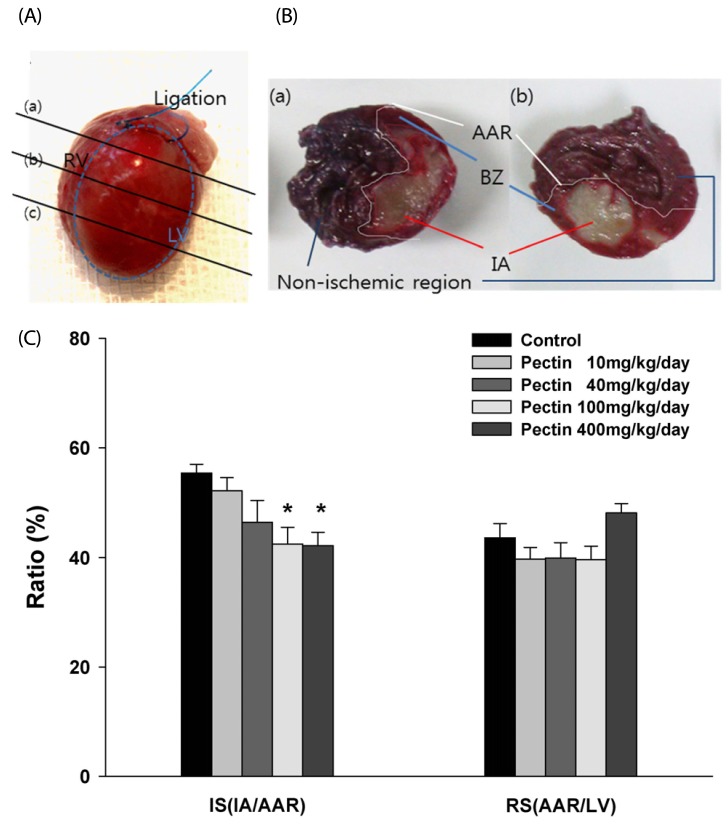
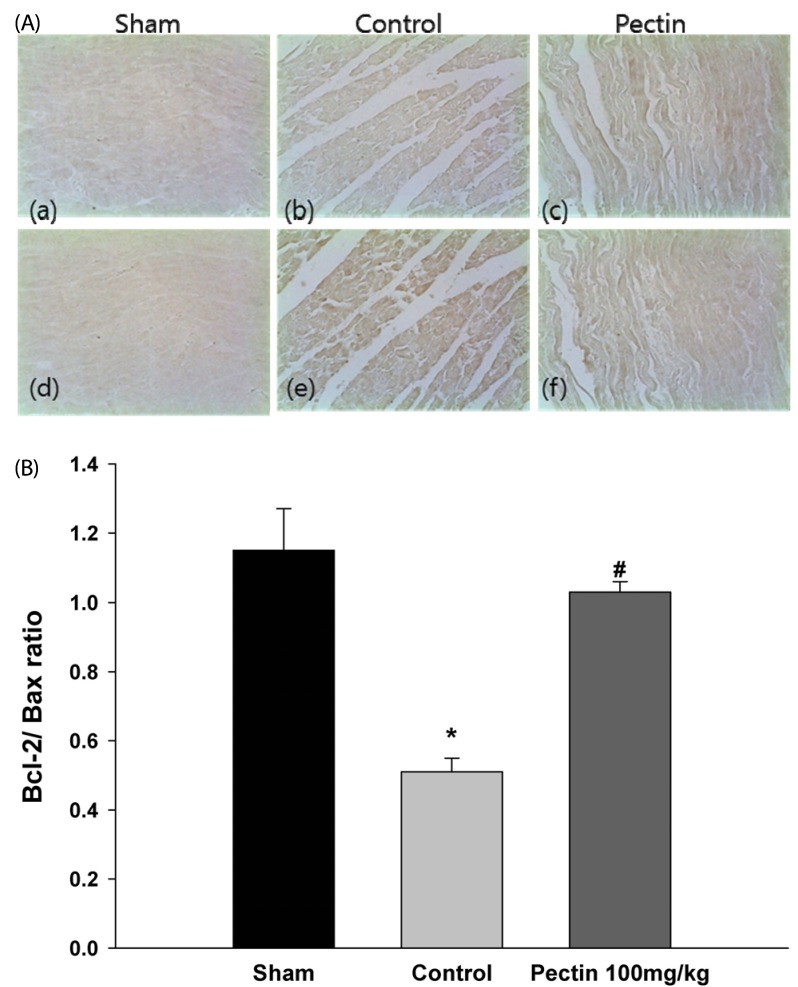
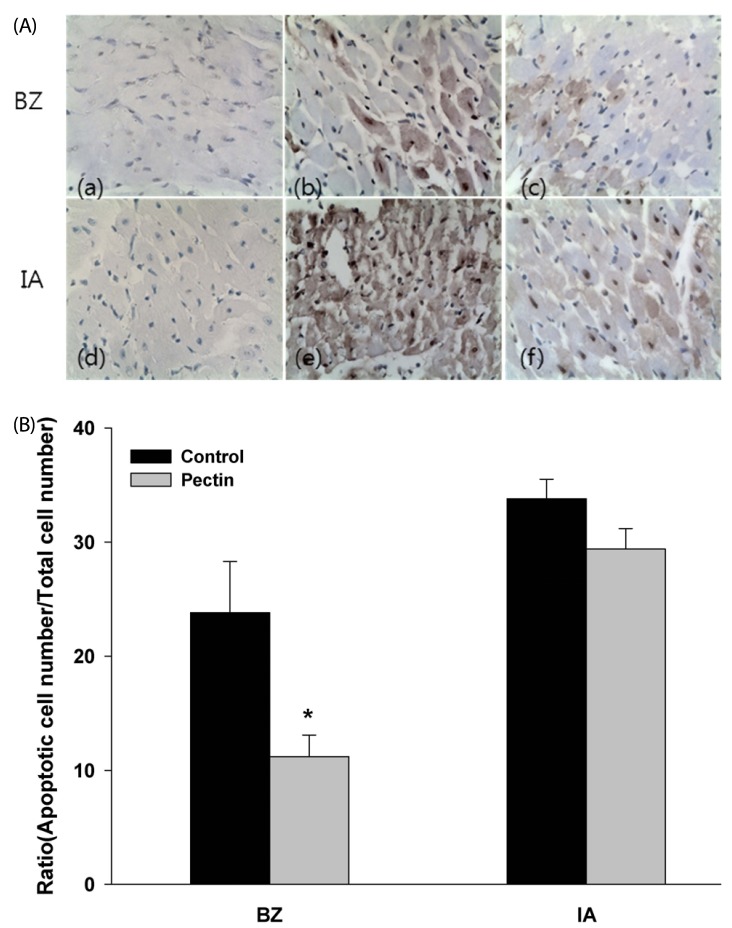
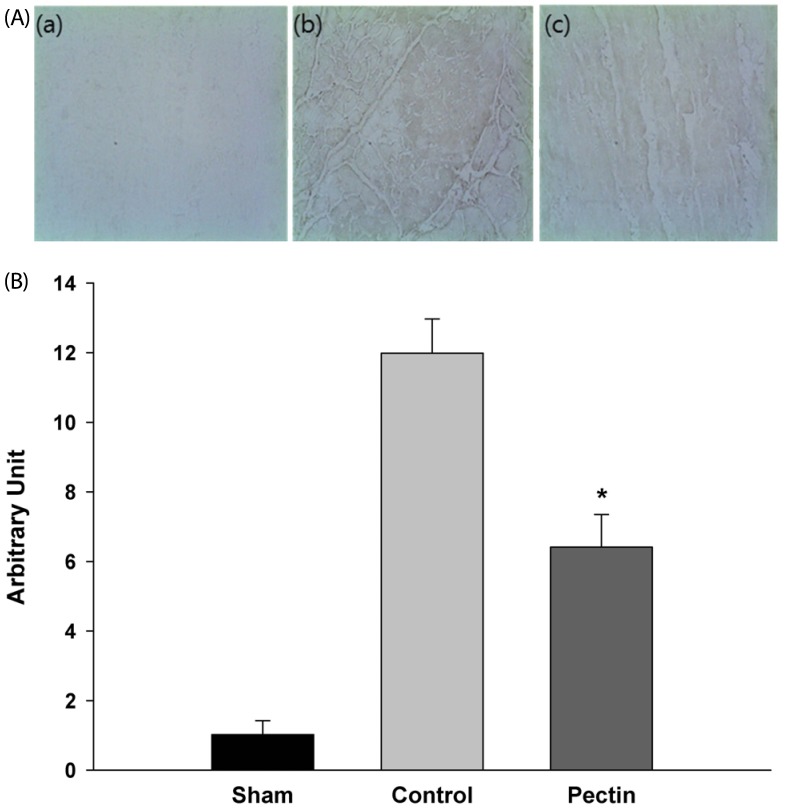
MATERIALS/METHODS: Three days after rats were fed apple pectin (AP) (with 10, 40, 100, and 400 mg/kg/day), myocardial ischemic injury was induced by 30 min-ligation of the left anterior descending coronary artery, followed by 3 hr-reperfusion. The area at risk and infarct area were evaluated using Evans blue dye and 2,3,5-triphenyltetrazolium chloride (TTC) staining, respectively. DNA nicks reflecting the extent of myocardial apoptosis were assessed by TUNEL assay. Levels of cleaved caspase-3, Bcl-2, and Bax were assessed by immunohistochemistry.
Supplementation of AP (with 100 and 400 mg/kg/day) resulted in significantly attenuated infarct size (IS) (ratio of infarct area to area at risk) by 21.9 and 22.4%, respectively, in the AP-treated group, compared with that in the control group. This attenuation in IS showed correlation with improvement in biomarkers involved in the apoptotic cascades: reduction of apoptotic cells, inhibition of conversion of procaspase-3 to caspase-3, and increase of Bcl-2/Bax ratio, a determinant of cell fate.
The findings indicate that supplementation of AP results in amelioration of myocardial infarction by inhibition of apoptosis. Thus, the current study suggests that intake of dietary fiber reduces the risk of CHD, not only by blocking steps leading to occlusion, but also by protecting against ischemic injury caused by occlusion of the arteries.
背景/目的:由于冠状动脉阻塞导致的心肌细胞死亡会导致心肌梗死,这是冠心病(CHD)的一个子集。膳食纤维与 CHD 风险降低有关,其潜在机制据推测是通过改善风险因素来延迟阻塞的发生。在这项研究中,我们测试了一个假设,即膳食纤维的有益作用可能源于对心肌细胞的保护作用,防止动脉阻塞后的缺血性损伤。
材料/方法:在大鼠喂食苹果果胶(AP)(每天 10、40、100 和 400mg/kg)3 天后,通过结扎左前降支冠状动脉 30 分钟,随后再灌注 3 小时,诱导心肌缺血损伤。通过 Evans 蓝染料和 2,3,5-三苯基氯化四唑(TTC)染色分别评估危险区和梗死区。通过 TUNEL 测定评估反映心肌细胞凋亡程度的 DNA 缺口。通过免疫组化评估 cleaved caspase-3、Bcl-2 和 Bax 的水平。
AP(每天 100 和 400mg/kg)的补充分别使 AP 处理组的梗死面积(IS)(梗死面积与危险区面积的比值)显著减少 21.9%和 22.4%,与对照组相比。这种 IS 的减少与参与凋亡级联的生物标志物的改善相关:凋亡细胞减少、procaspase-3 向 caspase-3 的转化抑制、Bcl-2/Bax 比值增加,这是细胞命运的决定因素。
研究结果表明,AP 的补充通过抑制细胞凋亡改善了心肌梗死。因此,本研究表明,膳食纤维的摄入不仅通过阻断导致阻塞的步骤,而且通过防止动脉阻塞引起的缺血性损伤,降低 CHD 的风险。