Ricca Ezio, Baccigalupi Loredana, Cangiano Giuseppina, De Felice Maurilio, Isticato Rachele
Microb Cell Fact. 2014 Aug 12;13:115. doi: 10.1186/s12934-014-0115-2.
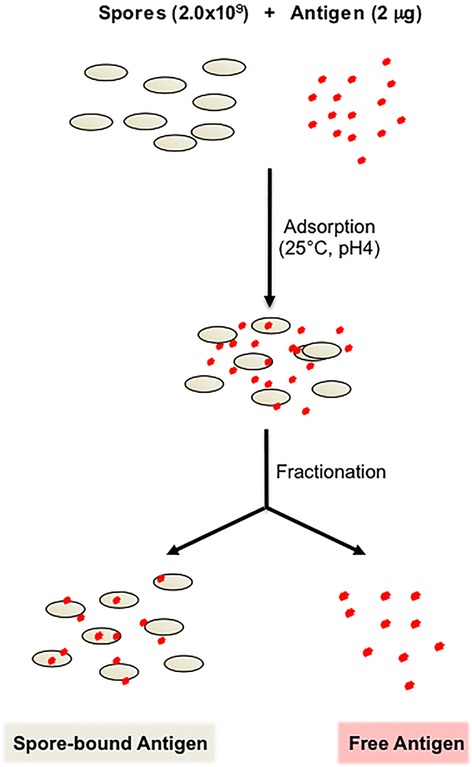
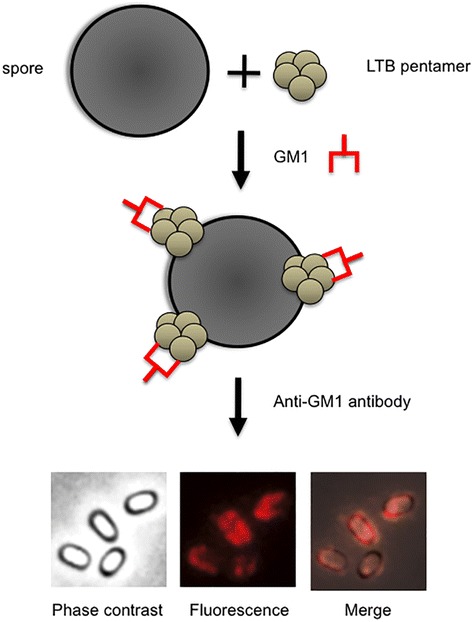
Development of mucosal vaccines strongly relies on an efficient delivery system and, over the years, a variety of approaches based on phages, bacteria or synthetic nanoparticles have been proposed to display and deliver antigens. The spore of Bacillus subtilis displaying heterologous antigens has also been considered as a mucosal vaccine vehicle, and shown able to conjugate some advantages of live microrganisms with some of synthetic nanoparticles. Here we review the use of non-recombinant spores of B. subtilis as a delivery system for mucosal immunizations. The non-recombinant display is based on the adsorption of heterologous molecules on the spore surface without the need of genetic manipulations, thus avoiding all concerns about the use and environmental release of genetically modified microorganisms. In addition, adsorbed molecules are stabilized and protected by the interaction with the spore, suggesting that this system could reduce the rapid degradation of the antigen, often observed with other delivery systems and identified as a major drawback of mucosal vaccines.
黏膜疫苗的开发强烈依赖于高效的递送系统,多年来,人们提出了多种基于噬菌体、细菌或合成纳米颗粒的方法来展示和递送抗原。展示异源抗原的枯草芽孢杆菌孢子也被视为一种黏膜疫苗载体,并显示出能够将活微生物的一些优点与一些合成纳米颗粒的优点相结合。在这里,我们综述了非重组枯草芽孢杆菌孢子作为黏膜免疫递送系统的应用。非重组展示基于异源分子在孢子表面的吸附,无需基因操作,从而避免了对转基因微生物使用和环境释放的所有担忧。此外,吸附的分子通过与孢子的相互作用而稳定并受到保护,这表明该系统可以减少抗原的快速降解,而抗原快速降解在其他递送系统中经常出现,并被认为是黏膜疫苗的一个主要缺点。