• 文献检索
  • 文档翻译
  • 深度研究
  • 学术资讯
  • Suppr Zotero 插件Zotero 插件
  • 邀请有礼
  • 套餐&价格
  • 历史记录
应用&插件
Suppr Zotero 插件Zotero 插件浏览器插件Mac 客户端Windows 客户端微信小程序
定价
高级版会员购买积分包购买API积分包
服务
文献检索文档翻译深度研究API 文档MCP 服务
关于我们
关于 Suppr公司介绍联系我们用户协议隐私条款
关注我们

Suppr 超能文献

核心技术专利:CN118964589B侵权必究
粤ICP备2023148730 号-1Suppr @ 2026

文献检索

告别复杂PubMed语法,用中文像聊天一样搜索,搜遍4000万医学文献。AI智能推荐,让科研检索更轻松。

立即免费搜索

文件翻译

保留排版,准确专业,支持PDF/Word/PPT等文件格式,支持 12+语言互译。

免费翻译文档

深度研究

AI帮你快速写综述,25分钟生成高质量综述,智能提取关键信息,辅助科研写作。

立即免费体验

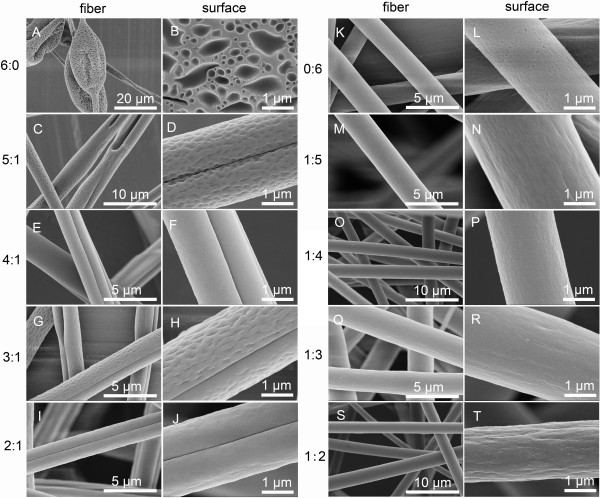
通过控制溶剂体系和相对湿度来定制电纺聚苯乙烯纳米纤维的凹槽纹理。

Tailoring the grooved texture of electrospun polystyrene nanofibers by controlling the solvent system and relative humidity.

机构信息

Key Laboratory of Textile Science & Technology, Ministry of Education, College of Textiles, Donghua University, No. 2999 North Renmin Road, Songjiang, Shanghai 201620, China.

出版信息

Nanoscale Res Lett. 2014 Jul 14;9(1):350. doi: 10.1186/1556-276X-9-350. eCollection 2014.

DOI:10.1186/1556-276X-9-350
PMID:25114643
原文链接:https://pmc.ncbi.nlm.nih.gov/articles/PMC4110521/
Abstract

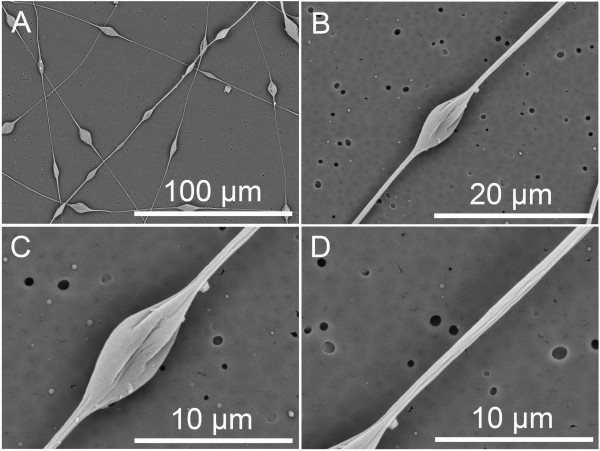
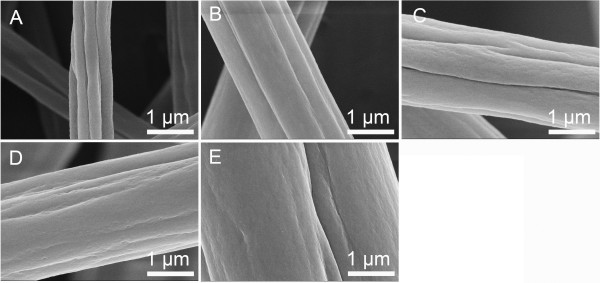
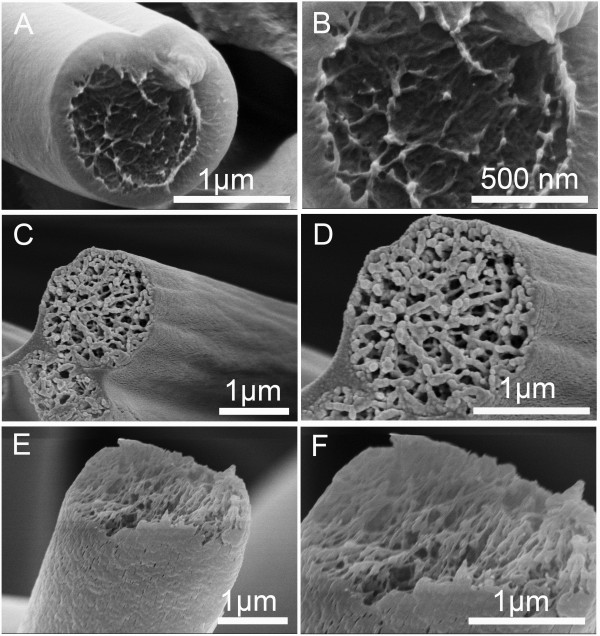
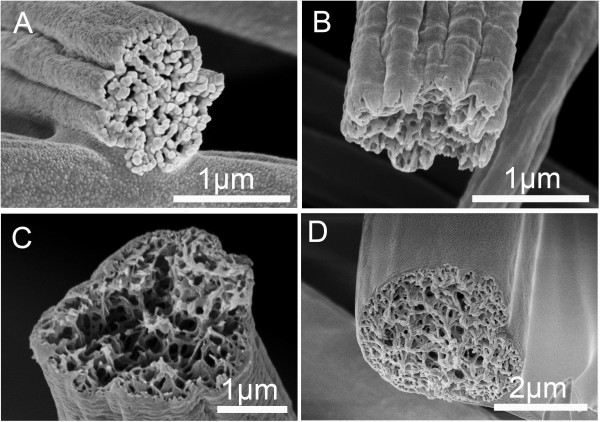
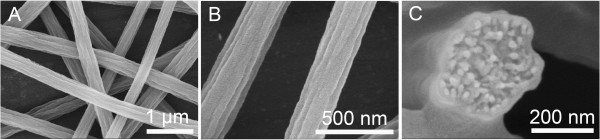
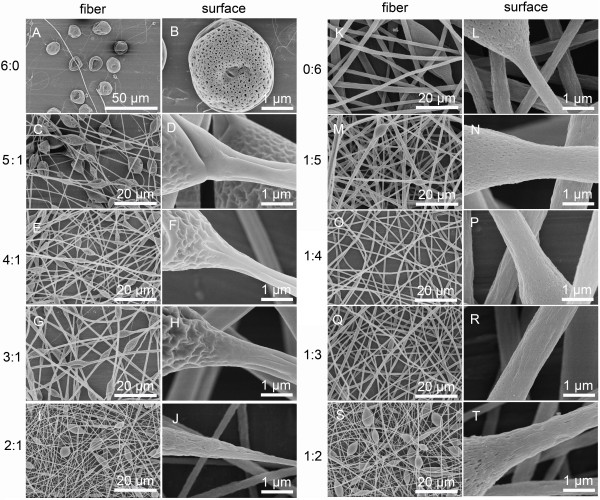
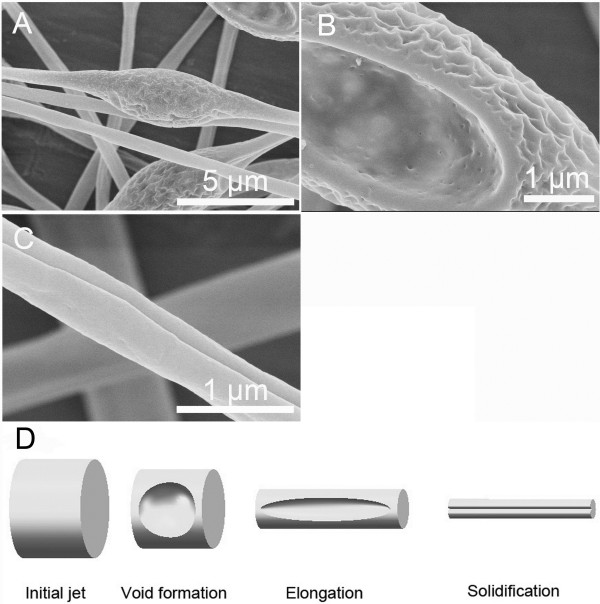
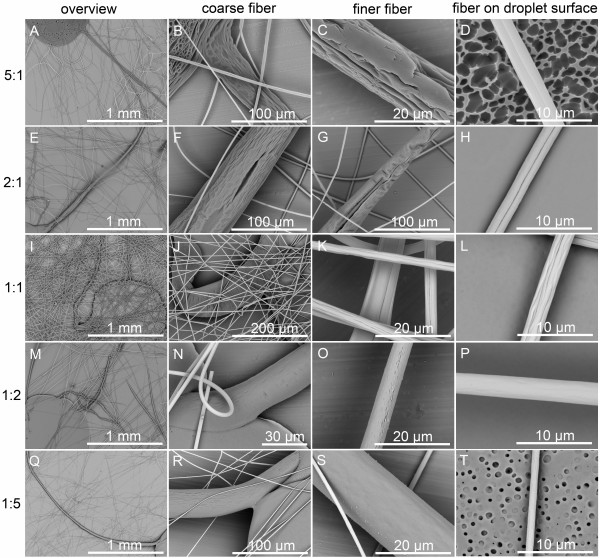
In this study, we have successfully fabricated electrospun polystyrene (PS) nanofibers having a diameter of 326 ± 50 nm with a parallel grooved texture using a mixed solvent of tetrahydrofuran (THF) and N,N-dimethylformamide (DMF). We discovered that solvent system, solution concentration, and relative humidity were the three key factors to the formation of grooved texture and the diameter of nanofibers. We demonstrated that grooved nanofibers with desired properties (e.g., different numbers of grooves, widths between two adjacent grooves, and depths of grooves) could be electrospun under certain conditions. When THF/DMF ratio was higher than 2:1, the formation mechanism of single grooved texture should be attributed to the formation of voids on the jet surface at the early stage of electrospinning and subsequent elongation and solidification of the voids into a line surface structure. When THF/DMF ratio was 1:1, the formation mechanism of grooved texture should be ascribed to the formation of wrinkled surface on the jet surface at the early stage of electrospinning and subsequent elongation into a grooved texture. Such findings can serve as guidelines for the preparation of grooved nanofibers with desired secondary morphology.

摘要

在这项研究中,我们成功地使用四氢呋喃(THF)和 N,N-二甲基甲酰胺(DMF)的混合溶剂制备了具有 326±50nm 直径的平行沟槽纹理的电纺聚苯乙烯(PS)纳米纤维。我们发现溶剂体系、溶液浓度和相对湿度是形成沟槽纹理和纳米纤维直径的三个关键因素。我们证明,在一定条件下可以电纺出具有所需性能(例如,不同数量的沟槽、相邻沟槽之间的宽度和沟槽的深度)的沟槽纳米纤维。当 THF/DMF 比例高于 2:1 时,单沟槽纹理的形成机制应该归因于在静电纺丝的早期阶段在射流表面上形成空隙,以及随后空隙的伸长和固化成线状表面结构。当 THF/DMF 比例为 1:1 时,沟槽纹理的形成机制应该归因于在静电纺丝的早期阶段在射流表面上形成皱纹表面,以及随后伸长成沟槽纹理。这些发现可以为制备具有所需二次形态的沟槽纳米纤维提供指导。
https://cdn.ncbi.nlm.nih.gov/pmc/blobs/3c21/4110521/a9e794cfd65b/1556-276X-9-350-9.jpg
https://cdn.ncbi.nlm.nih.gov/pmc/blobs/3c21/4110521/9fc46bc2a912/1556-276X-9-350-1.jpg
https://cdn.ncbi.nlm.nih.gov/pmc/blobs/3c21/4110521/79dbf50ed954/1556-276X-9-350-2.jpg
https://cdn.ncbi.nlm.nih.gov/pmc/blobs/3c21/4110521/8c23400f4abe/1556-276X-9-350-3.jpg
https://cdn.ncbi.nlm.nih.gov/pmc/blobs/3c21/4110521/457e7a37299f/1556-276X-9-350-4.jpg
https://cdn.ncbi.nlm.nih.gov/pmc/blobs/3c21/4110521/b681e11411f4/1556-276X-9-350-5.jpg
https://cdn.ncbi.nlm.nih.gov/pmc/blobs/3c21/4110521/6de046cb6ff2/1556-276X-9-350-6.jpg
https://cdn.ncbi.nlm.nih.gov/pmc/blobs/3c21/4110521/ff12e6057e15/1556-276X-9-350-7.jpg
https://cdn.ncbi.nlm.nih.gov/pmc/blobs/3c21/4110521/2d72aac755a2/1556-276X-9-350-8.jpg
https://cdn.ncbi.nlm.nih.gov/pmc/blobs/3c21/4110521/a9e794cfd65b/1556-276X-9-350-9.jpg
https://cdn.ncbi.nlm.nih.gov/pmc/blobs/3c21/4110521/9fc46bc2a912/1556-276X-9-350-1.jpg
https://cdn.ncbi.nlm.nih.gov/pmc/blobs/3c21/4110521/79dbf50ed954/1556-276X-9-350-2.jpg
https://cdn.ncbi.nlm.nih.gov/pmc/blobs/3c21/4110521/8c23400f4abe/1556-276X-9-350-3.jpg
https://cdn.ncbi.nlm.nih.gov/pmc/blobs/3c21/4110521/457e7a37299f/1556-276X-9-350-4.jpg
https://cdn.ncbi.nlm.nih.gov/pmc/blobs/3c21/4110521/b681e11411f4/1556-276X-9-350-5.jpg
https://cdn.ncbi.nlm.nih.gov/pmc/blobs/3c21/4110521/6de046cb6ff2/1556-276X-9-350-6.jpg
https://cdn.ncbi.nlm.nih.gov/pmc/blobs/3c21/4110521/ff12e6057e15/1556-276X-9-350-7.jpg
https://cdn.ncbi.nlm.nih.gov/pmc/blobs/3c21/4110521/2d72aac755a2/1556-276X-9-350-8.jpg
https://cdn.ncbi.nlm.nih.gov/pmc/blobs/3c21/4110521/a9e794cfd65b/1556-276X-9-350-9.jpg

相似文献

1
Tailoring the grooved texture of electrospun polystyrene nanofibers by controlling the solvent system and relative humidity.通过控制溶剂体系和相对湿度来定制电纺聚苯乙烯纳米纤维的凹槽纹理。
Nanoscale Res Lett. 2014 Jul 14;9(1):350. doi: 10.1186/1556-276X-9-350. eCollection 2014.
2
Electrospinning of Grooved Polystyrene Fibers: Effect of Solvent Systems.带凹槽聚苯乙烯纤维的静电纺丝:溶剂体系的影响
Nanoscale Res Lett. 2015 Dec;10(1):949. doi: 10.1186/s11671-015-0949-5. Epub 2015 May 27.
3
Fabrication, characterization and application of electrospun polysulfone membrane for phosphate ion removal in real samples.静电纺丝聚砜膜的制备、表征及其在实际样品中除磷的应用。
Chemosphere. 2022 Sep;303(Pt 3):135228. doi: 10.1016/j.chemosphere.2022.135228. Epub 2022 Jun 4.
4
Controlling the Secondary Surface Morphology of Electrospun PVDF Nanofibers by Regulating the Solvent and Relative Humidity.通过调节溶剂和相对湿度来控制电纺聚偏氟乙烯纳米纤维的二次表面形态
Nanoscale Res Lett. 2018 Sep 12;13(1):285. doi: 10.1186/s11671-018-2705-0.
5
Maneuvering the internal porosity and surface morphology of electrospun polystyrene yarns by controlling the solvent and relative humidity.通过控制溶剂和相对湿度来改变静电纺聚苯乙烯纤维的内部孔隙率和表面形貌。
Langmuir. 2013 Jun 11;29(23):7070-8. doi: 10.1021/la400747y. Epub 2013 Apr 4.
6
A Solvent System Involved Fabricating Electrospun Polyurethane Nanofibers for Biomedical Applications.一种用于生物医学应用的制备电纺聚氨酯纳米纤维的溶剂体系。
Polymers (Basel). 2020 Dec 18;12(12):3038. doi: 10.3390/polym12123038.
7
Effects of ambient relative humidity and solvent properties on the electrospinning of pure hyaluronic acid nanofibers.环境相对湿度和溶剂性质对纯透明质酸纳米纤维静电纺丝的影响。
J Nanosci Nanotechnol. 2013 Jul;13(7):4752-8. doi: 10.1166/jnn.2013.7197.
8
Electrospinnability of Poly Lactic-co-glycolic Acid (PLGA): the Role of Solvent Type and Solvent Composition.聚乳酸-乙醇酸共聚物(PLGA)的电纺性能:溶剂类型和溶剂组成的作用
Pharm Res. 2017 Apr;34(4):738-749. doi: 10.1007/s11095-017-2100-z. Epub 2017 Jan 24.
9
Molecular orientation evolution and solvent evaporation during electrospinning of atactic polystyrene using real-time Raman spectroscopy.实时拉曼光谱研究无规聚苯乙烯静电纺丝过程中的分子取向演变和溶剂挥发。
Appl Spectrosc. 2011 Aug;65(8):858-65. doi: 10.1366/11-06235.
10
Advancing Nanofiber Research: Assessing Nonsolvent Contributions to Structure Using Coaxial Electrospinning.推进纳米纤维研究:使用同轴静电纺丝评估非溶剂对结构的贡献。
Langmuir. 2023 Aug 8;39(31):10881-10891. doi: 10.1021/acs.langmuir.3c01038. Epub 2023 Jun 30.

引用本文的文献

1
Preparation Methods and Multifunctional Applications of Functionalized Electrospun Nanofibers for Biomedicine.用于生物医学的功能化电纺纳米纤维的制备方法及多功能应用
Nanomaterials (Basel). 2025 Jun 11;15(12):909. doi: 10.3390/nano15120909.
2
Tenax-Based Electrospun Fibrous Membranes for Efficient VOC Sampling.用于高效挥发性有机化合物采样的基于Tenax的电纺纤维膜
Macromol Rapid Commun. 2025 Jul;46(13):e2400969. doi: 10.1002/marc.202400969. Epub 2025 Mar 3.
3
Wound Dressing with Electrospun Core-Shell Nanofibers: From Material Selection to Synthesis.

本文引用的文献

1
Electro-spinning/netting: A strategy for the fabrication of three-dimensional polymer nano-fiber/nets.静电纺丝/编织:一种制备三维聚合物纳米纤维/网的策略。
Prog Mater Sci. 2013 Oct;58(8):1173-1243. doi: 10.1016/j.pmatsci.2013.05.001. Epub 2013 May 26.
2
Maneuvering the internal porosity and surface morphology of electrospun polystyrene yarns by controlling the solvent and relative humidity.通过控制溶剂和相对湿度来改变静电纺聚苯乙烯纤维的内部孔隙率和表面形貌。
Langmuir. 2013 Jun 11;29(23):7070-8. doi: 10.1021/la400747y. Epub 2013 Apr 4.
3
Fiber-based tissue engineering: Progress, challenges, and opportunities.
具有电纺核壳纳米纤维的伤口敷料:从材料选择到合成
Polymers (Basel). 2024 Sep 5;16(17):2526. doi: 10.3390/polym16172526.
4
Roxb. Essential Oil-Loaded Electrospun Poly(lactic acid)/Poly(ethylene oxide) Fiber Blend Membrane for Antibacterial Wound Dressing Application.用于抗菌伤口敷料应用的罗克斯伯里精油负载电纺聚乳酸/聚环氧乙烷纤维混合膜。
Membranes (Basel). 2021 Aug 24;11(9):648. doi: 10.3390/membranes11090648.
5
Controlling the Secondary Surface Morphology of Electrospun PVDF Nanofibers by Regulating the Solvent and Relative Humidity.通过调节溶剂和相对湿度来控制电纺聚偏氟乙烯纳米纤维的二次表面形态
Nanoscale Res Lett. 2018 Sep 12;13(1):285. doi: 10.1186/s11671-018-2705-0.
6
The Use of Finite Element Analyses to Design and Fabricate Three-Dimensional Scaffolds for Skeletal Tissue Engineering.利用有限元分析设计和制造用于骨组织工程的三维支架。
Front Bioeng Biotechnol. 2017 May 17;5:30. doi: 10.3389/fbioe.2017.00030. eCollection 2017.
7
Advancing Tissue Engineering: A Tale of Nano-, Micro-, and Macroscale Integration.推进组织工程学:一个关于纳米、微米和宏观尺度整合的故事。
Small. 2016 Apr 27;12(16):2130-45. doi: 10.1002/smll.201501798. Epub 2015 Dec 3.
8
Electrospinning of Grooved Polystyrene Fibers: Effect of Solvent Systems.带凹槽聚苯乙烯纤维的静电纺丝:溶剂体系的影响
Nanoscale Res Lett. 2015 Dec;10(1):949. doi: 10.1186/s11671-015-0949-5. Epub 2015 May 27.
纤维基组织工程:进展、挑战与机遇。
Biotechnol Adv. 2013 Sep-Oct;31(5):669-87. doi: 10.1016/j.biotechadv.2012.11.007. Epub 2012 Nov 27.
4
Rice grain-shaped TiO2 mesostructures by electrospinning for dye-sensitized solar cells.电纺丝法制备大米状 TiO2 介孔结构用于染料敏化太阳能电池
Chem Commun (Camb). 2010 Oct 21;46(39):7421-3. doi: 10.1039/c0cc01490g. Epub 2010 Aug 27.
5
Designing superoleophobic surfaces.设计超疏油表面。
Science. 2007 Dec 7;318(5856):1618-22. doi: 10.1126/science.1148326.