Liu Wanjun, Huang Chen, Jin Xiangyu
Engineering Research Center of Technical Textiles, Ministry of Education, College of Textiles, Donghua University, No. 2999 North Renmin Road, Songjiang, Shanghai, 201620, China,
Nanoscale Res Lett. 2015 Dec;10(1):949. doi: 10.1186/s11671-015-0949-5. Epub 2015 May 27.
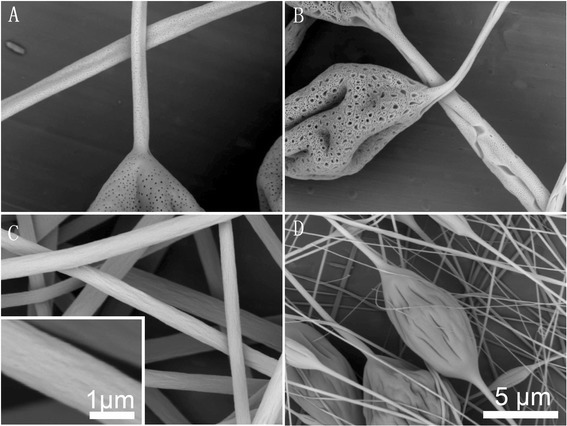
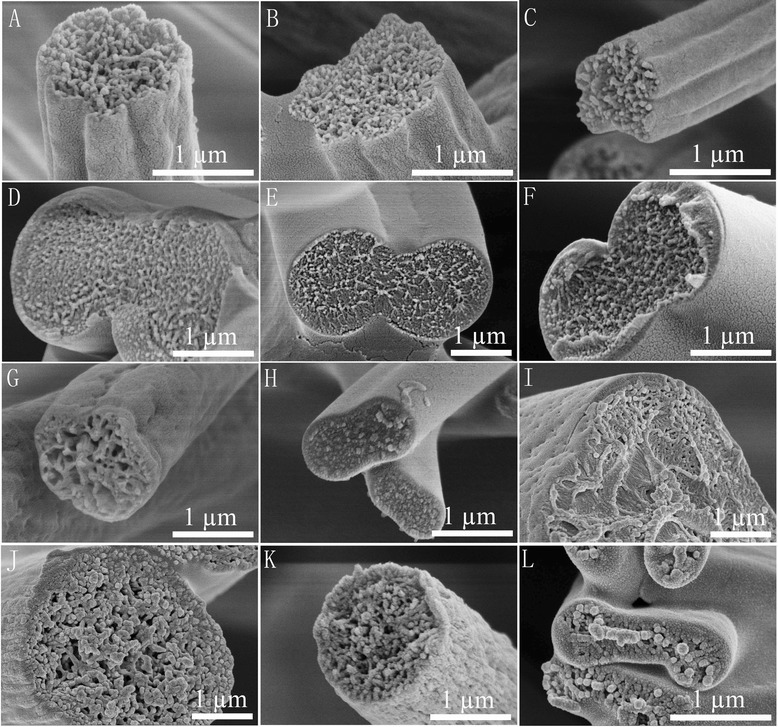
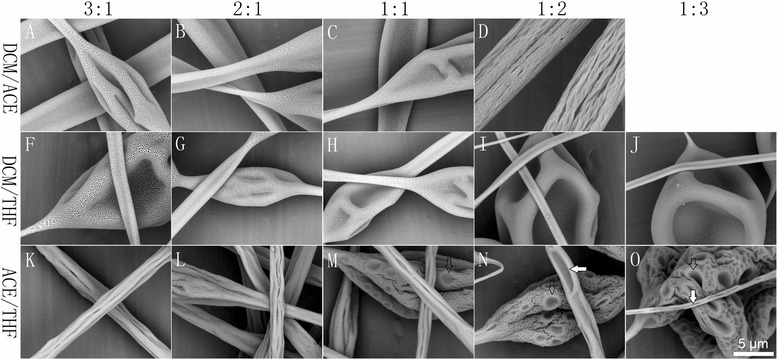
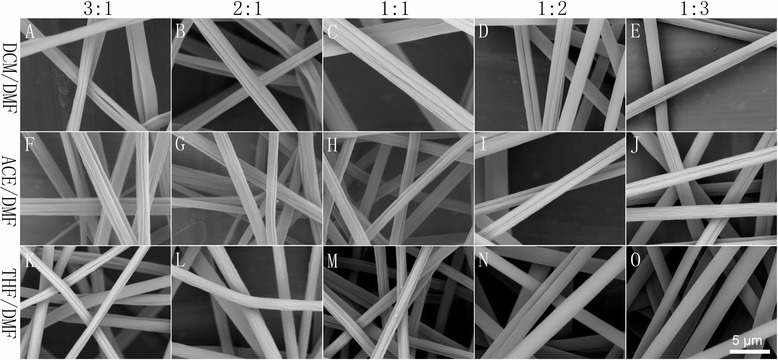
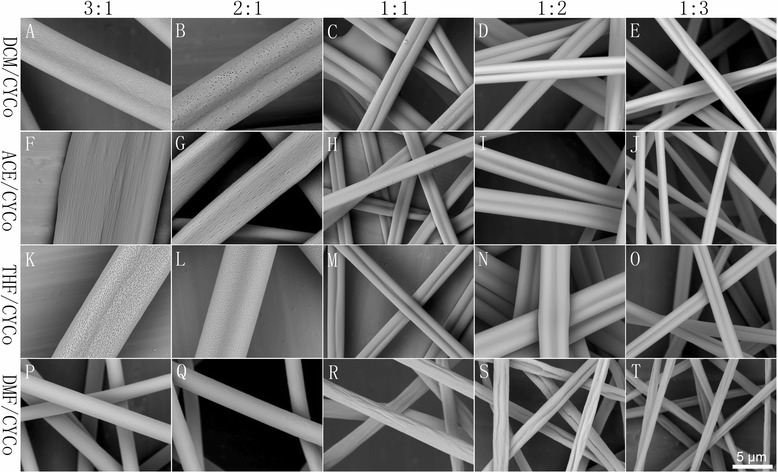
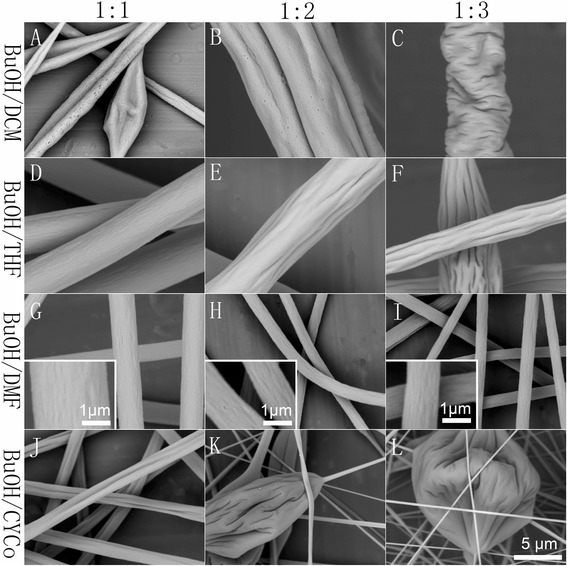
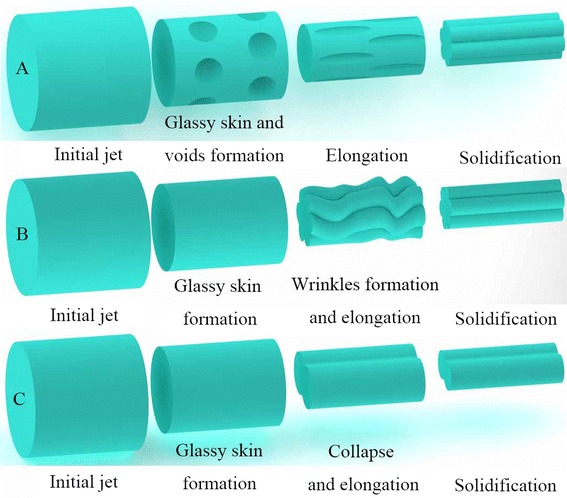
Secondary surface texture is of great significance to morphological variety and further expands the application areas of electrospun nanofibers. This paper presents the possibility of directly electrospinning grooved polystyrene (PS) fibers using both single and binary solvent systems. Solvents were classified as low boiling point solvent (LBPS): dichloromethane (DCM), acetone (ACE), and tetrahydrofuran (THF); high boiling point solvent (HBPS): N,N-dimethylformamide (DMF) and cyclohexanone (CYCo); and non-solvent (NS): 1-butanol (BuOH). By the systematic selection and combination of these solvents at given parameters, we found that single solvent systems produced non-grooved fibers. LBPS/DMF solvent systems resulted in fibers with different grooved textures, while LBPS/CYCo led to fibers with double grooved texture. Grooved fibers can also be fabricated from LBPS/LBPS, NS/LBPS, and NS/HBPS systems under specific conditions. The results indicated that the difference of evaporation rate (DER) between the two solvents played a key role in the formation of grooved texture. The formation of this unique texture should be attributed to three separate mechanisms, namely void-based elongation, wrinkle-based elongation, and collapsed jet-based elongation. Our findings can serve as guidelines for the preparation of ultrafine fibers with grooved secondary texture.
二次表面纹理对形态多样性具有重要意义,并进一步拓展了电纺纳米纤维的应用领域。本文介绍了使用单一和二元溶剂体系直接静电纺丝制备带沟槽聚苯乙烯(PS)纤维的可能性。溶剂分为低沸点溶剂(LBPS):二氯甲烷(DCM)、丙酮(ACE)和四氢呋喃(THF);高沸点溶剂(HBPS):N,N-二甲基甲酰胺(DMF)和环己酮(CYCo);以及非溶剂(NS):正丁醇(BuOH)。通过在给定参数下对这些溶剂进行系统的选择和组合,我们发现单一溶剂体系产生的是无沟槽纤维。LBPS/DMF溶剂体系产生具有不同沟槽纹理的纤维,而LBPS/CYCo则产生具有双沟槽纹理的纤维。在特定条件下,也可以由LBPS/LBPS、NS/LBPS和NS/HBPS体系制备带沟槽纤维。结果表明,两种溶剂之间的蒸发速率差异(DER)在沟槽纹理的形成中起关键作用。这种独特纹理的形成应归因于三种不同的机制,即基于孔隙的伸长、基于褶皱的伸长和基于塌陷射流的伸长。我们的研究结果可为制备具有带沟槽二次纹理的超细纤维提供指导。