Schmidt Stephen L, Iyengar Apoorva K, Foulser A Alban, Boyle Michael R, Fröhlich Flavio
Department of Psychiatry, University of North Carolina at Chapel Hill, Chapel Hill, NC 27599, USA; Department of Biomedical Engineering, University of North Carolina at Chapel Hill, Chapel Hill, NC 27599, USA.
Department of Biology, University of North Carolina at Chapel Hill, Chapel Hill, NC 27599, USA.
Brain Stimul. 2014 Nov-Dec;7(6):878-89. doi: 10.1016/j.brs.2014.07.033. Epub 2014 Jul 19.
Transcranial alternating current stimulation (tACS) is a non-invasive brain stimulation modality that may modulate cognition by enhancing endogenous neocortical oscillations by application of sine-wave electric fields. Yet, the role of endogenous network activity in enabling and shaping the effects of tACS has remained unclear.
We combined optogenetic stimulation and multichannel slice electrophysiology to elucidate how the effect of a weak sine-wave electric field depends on the ongoing cortical oscillatory activity. We hypothesized that endogenous cortical oscillations constrain neuromodulation by tACS.
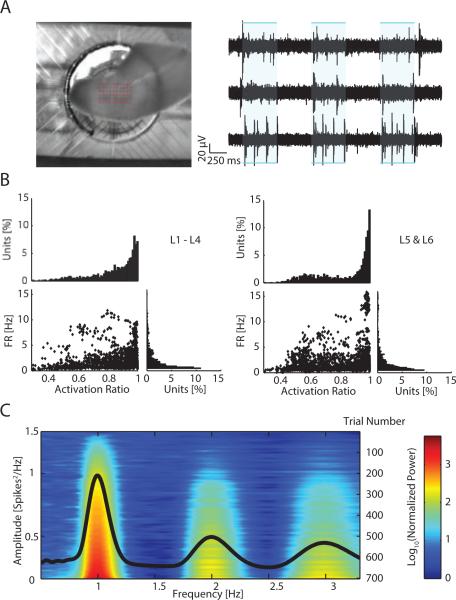
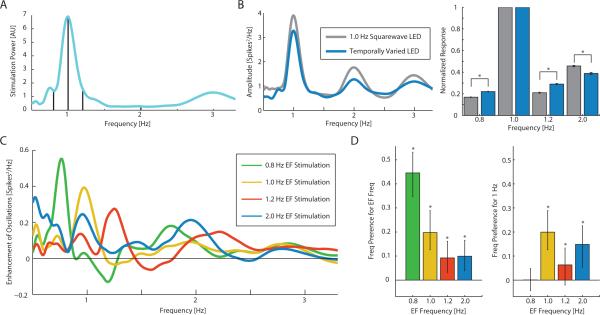
We studied the effect of weak sine-wave electric fields on oscillatory activity in mouse neocortical slices. Optogenetic control of the network activity enabled the generation of in vivo-like cortical oscillations for studying the temporal relationship between network activity and sine-wave electric field stimulation.
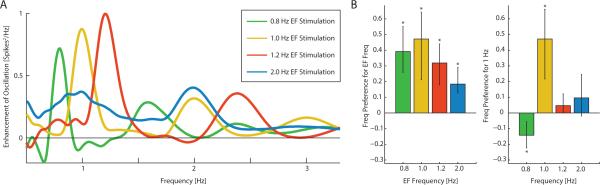
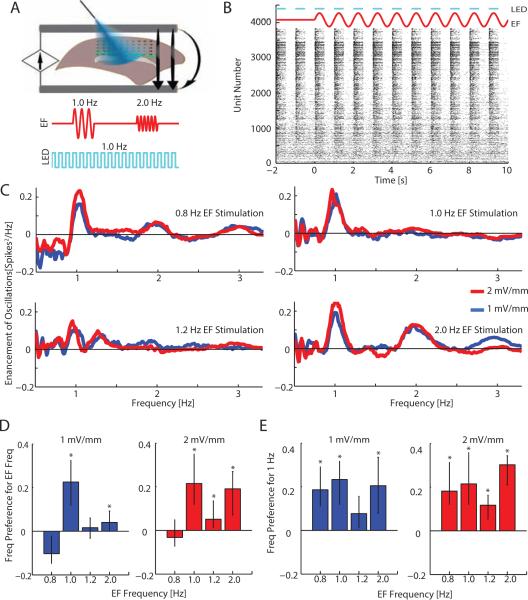
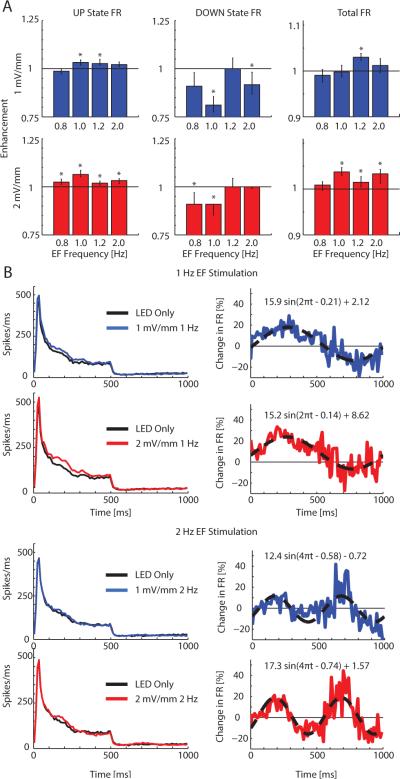
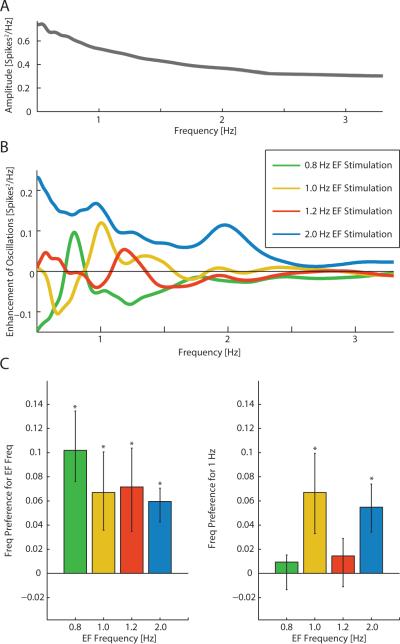
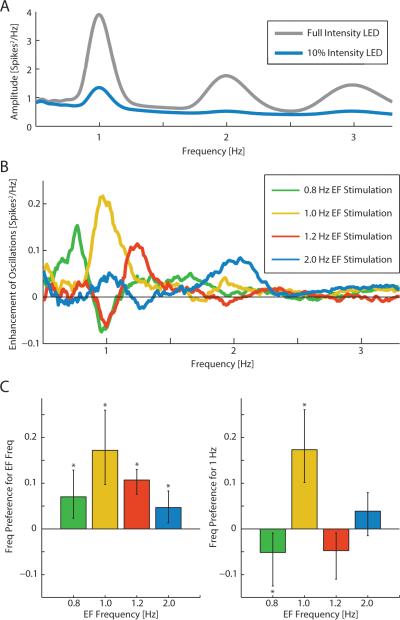
Weak electric fields enhanced endogenous oscillations but failed to induce a frequency shift of the ongoing oscillation for stimulation frequencies that were not matched to the endogenous oscillation. This constraint on the effect of electric field stimulation imposed by endogenous network dynamics was limited to the case of weak electric fields targeting in vivo-like network dynamics. Together, these results suggest that the key mechanism of tACS may be enhancing, but not overriding, intrinsic network dynamics.
Our results contribute to understanding the inconsistent tACS results from human studies and propose that stimulation precisely adjusted in frequency to the endogenous oscillations is key to rational design of non-invasive brain stimulation paradigms.
经颅交流电刺激(tACS)是一种非侵入性脑刺激方式,可通过施加正弦波电场增强内源性新皮质振荡来调节认知。然而,内源性网络活动在促成和塑造tACS效应方面的作用仍不明确。
我们结合光遗传学刺激和多通道切片电生理学,以阐明弱正弦波电场的效应如何依赖于正在进行的皮质振荡活动。我们假设内源性皮质振荡会限制tACS的神经调节作用。
我们研究了弱正弦波电场对小鼠新皮质切片振荡活动的影响。通过光遗传学控制网络活动能够产生类似体内的皮质振荡,用于研究网络活动与正弦波电场刺激之间的时间关系。
对于与内源性振荡不匹配的刺激频率,弱电场增强了内源性振荡,但未能诱导正在进行的振荡发生频率偏移。内源性网络动力学对电场刺激效应的这种限制仅限于针对类似体内网络动力学的弱电场情况。总之,这些结果表明tACS的关键机制可能是增强而非凌驾于内在网络动力学之上。
我们的结果有助于理解人体研究中tACS结果不一致的情况,并提出频率精确调整至内源性振荡的刺激是合理设计非侵入性脑刺激范式的关键。