Fröhlich Flavio, Schmidt Stephen L
Department of Psychiatry, University of North Carolina Chapel Hill, NC, USA ; Department of Cell Biology and Physiology, University of North Carolina Chapel Hill, NC, USA ; Department of Biomedical Engineering, University of North Carolina Chapel Hill, NC, USA ; Neurobiology Curriculum, University of North Carolina Chapel Hill, NC, USA ; Neuroscience Center, University of North Carolina Chapel Hill, NC, USA.
Front Hum Neurosci. 2013 Nov 26;7:804. doi: 10.3389/fnhum.2013.00804.
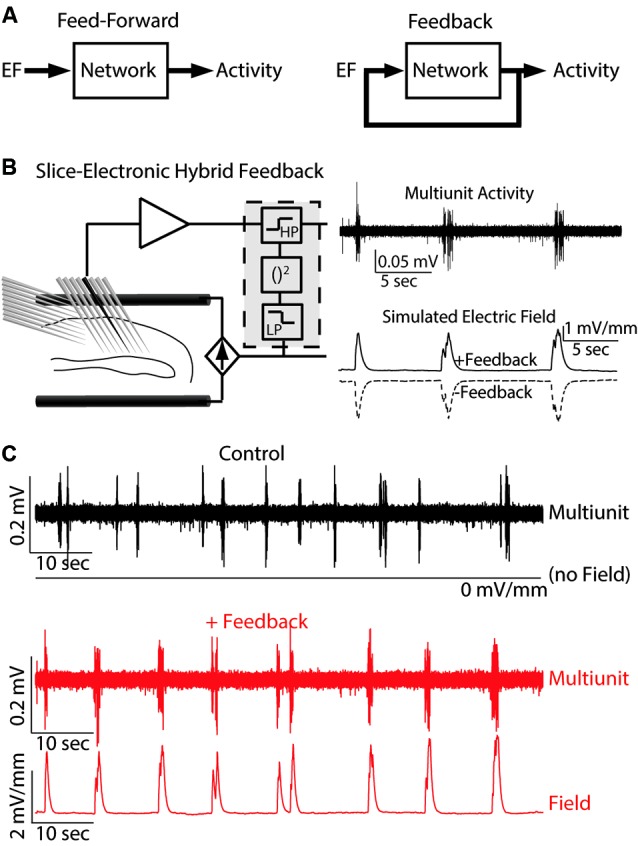
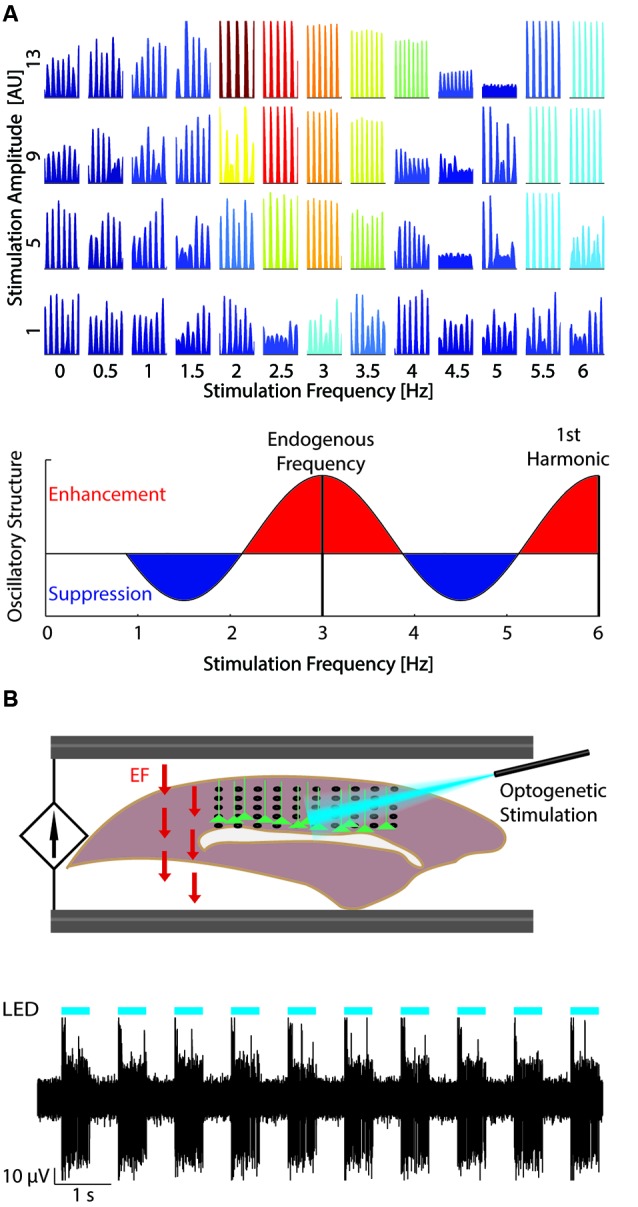
Transcranial current stimulation (TCS) is a promising method of non-invasive brain stimulation to modulate cortical network dynamics. Preliminary studies have demonstrated the ability of TCS to enhance cognition and reduce symptoms in both neurological and psychiatric illnesses. Despite the encouraging results of these studies, the mechanisms by which TCS and endogenous network dynamics interact remain poorly understood. Here, we propose that the development of the next generation of TCS paradigms with increased efficacy requires such mechanistic understanding of how weak electric fields (EFs) imposed by TCS interact with the nonlinear dynamics of large-scale cortical networks. We highlight key recent advances in the study of the interaction dynamics between TCS and cortical network activity. In particular, we illustrate an interdisciplinary approach that bridges neurobiology and electrical engineering. We discuss the use of (1) hybrid biological-electronic experimental approaches to disentangle feedback interactions; (2) large-scale computer simulations for the study of weak global perturbations imposed by TCS; and (3) optogenetic manipulations informed by dynamic systems theory to probe network dynamics. Together, we here provide the foundation for the use of rational design for the development of the next generation of TCS neurotherapeutics.
经颅电流刺激(TCS)是一种很有前景的非侵入性脑刺激方法,用于调节皮质网络动力学。初步研究已证明TCS有能力增强认知并减轻神经疾病和精神疾病的症状。尽管这些研究取得了令人鼓舞的结果,但TCS与内源性网络动力学相互作用的机制仍知之甚少。在此,我们提出,要开发出疗效更高的下一代TCS范式,就需要对TCS施加的弱电场(EFs)如何与大规模皮质网络的非线性动力学相互作用有这样的机制性理解。我们重点介绍了TCS与皮质网络活动相互作用动力学研究中最近的关键进展。特别是,我们阐述了一种跨学科方法,该方法架起了神经生物学和电气工程之间的桥梁。我们讨论了使用(1)混合生物 - 电子实验方法来解开反馈相互作用;(2)大规模计算机模拟来研究TCS施加的弱全局扰动;以及(3)基于动态系统理论的光遗传学操作来探究网络动力学。我们共同为使用合理设计来开发下一代TCS神经疗法奠定了基础。