Ashtekar Kumar Dilip, Marzijarani Nastaran Salehi, Jaganathan Arvind, Holmes Daniel, Jackson James E, Borhan Babak
Engineering and Process Sciences, The Dow Chemical Company , Midland, Michigan 48674, United States.
J Am Chem Soc. 2014 Sep 24;136(38):13355-62. doi: 10.1021/ja506889c. Epub 2014 Sep 11.
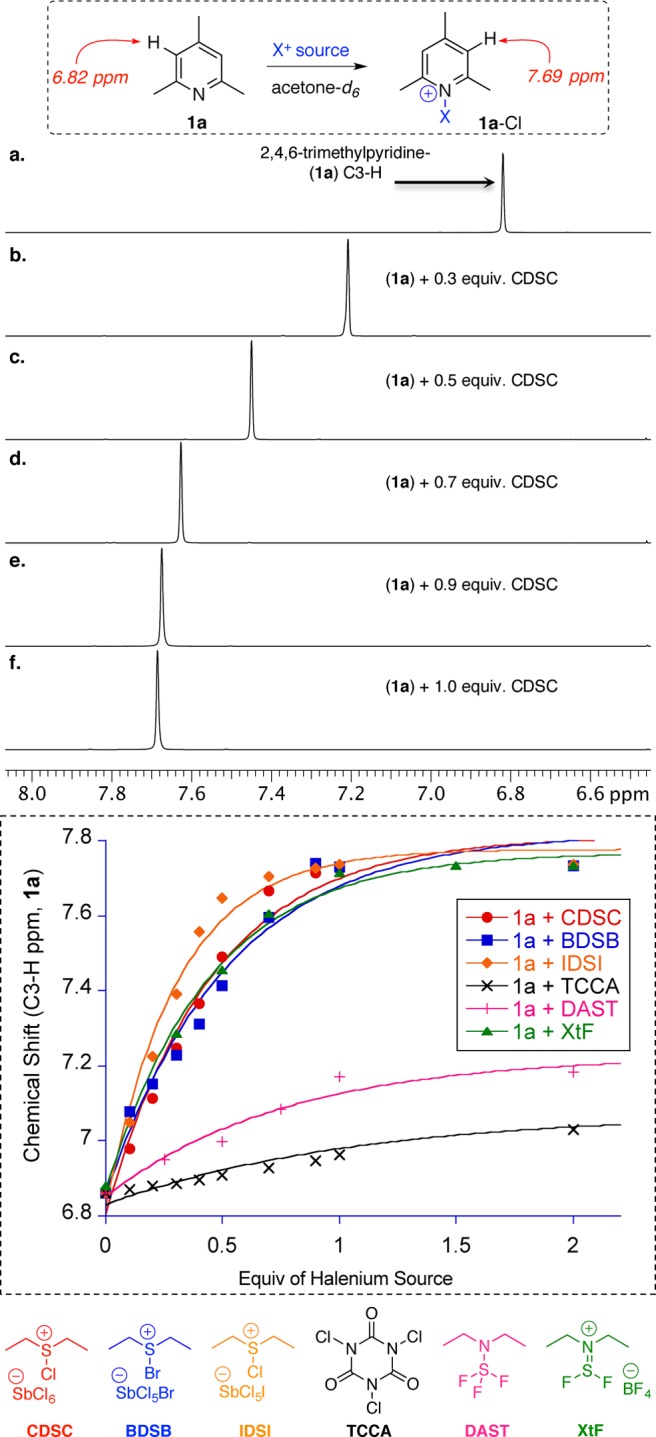
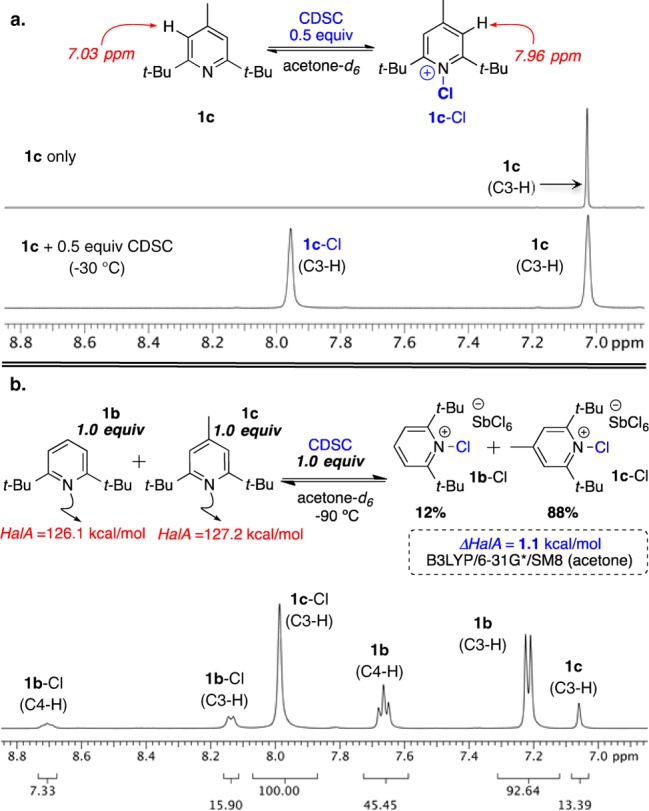
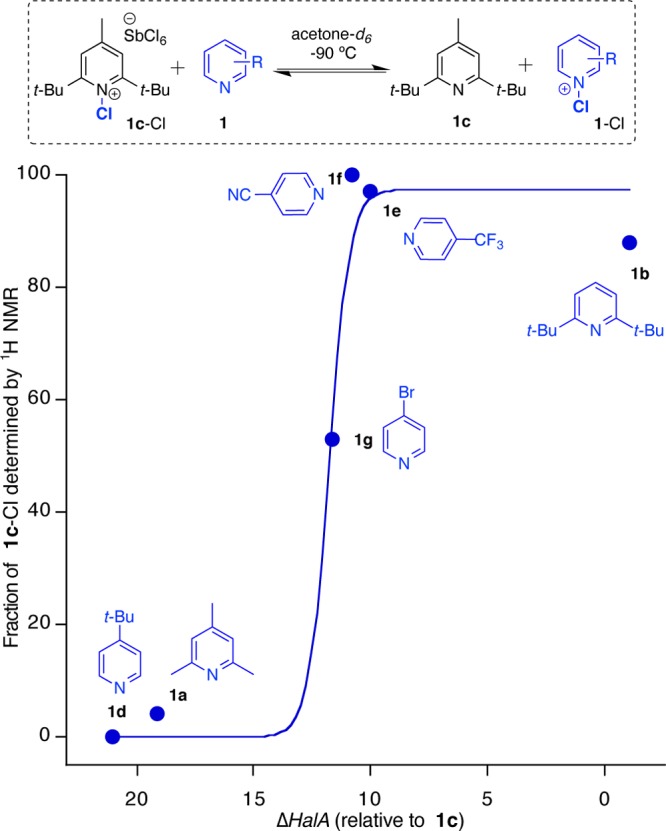
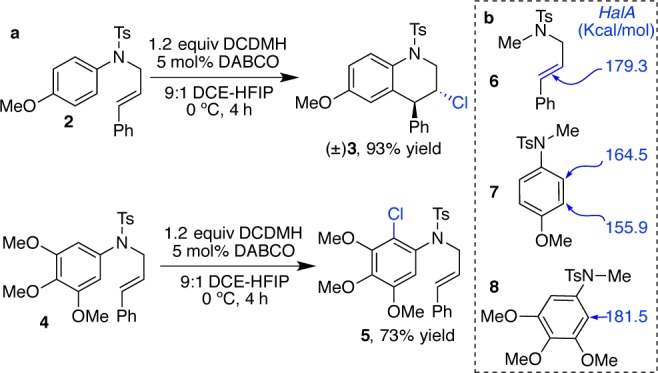
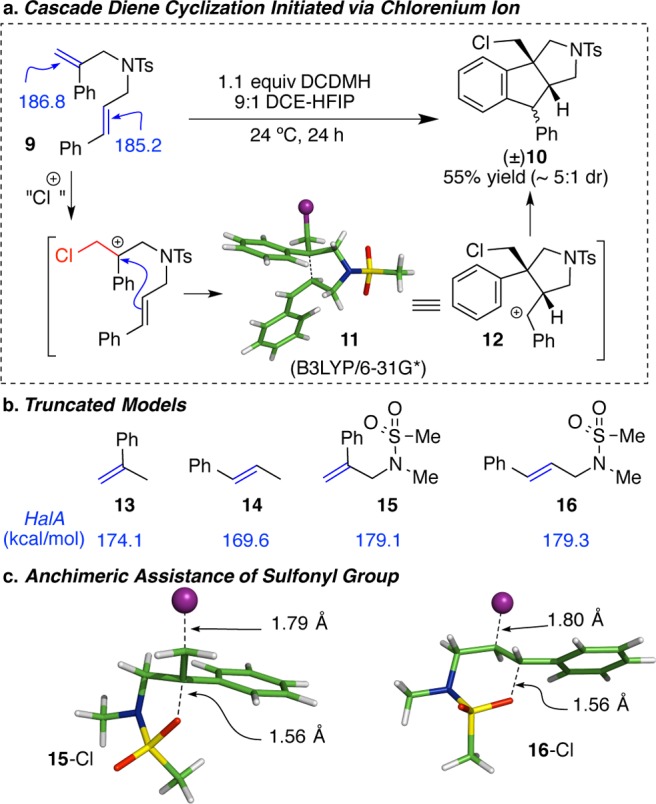
We introduce a previously unexplored parameter-halenium affinity (HalA)- as a quantitative descriptor of the bond strengths of various functional groups to halenium ions. The HalA scale ranks potential halenium ion acceptors based on their ability to stabilize a "free halenium ion". Alkenes in particular but other Lewis bases as well, such as amines, amides, carbonyls, and ether oxygen atoms, etc., have been classified on the HalA scale. This indirect approach enables a rapid and straightforward prediction of chemoselectivity for systems involved in halofunctionalization reactions that have multiple nucleophilic sites. The influences of subtle electronic and steric variations, as well as the less predictable anchimeric and stereoelectronic effects, are intrinsically accounted for by HalA computations, providing quantitative assessments beyond simple "chemical intuition". This combined theoretical-experimental approach offers an expeditious means of predicting and identifying unprecedented reactions.
我们引入了一个此前未被探索的参数——卤鎓离子亲和力(HalA)——作为各种官能团与卤鎓离子键强度的定量描述符。HalA标度根据潜在卤鎓离子受体稳定“游离卤鎓离子”的能力对其进行排名。特别是烯烃,但其他路易斯碱,如胺、酰胺、羰基和醚氧原子等,也已在HalA标度上进行了分类。这种间接方法能够快速、直接地预测涉及具有多个亲核位点的卤官能化反应体系的化学选择性。HalA计算本质上考虑了细微的电子和空间变化的影响,以及较难预测的邻基参与和立体电子效应,提供了超越简单“化学直觉”的定量评估。这种理论与实验相结合的方法提供了一种预测和识别前所未有的反应的快速手段。