Chairatana Phoom, Nolan Elizabeth M
Department of Chemistry, Massachusetts Institute of Technology , Cambridge, Massachusetts 02139, United States.
J Am Chem Soc. 2014 Sep 24;136(38):13267-76. doi: 10.1021/ja5057906. Epub 2014 Sep 12.
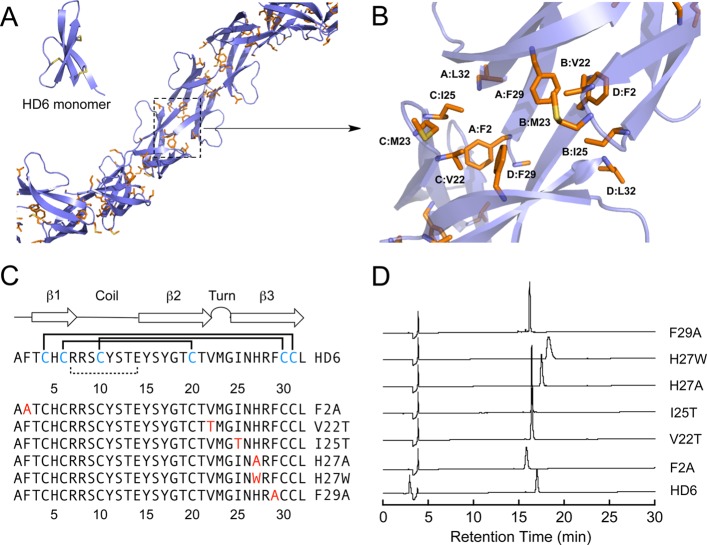
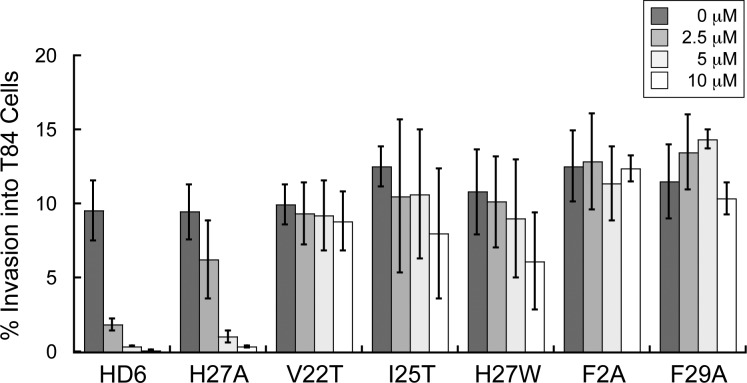
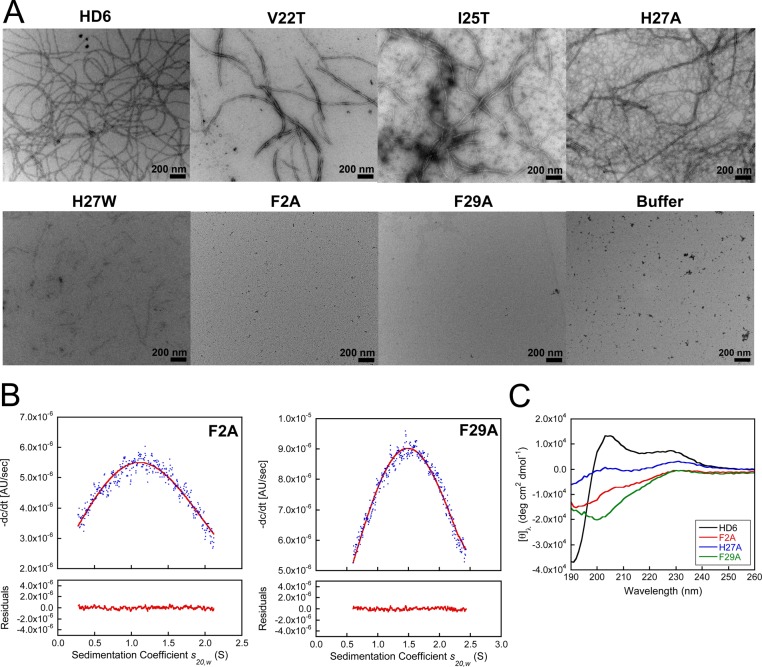
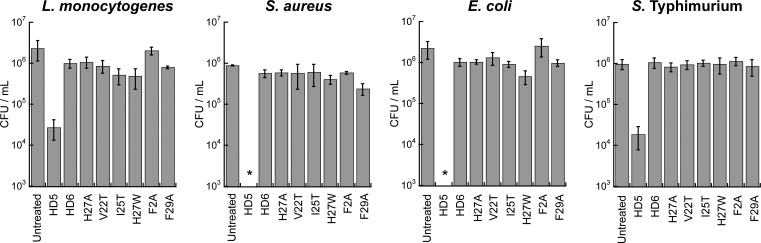
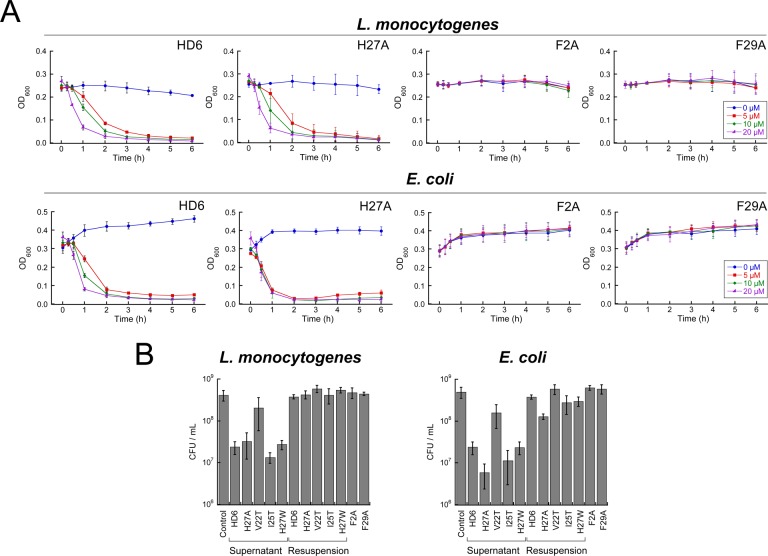
Human α-defensin 6 (HD6) is a 32-aa cysteine-rich peptide of the innate immune system. Although HD6 is a member of an antimicrobial peptide family, it exhibits negligible antibacterial activity in vitro. Rather, HD6 possesses a unique innate immune mechanism whereby it self-assembles into oligomers that capture pathogens to prevent microbial invasion of the intestinal epithelium and subsequent dissemination. Molecular-level understanding for why HD6 functions differently from other human defensins remains unclear. To further elucidate the HD6 self-assembly process and its biological activity, we developed robust protocols for obtaining native and mutant HD6 in high purity from overexpression in Escherichia coli. We combined biophysical characterization with biological assays to probe HD6 structure and function. We report that native HD6 readily self-assembles into elongated fibrils observable by transmission electron microscopy, agglutinates both Gram-negative and -positive bacteria, and prevents the human gastrointestinal pathogen Listeria monocytogenes from invading cultured mammalian cells. Mutation of hydrophobic residues (F2A, I22T, V25T, F29A) perturbs self-assembly and results in attenuated biological activity. In particular, the F2A and F29A mutants do not form fibrils under our experimental conditions and neither agglutinate bacteria nor prevent L. monocytogenes invasion. In total, our results demonstrate that the hydrophobic effect is essential for promoting HD6 self-assembly and innate immune function, and indicate that HD6 may provide host defense against Listeria in the gut. This investigation provides a timely description of how variations in amino acid sequence confer diverse physiological functions to members of the defensin family.
人α-防御素6(HD6)是一种由32个氨基酸组成的富含半胱氨酸的先天性免疫系统肽。尽管HD6是抗菌肽家族的一员,但它在体外表现出可忽略不计的抗菌活性。相反,HD6具有独特的先天性免疫机制,它能自组装成寡聚体,捕获病原体以防止微生物侵入肠道上皮并随后扩散。关于HD6为何与其他人类防御素功能不同的分子水平理解仍不清楚。为了进一步阐明HD6的自组装过程及其生物学活性,我们开发了强大的方案,用于从大肠杆菌的过表达中以高纯度获得天然和突变型HD6。我们将生物物理表征与生物学测定相结合,以探究HD6的结构和功能。我们报告说,天然HD6很容易自组装成通过透射电子显微镜可观察到的细长纤维,凝集革兰氏阴性菌和革兰氏阳性菌,并防止人类胃肠道病原体单核细胞增生李斯特菌侵入培养的哺乳动物细胞。疏水残基(F2A、I22T、V25T、F29A)的突变会扰乱自组装并导致生物学活性减弱。特别是,F2A和F29A突变体在我们的实验条件下不会形成纤维,既不凝集细菌也不阻止单核细胞增生李斯特菌的侵入。总的来说,我们的结果表明疏水作用对于促进HD6的自组装和先天性免疫功能至关重要,并表明HD6可能为肠道中的李斯特菌提供宿主防御。这项研究及时描述了氨基酸序列的变化如何赋予防御素家族成员不同的生理功能。