Zorman Sylvain, Rebane Aleksander A, Ma Lu, Yang Guangcan, Molski Matthew A, Coleman Jeff, Pincet Frederic, Rothman James E, Zhang Yongli
Department of Cell Biology, Yale University School of Medicine, New Haven, United States.
Department of Physics, Yale University, New Haven, United States.
Elife. 2014 Sep 1;3:e03348. doi: 10.7554/eLife.03348.
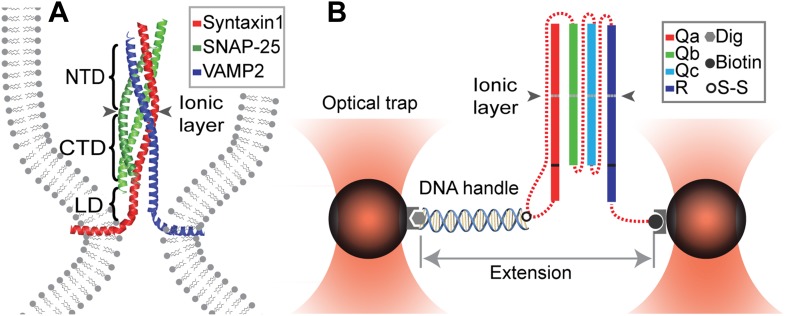
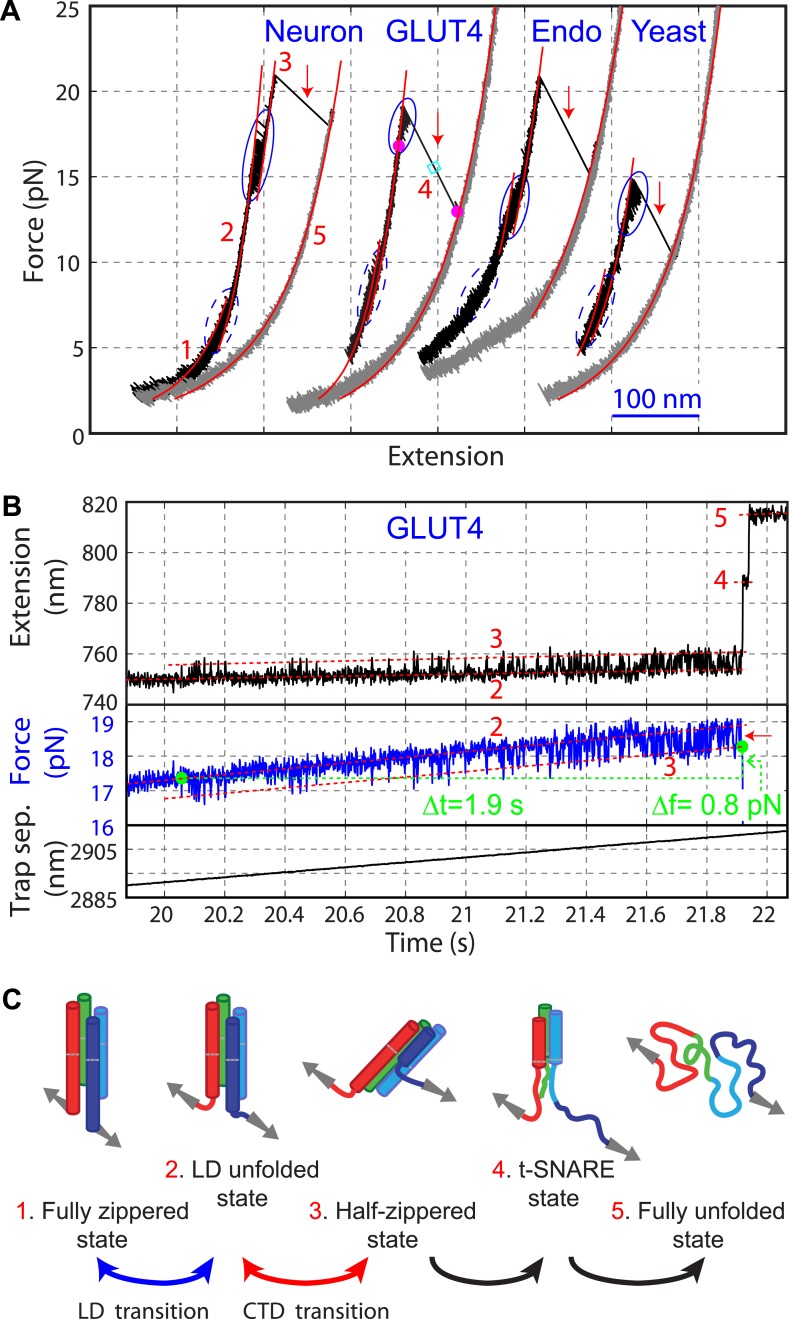
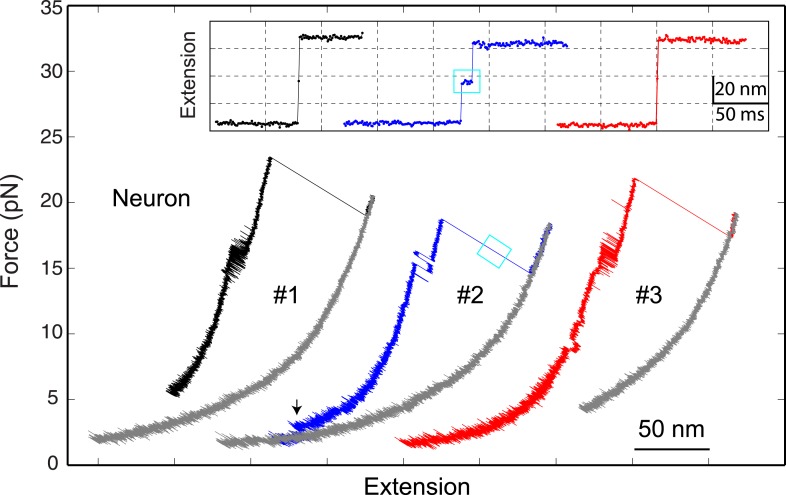
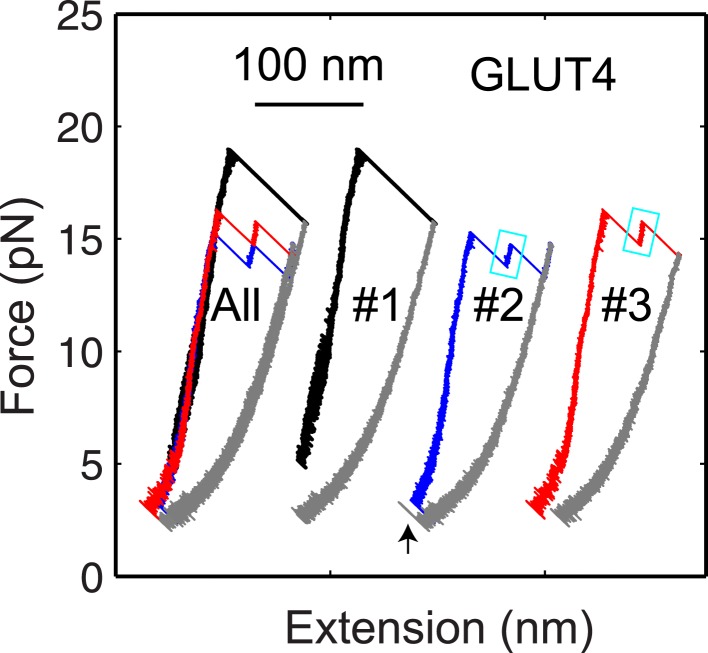
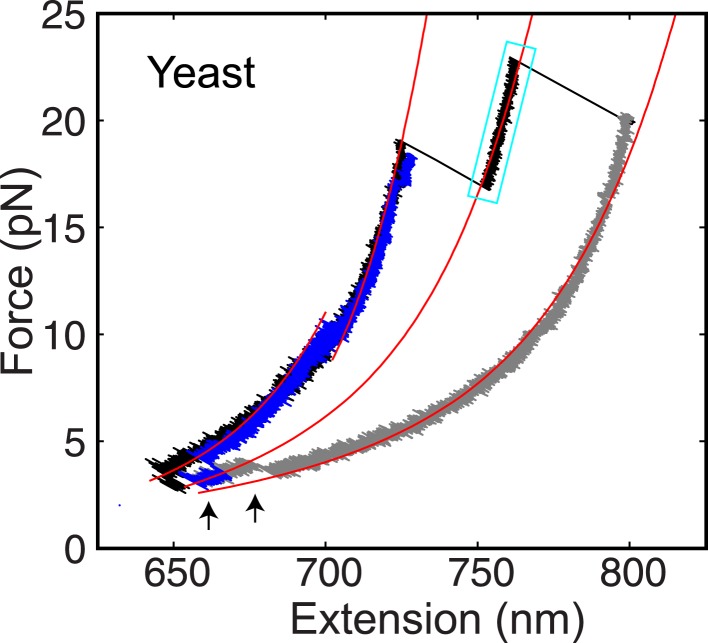
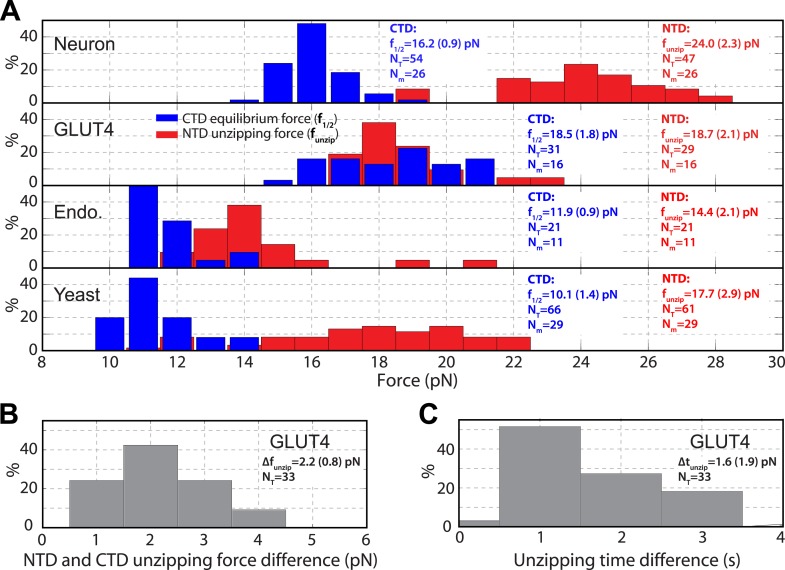
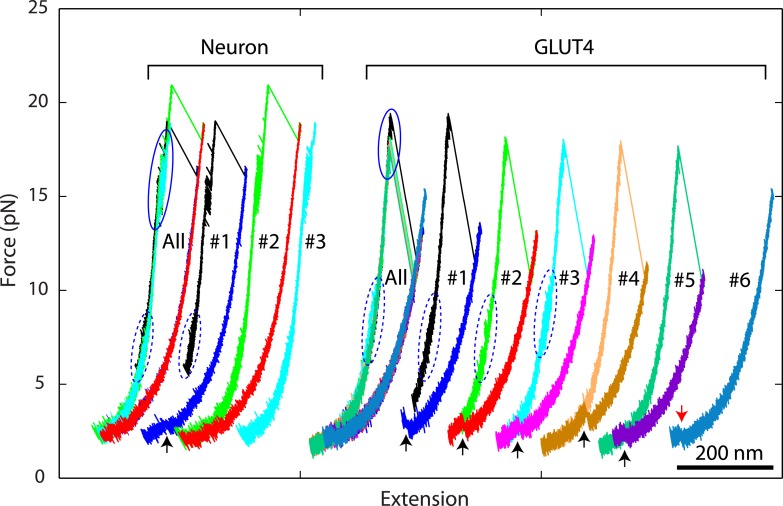
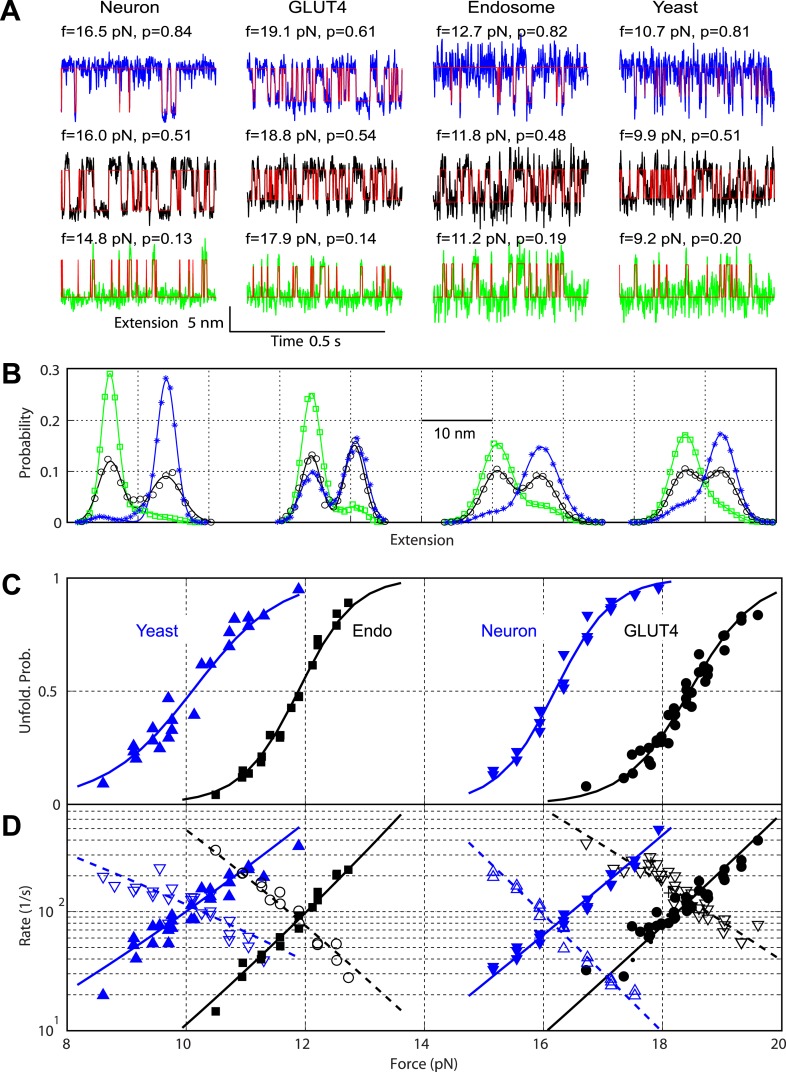
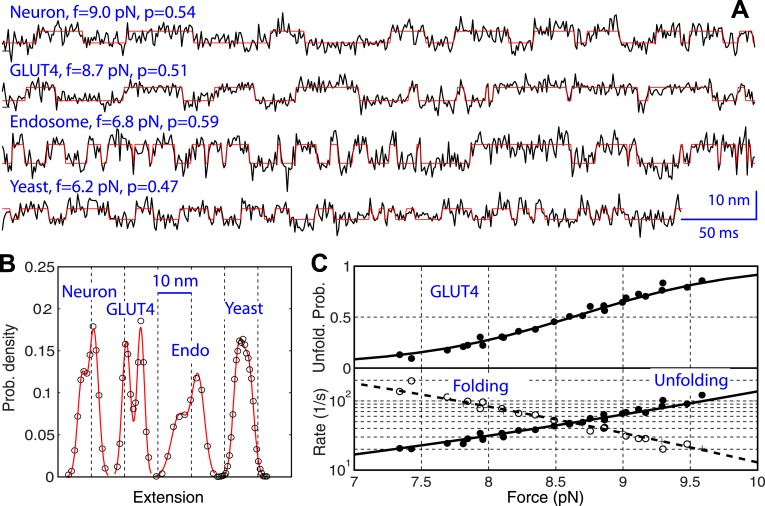
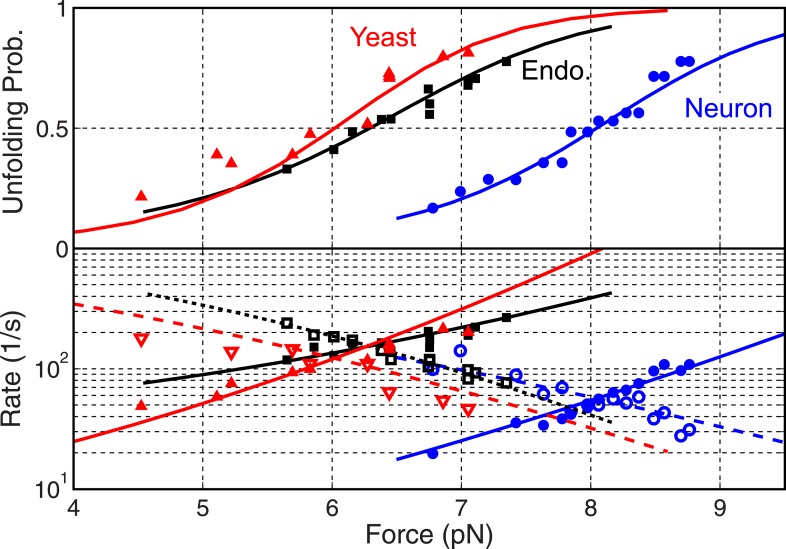
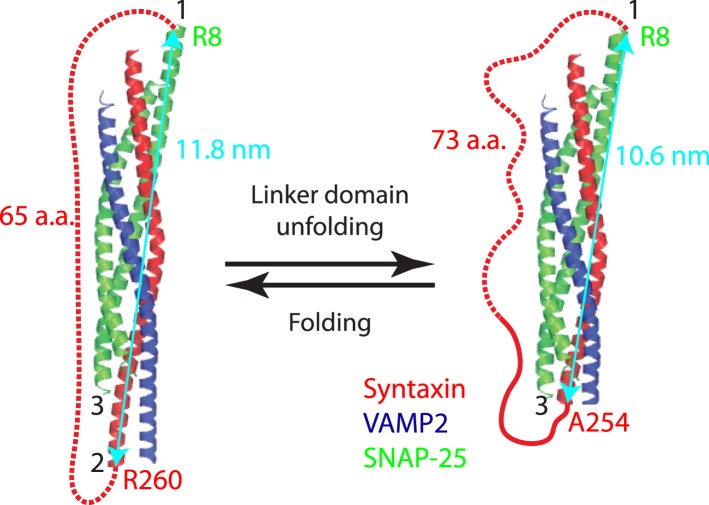
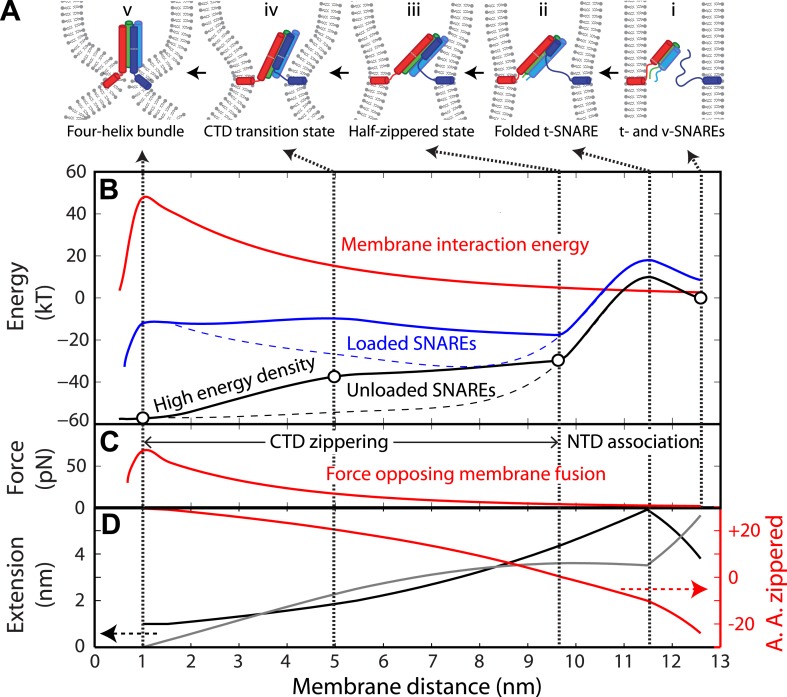
Soluble N-ethylmaleimide-sensitive factor attachment protein receptors (SNAREs) are evolutionarily conserved machines that couple their folding/assembly to membrane fusion. However, it is unclear how these processes are regulated and function. To determine these mechanisms, we characterized the folding energy and kinetics of four representative SNARE complexes at a single-molecule level using high-resolution optical tweezers. We found that all SNARE complexes assemble by the same step-wise zippering mechanism: slow N-terminal domain (NTD) association, a pause in a force-dependent half-zippered intermediate, and fast C-terminal domain (CTD) zippering. The energy release from CTD zippering differs for yeast (13 kBT) and neuronal SNARE complexes (27 kBT), and is concentrated at the C-terminal part of CTD zippering. Thus, SNARE complexes share a conserved zippering pathway and polarized energy release to efficiently drive membrane fusion, but generate different amounts of zippering energy to regulate fusion kinetics.
可溶性N-乙基马来酰亚胺敏感因子附着蛋白受体(SNAREs)是进化上保守的机制,将其折叠/组装与膜融合相偶联。然而,目前尚不清楚这些过程是如何被调控以及如何发挥功能的。为了确定这些机制,我们使用高分辨率光镊在单分子水平上对四种代表性SNARE复合体的折叠能量和动力学进行了表征。我们发现,所有SNARE复合体都是通过相同的逐步拉链式机制组装而成:缓慢的N端结构域(NTD)缔合、在一个依赖于力的半拉链式中间体中暂停以及快速的C端结构域(CTD)拉链化。CTD拉链化释放的能量在酵母(13 kBT)和神经元SNARE复合体(27 kBT)中有所不同,并且集中在CTD拉链化的C端部分。因此,SNARE复合体共享保守的拉链式途径和极化能量释放,以有效驱动膜融合,但产生不同量的拉链化能量来调控融合动力学。