Pappens Meike, Schroijen Mathias, Sütterlin Stefan, Smets Elyn, Van den Bergh Omer, Thayer Julian F, Van Diest Ilse
Research Group on Health Psychology, KU Leuven, Leuven, Belgium.
Research Group on Health Psychology, KU Leuven, Leuven, Belgium; Section of Psychology, Lillehammer University College, Lillehammer, Norway; Department of Psychosomatic Medicine, Division of Surgery and Clinical Neuroscience, Oslo University Hospital - Rikshospitalet, Oslo, Norway.
PLoS One. 2014 Sep 2;9(9):e105054. doi: 10.1371/journal.pone.0105054. eCollection 2014.
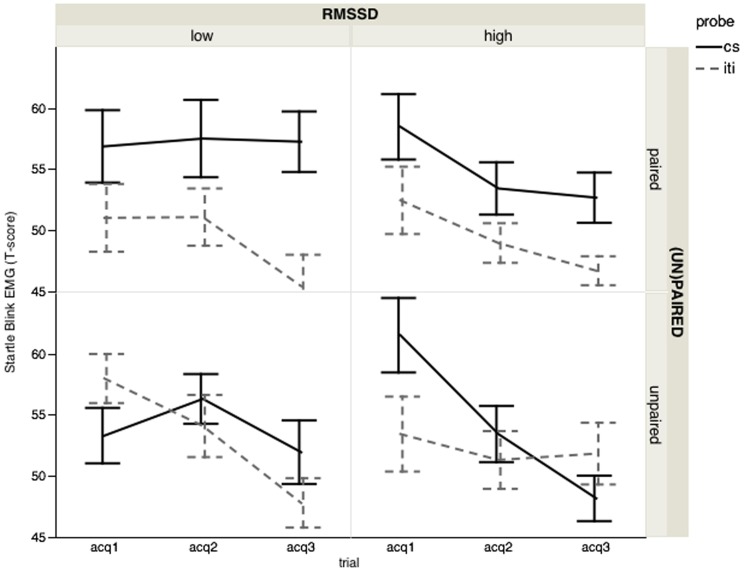
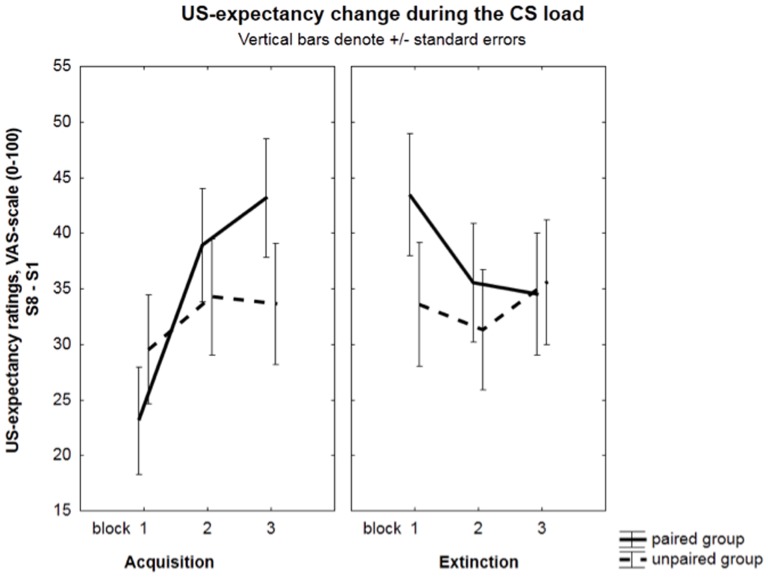
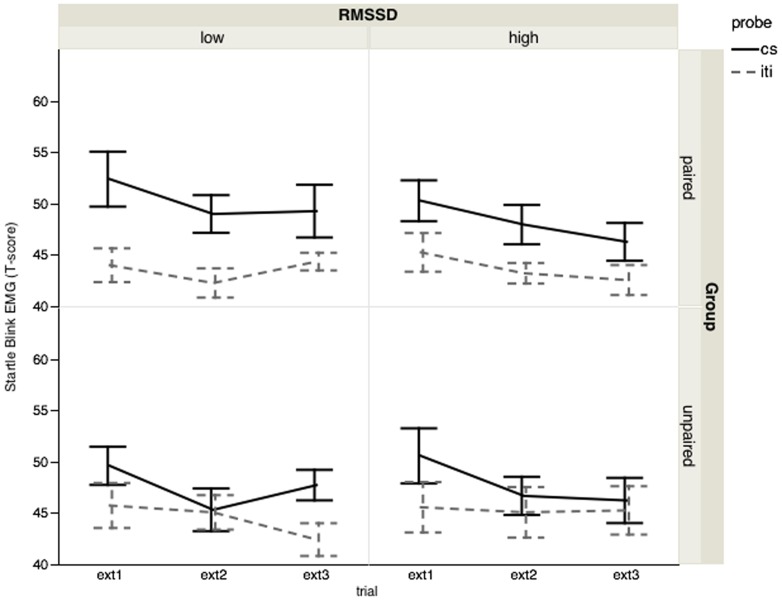
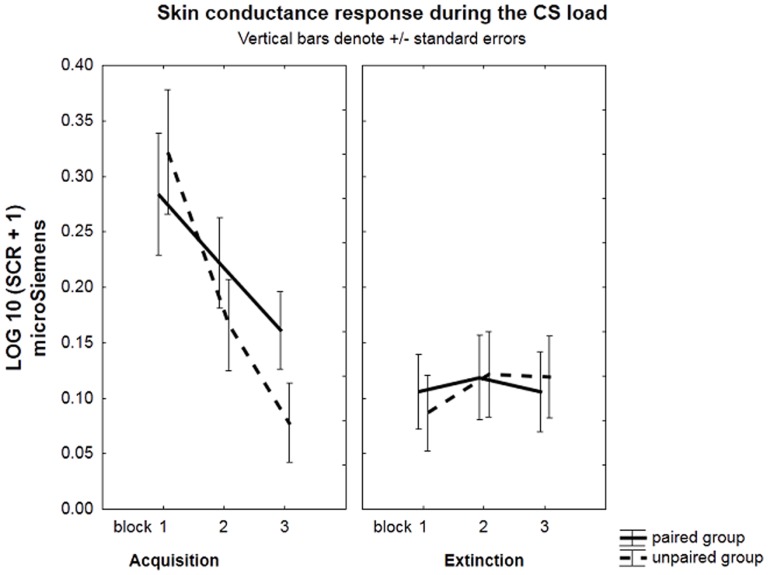
This study aimed to investigate whether interindividual differences in autonomic inhibitory control predict safety learning and fear extinction in an interoceptive fear conditioning paradigm. Data from a previously reported study (N = 40) were extended (N = 17) and re-analyzed to test whether healthy participants' resting heart rate variability (HRV) - a proxy of cardiac vagal tone - predicts learning performance. The conditioned stimulus (CS) was a slight sensation of breathlessness induced by a flow resistor, the unconditioned stimulus (US) was an aversive short-lasting suffocation experience induced by a complete occlusion of the breathing circuitry. During acquisition, the paired group received 6 paired CS-US presentations; the control group received 6 explicitly unpaired CS-US presentations. In the extinction phase, both groups were exposed to 6 CS-only presentations. Measures included startle blink EMG, skin conductance responses (SCR) and US-expectancy ratings. Resting HRV significantly predicted the startle blink EMG learning curves both during acquisition and extinction. In the unpaired group, higher levels of HRV at rest predicted safety learning to the CS during acquisition. In the paired group, higher levels of HRV were associated with better extinction. Our findings suggest that the strength or integrity of prefrontal inhibitory mechanisms involved in safety- and extinction learning can be indexed by HRV at rest.
本研究旨在探讨在一种内感受性恐惧条件范式中,自主抑制控制的个体间差异是否能预测安全学习和恐惧消退。对先前一项报告研究(N = 40)的数据进行了扩展(N = 17)并重新分析,以测试健康参与者的静息心率变异性(HRV)——心脏迷走神经张力的一个指标——是否能预测学习表现。条件刺激(CS)是由流量电阻器诱发的轻微呼吸困难感,非条件刺激(US)是由呼吸回路完全阻塞诱发的厌恶的短暂窒息体验。在习得阶段,配对组接受6次CS-US配对呈现;对照组接受6次明确的CS-US非配对呈现。在消退阶段,两组都接受6次仅CS呈现。测量指标包括惊吓眨眼肌电图、皮肤电导反应(SCR)和对US的预期评分。静息HRV在习得和消退过程中均显著预测惊吓眨眼肌电图学习曲线。在非配对组中,静息时较高水平的HRV预测了习得过程中对CS 的安全学习。在配对组中,较高水平的HRV与更好的消退相关联。我们的研究结果表明,参与安全学习和消退学习的前额叶抑制机制的强度或完整性可以通过静息HRV来衡量。