Cohn Michael A, Pietrucha Martha E, Saslow Laura R, Hult Jen R, Moskowitz Judith T
Osher Center for Integrative Medicine, University of California, San Francisco, San Francisco, CA, USA.
Clinical & Translational Science Institute, University of California, San Francisco, San Francisco, CA, USA.
J Posit Psychol. 2014 Jan 1;9(6):523-534. doi: 10.1080/17439760.2014.920410.
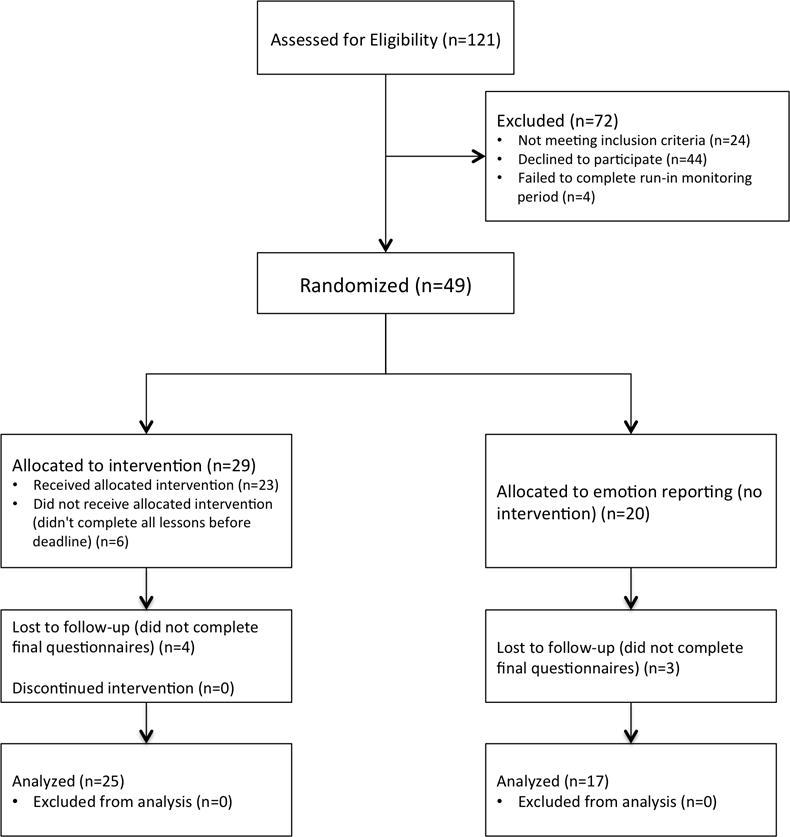
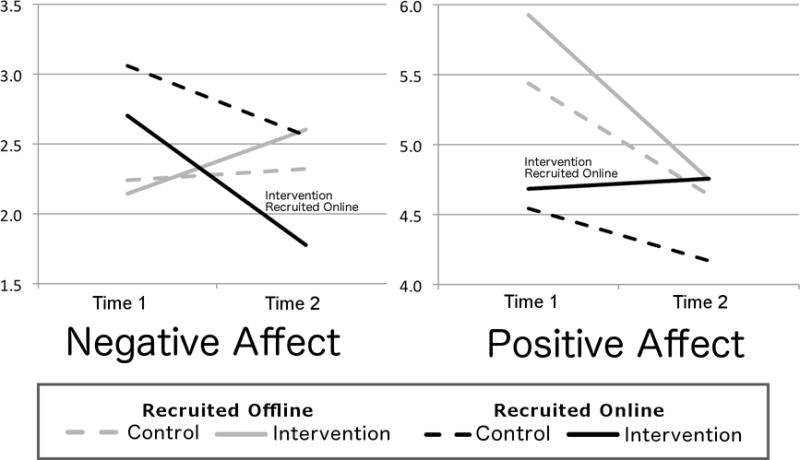
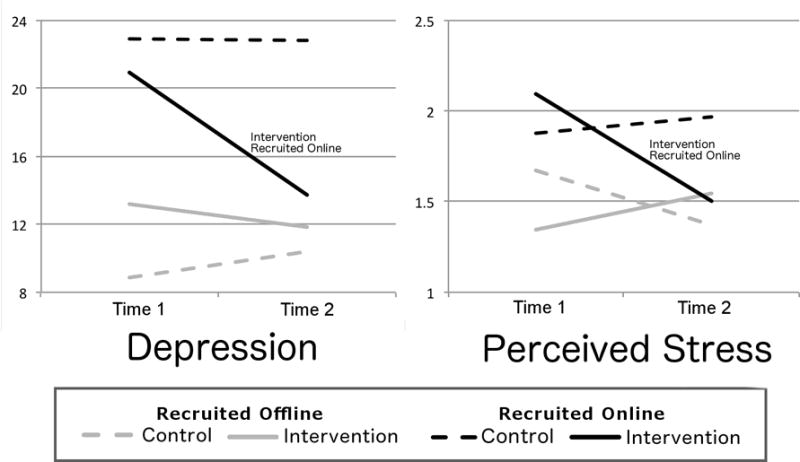
Positive affect predicts improved glycemic control and longevity in adults with type 2 diabetes. We tested DAHLIA, a self-paced online intervention for type 2 diabetes that teaches positive affect skills such as savoring, gratitude, and acts of kindness. Participants (n=49) were randomized to the 5-week DAHLIA course or an emotion-reporting waitlist control. DAHLIA was understood and accepted by participants and showed good retention (78%). At post-intervention, DAHLIA participants showed a significantly greater decrease in depression than controls (-4.3 vs. +0.6 points on the CES-D, =.05). Secondary analyses found that this effect was considerably stronger in intervention recipients recruited online than those recruited in person. Intervention recipients recruited online also showed significantly increased positive affect, reduced negative affect, and reduced perceived stress. There were no effects on measures of diabetes-specific efficacy or sense of burden, or preliminary measures of health behaviors. This successful feasibility and efficacy trial provides support for a larger trial focusing more specifically on health behavior.
积极情绪预示着2型糖尿病成年人血糖控制的改善和寿命的延长。我们测试了DAHLIA,这是一种针对2型糖尿病的自主在线干预措施,教授诸如品味、感恩和善意行为等积极情绪技巧。参与者(n = 49)被随机分为5周的DAHLIA课程组或情绪报告等待名单对照组。DAHLIA被参与者理解并接受,且保留率良好(78%)。干预后,DAHLIA组参与者的抑郁程度显著低于对照组(CES-D量表上分别为-4.3分和+0.6分,P = 0.05)。二次分析发现,在线招募的干预接受者的这种效果比亲自招募的参与者更强。在线招募的干预接受者还表现出积极情绪显著增加、消极情绪减少以及感知压力降低。对糖尿病特异性疗效或负担感指标以及健康行为初步指标没有影响。这项成功的可行性和疗效试验为更具体关注健康行为的更大规模试验提供了支持。