Choudhury Md Abu, Lott William B, Aaskov John
Institute of Health and Biomedical Innovation, Queensland University of Technology, Brisbane, Queensland, Australia.
Institute of Health and Biomedical Innovation, Queensland University of Technology, Brisbane, Queensland, Australia; School of Chemistry, Physics, and Mechanical Engineering, Science and Engineering Faculty, Queensland University of Technology, Brisbane, Queensland, Australia.
PLoS One. 2014 Sep 15;9(9):e107264. doi: 10.1371/journal.pone.0107264. eCollection 2014.
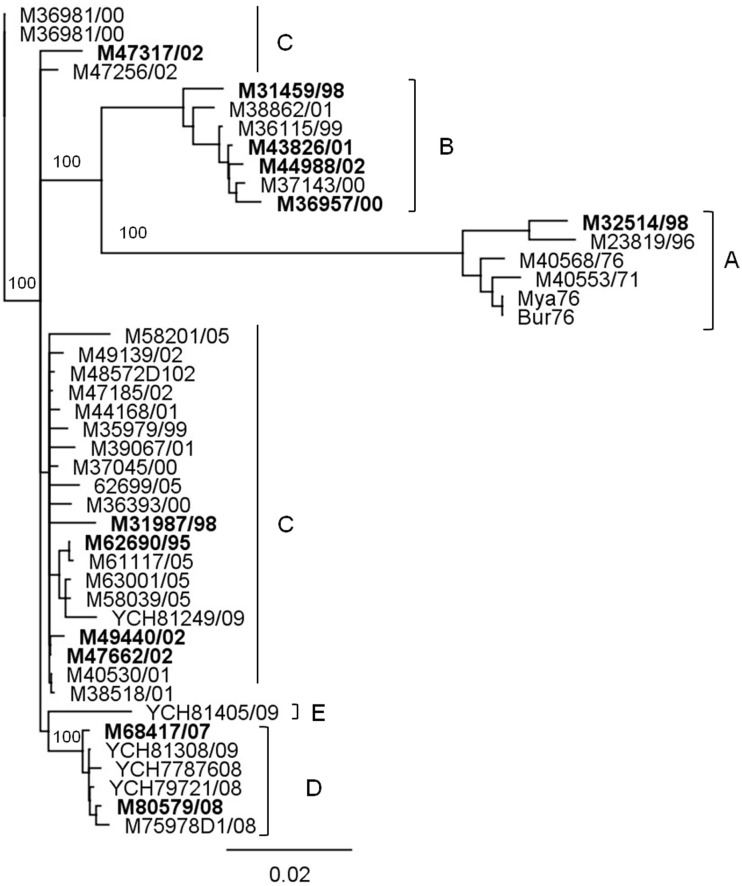
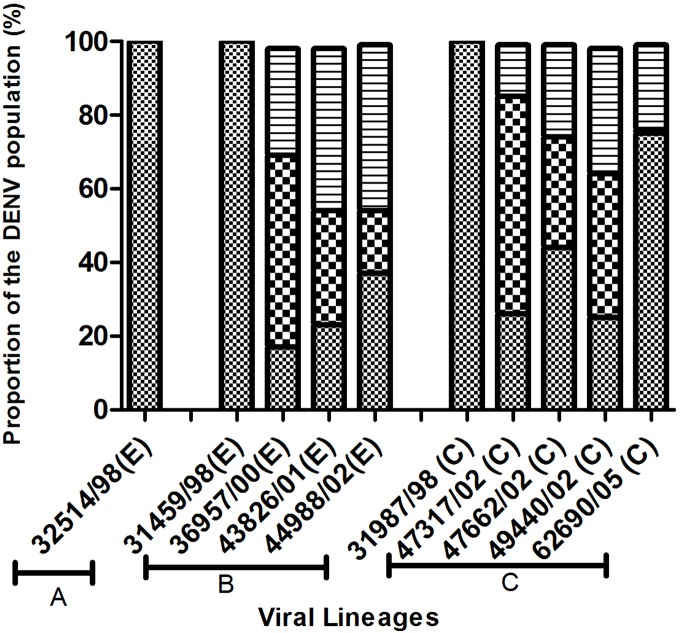
Genetically diverse RNA viruses like dengue viruses (DENVs) segregate into multiple, genetically distinct, lineages that temporally arise and disappear on a regular basis. Lineage turnover may occur through multiple processes such as, stochastic or due to variations in fitness. To determine the variation of fitness, we measured the distribution of fitness within DENV populations and correlated it with lineage extinction and replacement. The fitness of most members within a population proved lower than the aggregate fitness of populations from which they were drawn, but lineage replacement events were not associated with changes in the distribution of fitness. These data provide insights into variations in fitness of DENV populations, extending our understanding of the complexity between members of individual populations.
像登革病毒(DENVs)这样具有遗传多样性的RNA病毒会分离成多个遗传上不同的谱系,这些谱系会定期在不同时间出现和消失。谱系更替可能通过多种过程发生,比如随机过程或由于适应性的变化。为了确定适应性的变化,我们测量了登革病毒群体内适应性的分布,并将其与谱系灭绝和更替相关联。结果证明,群体中大多数成员的适应性低于它们所源自群体的总体适应性,但谱系更替事件与适应性分布的变化并无关联。这些数据为登革病毒群体适应性的变化提供了见解,扩展了我们对单个群体成员间复杂性的理解。