Hu Fei, Wang Wei, Zhou Hang-Cheng, Shang Xi-Fu
Department of Orthopedics, Anhui Provincial Hospital, Anhui Medical University, 17# Lujiang Road, Hefei 230001, People's Republic of China.
World J Surg Oncol. 2014 Sep 15;12:287. doi: 10.1186/1477-7819-12-287.
Recent studies have found that periostin (PN), as a kind of secreted glycoprotein, is closely related to the metastatic potential and prognosis of many kinds of tumors. This study aimed to examine the expression of PN in patients with osteosarcoma and explore the relationship of PN expression with clinicopathologic factors and prognosis.
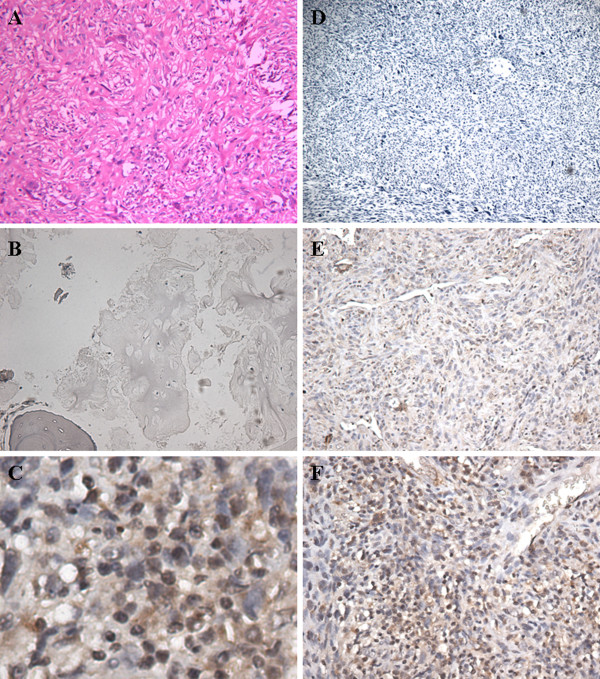
PN was detected by histopathological and immunohistochemical methods in 62 cases of osteosarcoma and 62 of osteochondroma. Detailed pathological and clinical data were collected by reviewing medical records.
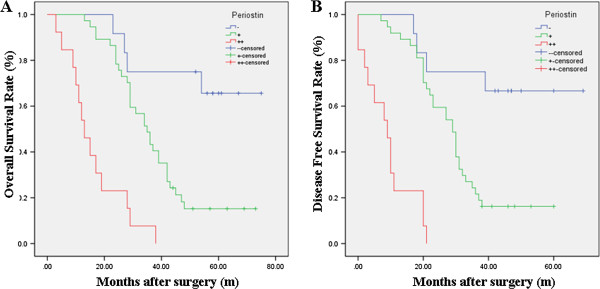
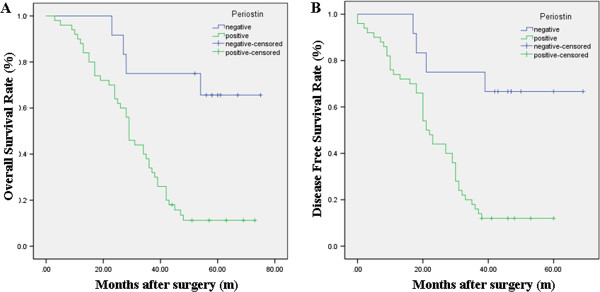
The results showed that increased PN protein expression was prevalent in osteosarcoma and was significantly associated with pathologic subtype (P =0.000), tumor size (P =0.016) and Enneking stage (P =0.047). Additionally, expression of PN was found to be an independent prognostic factor in osteosarcoma patients. High expression of PN protein is closely correlated to the tumor progression and poor survival of osteosarcoma.
Our data suggest that PN is a promising biomarker for identifying individuals with poor prognostic potential and suggests its possible use as a prognostic marker in patients with osteosarcoma.
近期研究发现,骨膜蛋白(PN)作为一种分泌型糖蛋白,与多种肿瘤的转移潜能及预后密切相关。本研究旨在检测骨肉瘤患者中PN的表达情况,并探讨PN表达与临床病理因素及预后的关系。
采用组织病理学和免疫组织化学方法检测62例骨肉瘤及62例骨软骨瘤中PN的表达。通过查阅病历收集详细的病理和临床资料。
结果显示,PN蛋白表达增加在骨肉瘤中普遍存在,且与病理亚型(P =0.000)、肿瘤大小(P =0.016)和Enneking分期(P =0.047)显著相关。此外,PN的表达被发现是骨肉瘤患者的独立预后因素。PN蛋白的高表达与骨肉瘤的肿瘤进展和不良生存密切相关。
我们的数据表明,PN是一种有前景的生物标志物,可用于识别预后不良的个体,并提示其可能作为骨肉瘤患者的预后标志物。