Perreau Matthieu, Vigano Selena, Bellanger Florence, Pellaton Céline, Buss Guillaume, Comte Denis, Roger Thierry, Lacabaratz Christine, Bart Pierre-Alexandre, Levy Yves, Pantaleo Giuseppe
Service of Immunology and Allergy and Service of Infectious Diseases, Department of Medicine, Lausanne University Hospital, University of Lausanne, 1011 Lausanne, Switzerland
Service of Immunology and Allergy and Service of Infectious Diseases, Department of Medicine, Lausanne University Hospital, University of Lausanne, 1011 Lausanne, Switzerland.
J Exp Med. 2014 Sep 22;211(10):2033-45. doi: 10.1084/jem.20140039. Epub 2014 Sep 15.
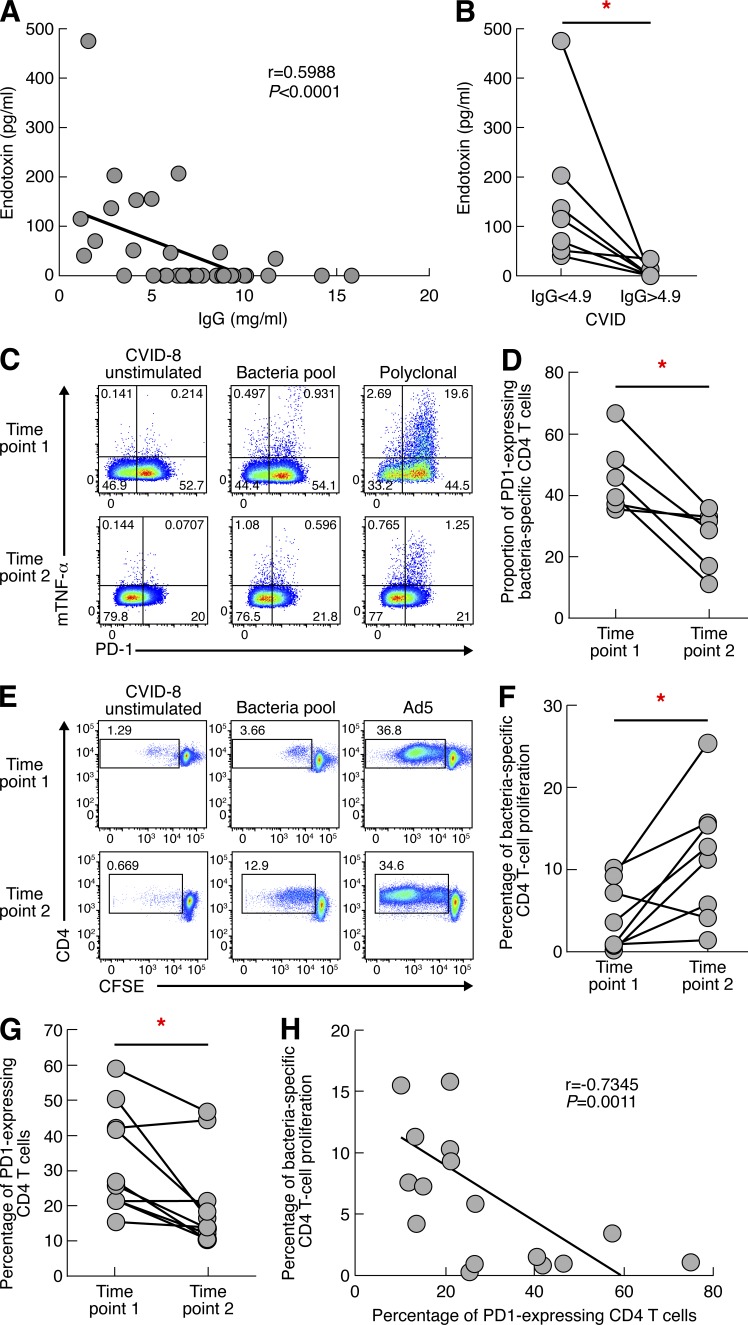
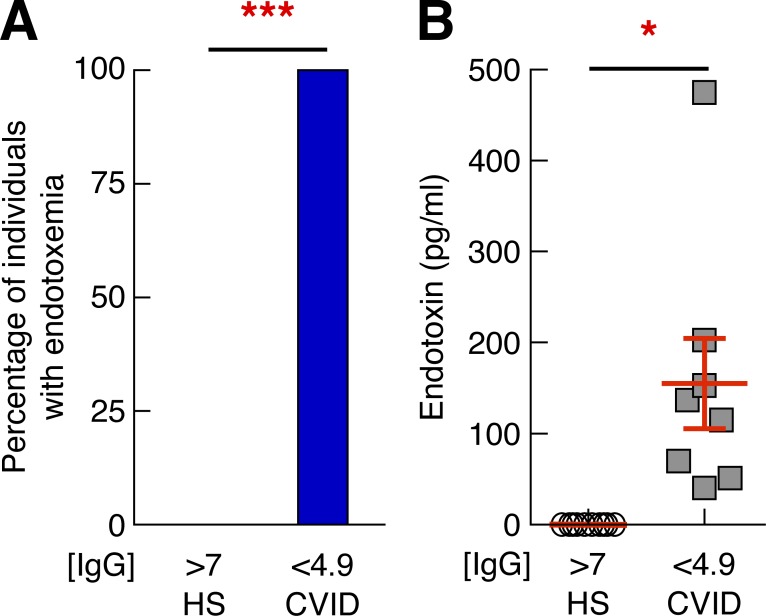
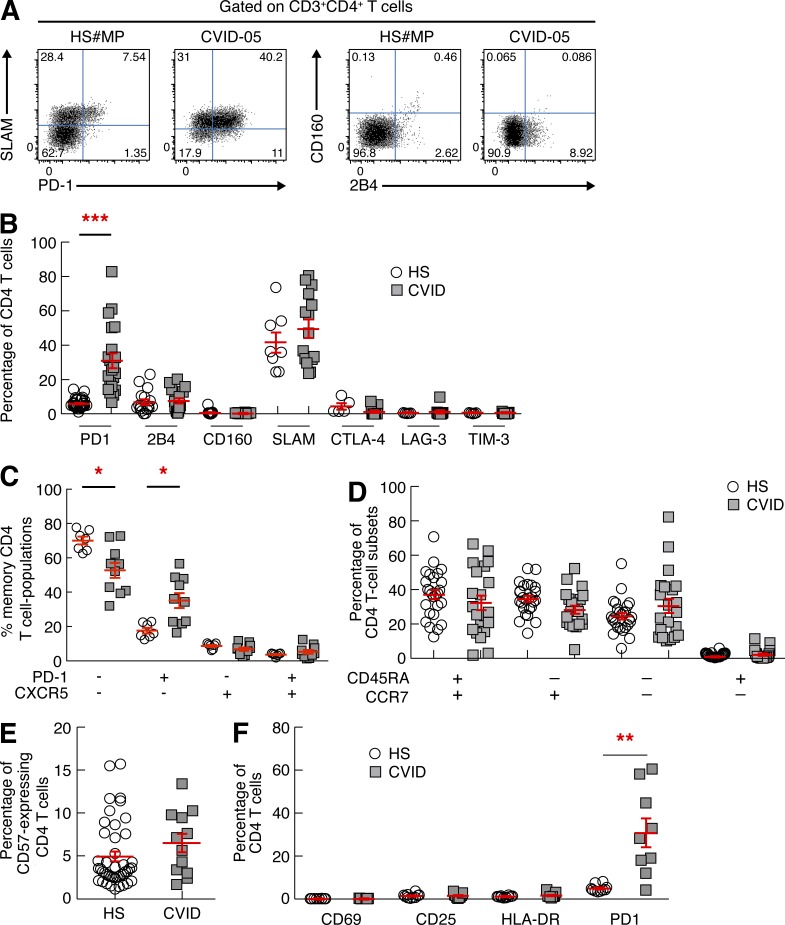
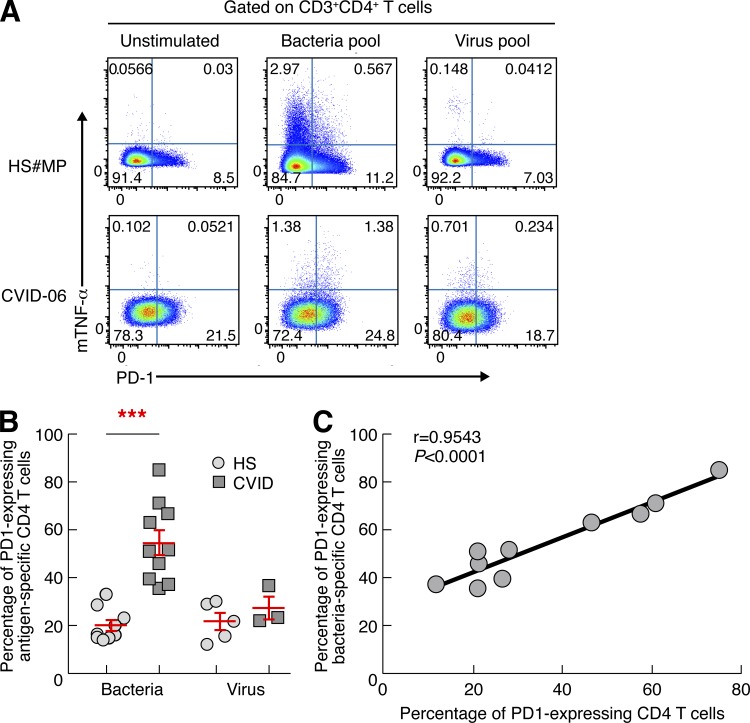
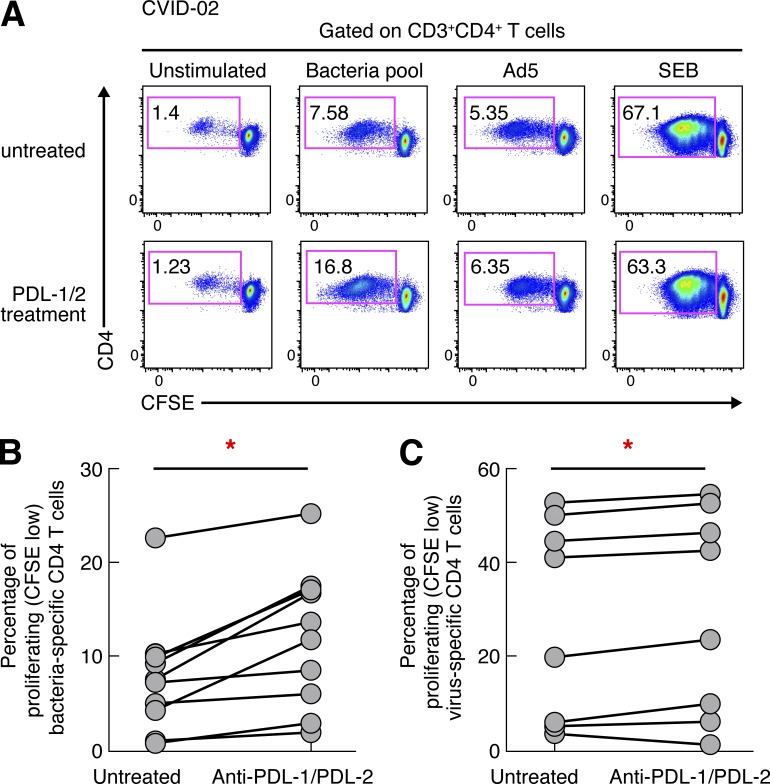
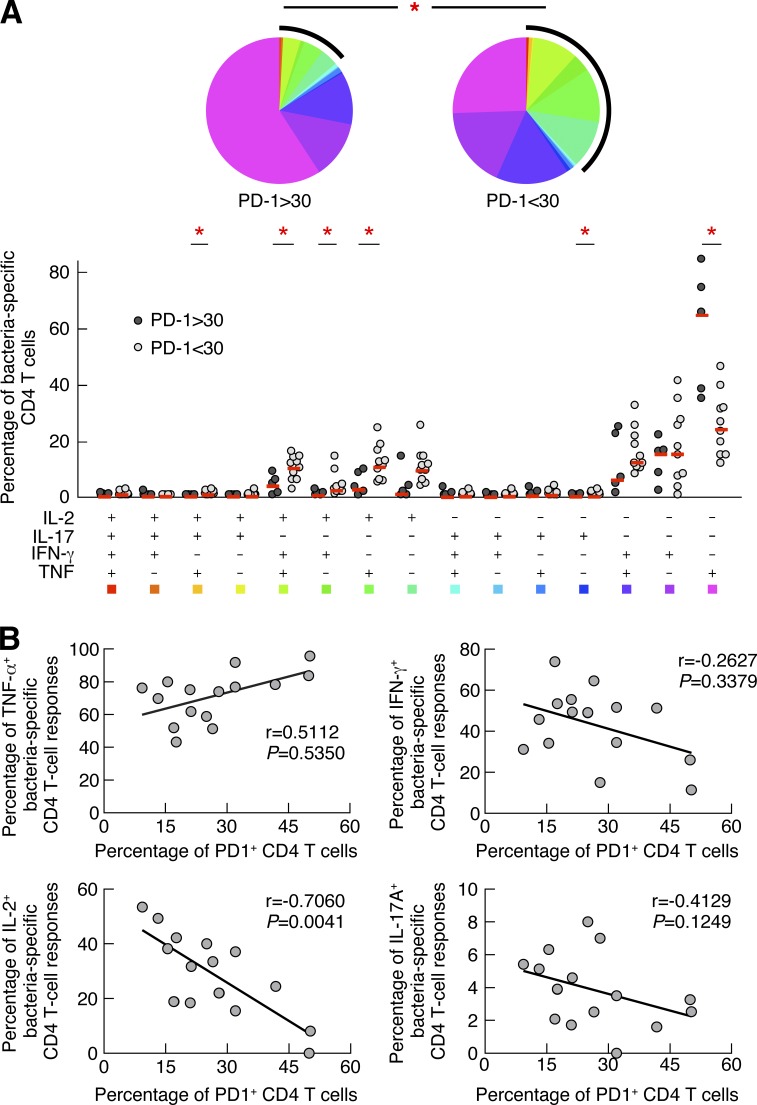
In the present study, we have investigated the functional profile of CD4 T cells from patients with common variable immunodeficiency (CVID), including production of cytokines and proliferation in response to bacteria and virus-derived antigens. We show that the functional impairment of CD4 T cells, including the reduced capacity to proliferate and to produce IFN-γ and IL-2, was restricted to bacteria-specific and not virus-specific CD4 T cells. High levels of endotoxins were found in the plasma of patients with CVID, suggesting that CD4 T cell dysfunction might be caused by bacterial translocation. Of note, endotoxemia was associated with significantly higher expression of programmed death 1 (PD-1) on CD4 T cells. The blockade of the PD-1-PD-L1/2 axis in vitro restored CD4 T cell proliferation capacity, thus indicating that PD-1 signaling negatively regulates CD4 T cell functions. Finally, we showed that intravenous immunoglobulin G (IVIG) treatment significantly reduced endotoxemia and the percentage of PD-1(+) CD4 T cells, and restored bacteria-specific CD4 T cell cytokine production and proliferation. In conclusion, the present study demonstrates that the CD4 T cell exhaustion and functional impairment observed in CVID patients is associated with bacterial translocation and that IVIG treatment resolves bacterial translocation and restores CD4 T cell functions.
在本研究中,我们调查了常见可变免疫缺陷(CVID)患者CD4 T细胞的功能概况,包括细胞因子的产生以及对细菌和病毒衍生抗原的增殖反应。我们发现,CD4 T细胞的功能损害,包括增殖能力以及产生IFN-γ和IL-2能力的降低,仅限于细菌特异性而非病毒特异性CD4 T细胞。在CVID患者的血浆中发现了高水平的内毒素,这表明CD4 T细胞功能障碍可能是由细菌易位引起的。值得注意的是,内毒素血症与CD4 T细胞上程序性死亡1(PD-1)的表达显著升高有关。体外阻断PD-1-PD-L1/2轴可恢复CD4 T细胞的增殖能力,因此表明PD-1信号通路对CD4 T细胞功能具有负调节作用。最后,我们发现静脉注射免疫球蛋白G(IVIG)治疗可显著降低内毒素血症和PD-1(+) CD4 T细胞的百分比,并恢复细菌特异性CD4 T细胞的细胞因子产生和增殖能力。总之,本研究表明,在CVID患者中观察到的CD4 T细胞耗竭和功能损害与细菌易位有关,并且IVIG治疗可解决细菌易位并恢复CD4 T细胞功能。