Archibald S L, McCutchan J A, Sanders C, Wolfson T, Jernigan T L, Ellis R J, Ances B M, Collier A C, McArthur J C, Morgello S, Simpson D M, Marra C, Gelman B B, Clifford D B, Grant I, Fennema-Notestine C
Department of Psychiatry, University of California, San Diego, 9500 Gilman Drive #0949, La Jolla, CA, 92093-0949, USA,
J Neurovirol. 2014 Dec;20(6):603-11. doi: 10.1007/s13365-014-0284-0. Epub 2014 Sep 17.
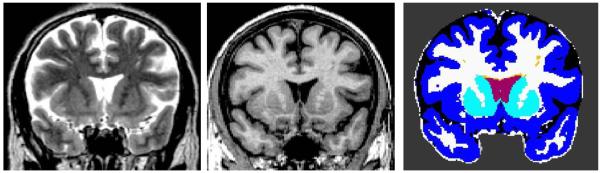
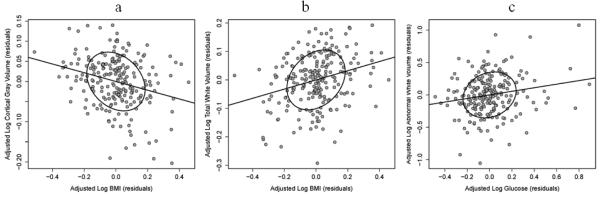
Obesity and other metabolic variables are associated with abnormal brain structural volumes and cognitive dysfunction in HIV-uninfected populations. Since individuals with HIV infection on combined antiretroviral therapy (CART) often have systemic metabolic abnormalities and changes in brain morphology and function, we examined associations among brain volumes and metabolic factors in the multisite CNS HIV AntiRetroviral Therapy Effects Research (CHARTER) cohort, cross-sectional study of 222 HIV-infected individuals. Metabolic variables included body mass index (BMI), total blood cholesterol (C), low- and high-density lipoprotein C (LDL-C and HDL-C), blood pressure, random blood glucose, and diabetes. MRI measured volumes of cerebral white matter, abnormal white matter, cortical and subcortical gray matter, and ventricular and sulcal CSF. Multiple linear regression models allowed us to examine metabolic variables separately and in combination to predict each regional volume. Greater BMI was associated with smaller cortical gray and larger white matter volumes. Higher total cholesterol (C) levels were associated with smaller cortex volumes; higher LDL-C was associated with larger cerebral white matter volumes, while higher HDL-C levels were associated with larger sulci. Higher blood glucose levels and diabetes were associated with more abnormal white matter. Multiple atherogenic metabolic factors contribute to regional brain volumes in HIV-infected, CART-treated patients, reflecting associations similar to those found in HIV-uninfected individuals. These risk factors may accelerate cerebral atherosclerosis and consequent brain alterations and cognitive dysfunction.
肥胖及其他代谢变量与未感染艾滋病毒人群的脑结构体积异常及认知功能障碍相关。由于接受联合抗逆转录病毒疗法(CART)的艾滋病毒感染者常存在全身代谢异常以及脑形态和功能改变,我们在多中心中枢神经系统艾滋病毒抗逆转录病毒治疗效果研究(CHARTER)队列中,对222名艾滋病毒感染者进行横断面研究,以探究脑容量与代谢因素之间的关联。代谢变量包括体重指数(BMI)、总血胆固醇(C)、低密度和高密度脂蛋白胆固醇(LDL-C和HDL-C)、血压、随机血糖及糖尿病。磁共振成像(MRI)测量了脑白质、异常白质、皮质和皮质下灰质以及脑室和脑沟脑脊液的体积。多元线性回归模型使我们能够分别及综合检验代谢变量,以预测每个区域的体积。较高的BMI与较小的皮质灰质体积及较大的白质体积相关。较高的总胆固醇(C)水平与较小的皮质体积相关;较高的LDL-C与较大的脑白质体积相关,而较高的HDL-C水平与较大的脑沟相关。较高的血糖水平及糖尿病与更多的异常白质相关。多种致动脉粥样硬化的代谢因素影响接受CART治疗的艾滋病毒感染者的区域脑容量,这反映出与未感染艾滋病毒个体中发现的关联相似。这些危险因素可能会加速脑动脉粥样硬化以及随之而来的脑部改变和认知功能障碍。