D'Alessandro Angelo, Amelio Ivano, Berkers Celia R, Antonov Alexey, Vousden Karen H, Melino Gerry, Zolla Lello
Department of Ecological and Biological Sciences, University of Tuscia, Largo dell'Università, snc, Viterbo, Italy. Department of Biochemistry and Molecular Genetics, University of Colorado Denver - Anschutz Medical Campus, Aurora, CO, USA.
Medical Research Council, Toxicology Unit, Hodgkin Building, Leicester University, Lancaster Road, Leicester, UK.
Oncotarget. 2014 Sep 15;5(17):7722-33. doi: 10.18632/oncotarget.2300.
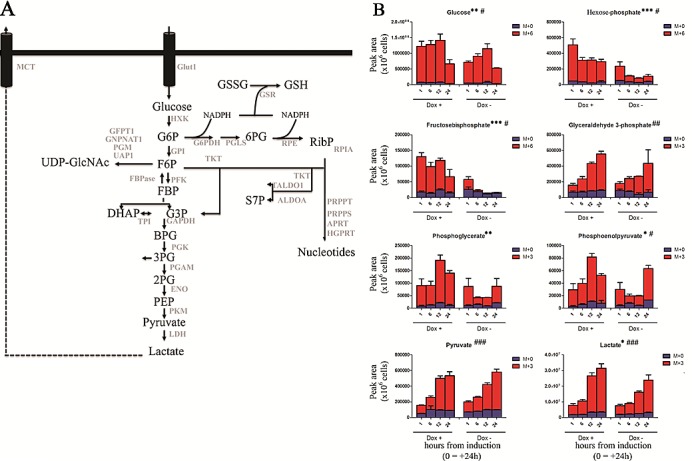
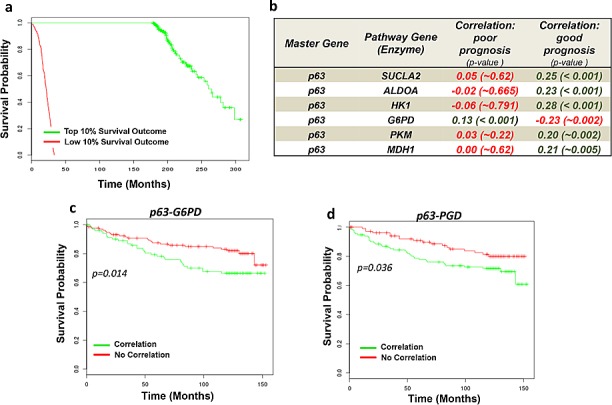
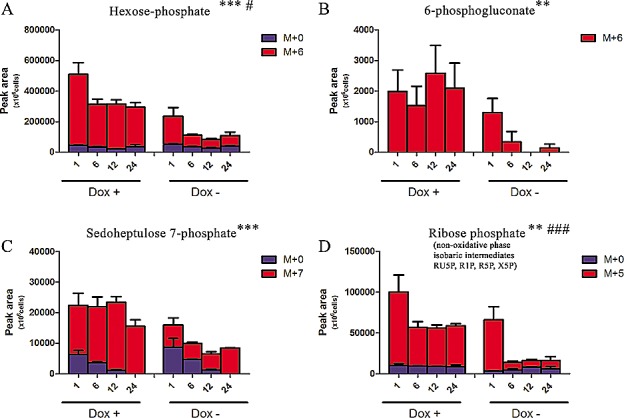
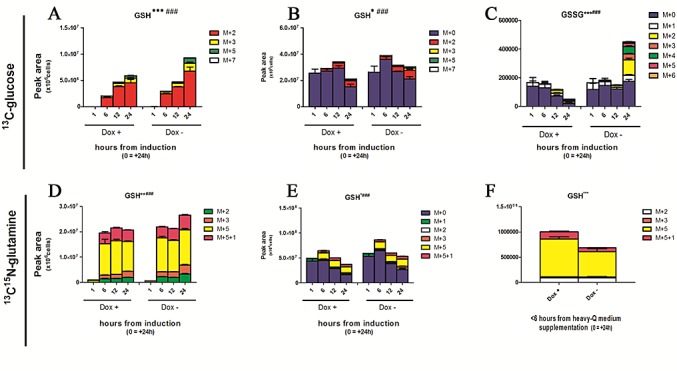
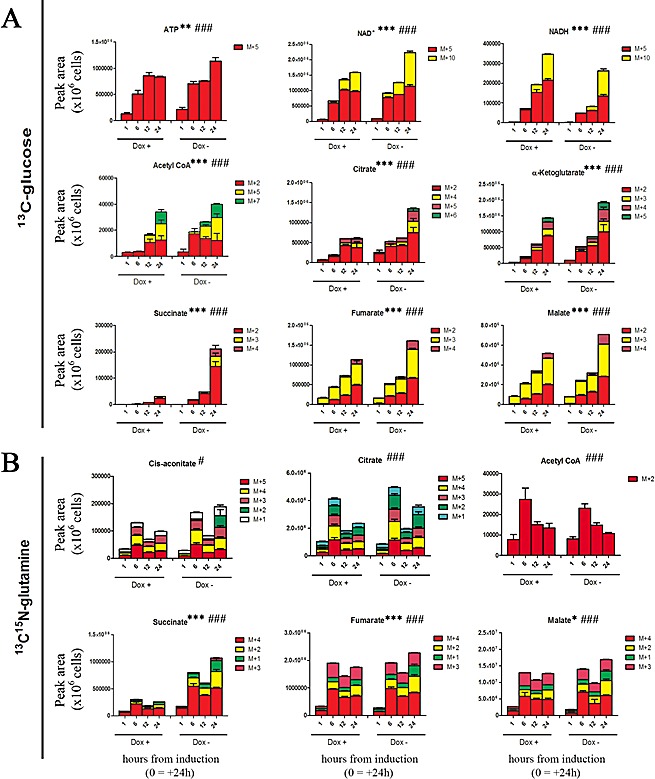
TAp63α is a member of the p53 family, which plays a central role in epithelial cancers. Recently, a role has emerged for p53 family members in cancer metabolic modulation. In order to assess whether TAp63α plays a role in cancer metabolism, we exploited p53-null osteosarcoma Tet-On Saos-2 cells, in which the expression of TAp63α was dependent on doxycycline supplementation to the medium. Metabolomics labeling experiments were performed by incubating the cells in 13C-glucose or 13C15N-glutamine-labeled culture media, as to monitor metabolic fluxes upon induced expression of TAp63α. Induced expression of TAp63α resulted in cell cycle arrest at the G1 phase. From a metabolic standpoint, expression of Tap63α promoted glycolysis and the pentose phosphate pathway, which was uncoupled from nucleotide biosynthesis, albeit prevented oxidative stress in the form of oxidized glutathione. Double 13C-glucose and 13C15N-glutamine metabolic labeling confirmed that induced expression of TAp63α corresponded to a decreased flux of pyruvate to the Krebs cycle and decreased utilization of glutamine for catabolic purposes in the TCA cycle. Results were not conclusive in relation to anabolic utilization of labeled glutamine, since it is unclear to what extent the observed minor TAp63α-dependent increases of glutamine-derived labeling in palmitate could be tied to increased rates of reductive carboxylation and de novo synthesis of fatty acids. Finally, bioinformatics elaborations highlighted a link between patient survival rates and the co-expression of p63 and rate limiting enzymes of the pentose phosphate pathway, G6PD and PGD.
TAp63α是p53家族的成员,在上皮癌中起核心作用。最近,p53家族成员在癌症代谢调节中的作用逐渐显现。为了评估TAp63α是否在癌症代谢中发挥作用,我们利用了p53基因缺失的骨肉瘤Tet-On Saos-2细胞,其中TAp63α的表达依赖于向培养基中添加强力霉素。代谢组学标记实验通过将细胞置于13C-葡萄糖或13C15N-谷氨酰胺标记的培养基中进行培养,以监测TAp63α诱导表达后的代谢通量。TAp63α的诱导表达导致细胞周期停滞在G1期。从代谢角度来看,Tap63α的表达促进了糖酵解和磷酸戊糖途径,这与核苷酸生物合成解偶联,尽管以氧化型谷胱甘肽的形式预防了氧化应激。双13C-葡萄糖和13C15N-谷氨酰胺代谢标记证实,TAp63α的诱导表达对应于丙酮酸进入三羧酸循环的通量减少以及三羧酸循环中谷氨酰胺用于分解代谢目的的利用率降低。关于标记谷氨酰胺的合成代谢利用结果尚无定论,因为目前尚不清楚在棕榈酸中观察到的由TAp63α依赖性导致的谷氨酰胺衍生标记的轻微增加在多大程度上与脂肪酸还原羧化和从头合成速率的增加有关。最后,生物信息学分析突出了患者生存率与p63以及磷酸戊糖途径的限速酶G6PD和PGD的共表达之间的联系。