Liu Xiao Qiong, Mao Yang, Wang Bo, Lu Xiao Ting, Bai Wen Wu, Sun Yuan Yuan, Liu Yan, Liu Hong Mei, Zhang Lei, Zhao Yu Xia, Zhang Yun
Key Laboratory of Cardiovascular Remodeling and Function Research, Shandong University Qilu Hospital, Jinan, Shandong, China; Department of Traditional Chinese Medicine, Shandong University Qilu Hospital, Jinan, Shandong, China.
Key Laboratory of Cardiovascular Remodeling and Function Research, Shandong University Qilu Hospital, Jinan, Shandong, China.
PLoS One. 2014 Sep 18;9(9):e107851. doi: 10.1371/journal.pone.0107851. eCollection 2014.
Ectopic angiogenesis within the intima and media is considered to be a hallmark of advanced vulnerable atherosclerotic lesions. Some studies have shown that specific matrix metalloproteinases (MMPs) might play different roles in angiogenesis. Therefore, we investigated the predominant effects of specific MMPs in intraplaque angiogenesis and plaque instability in a rabbit model of atherosclerosis.
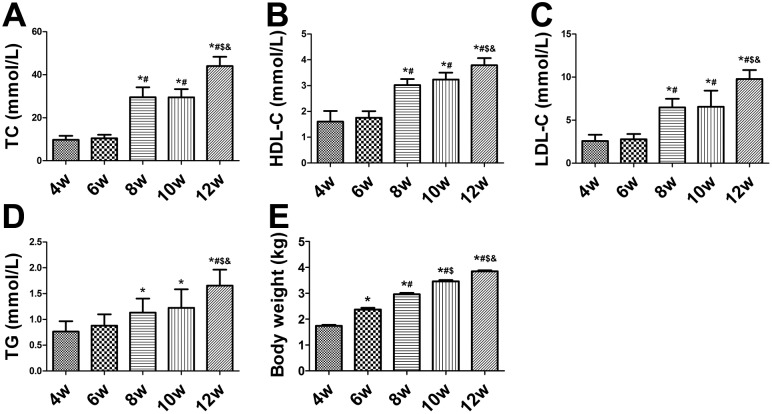
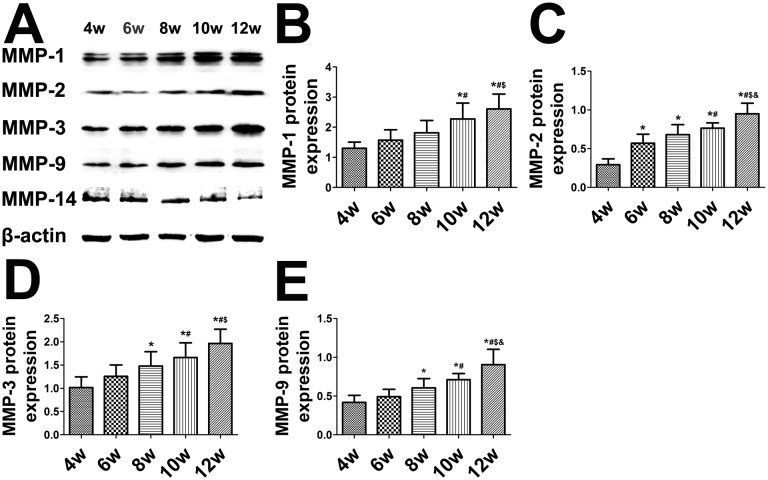
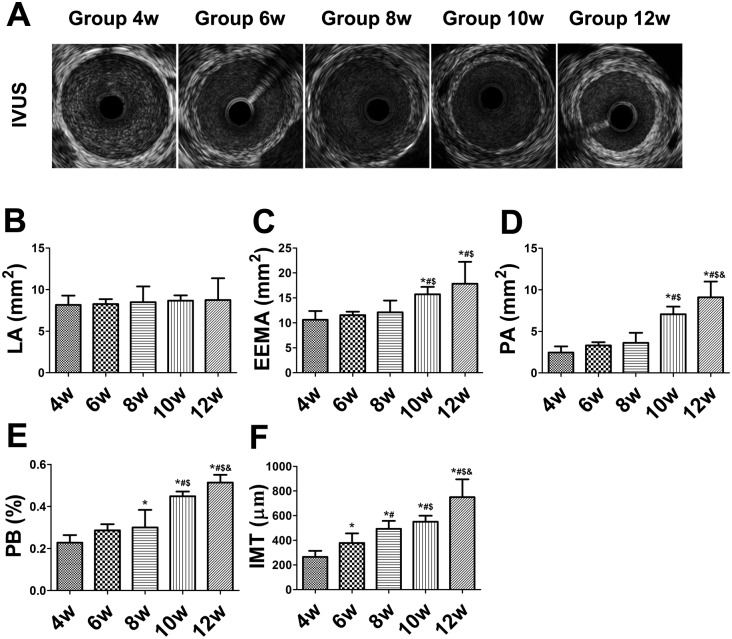
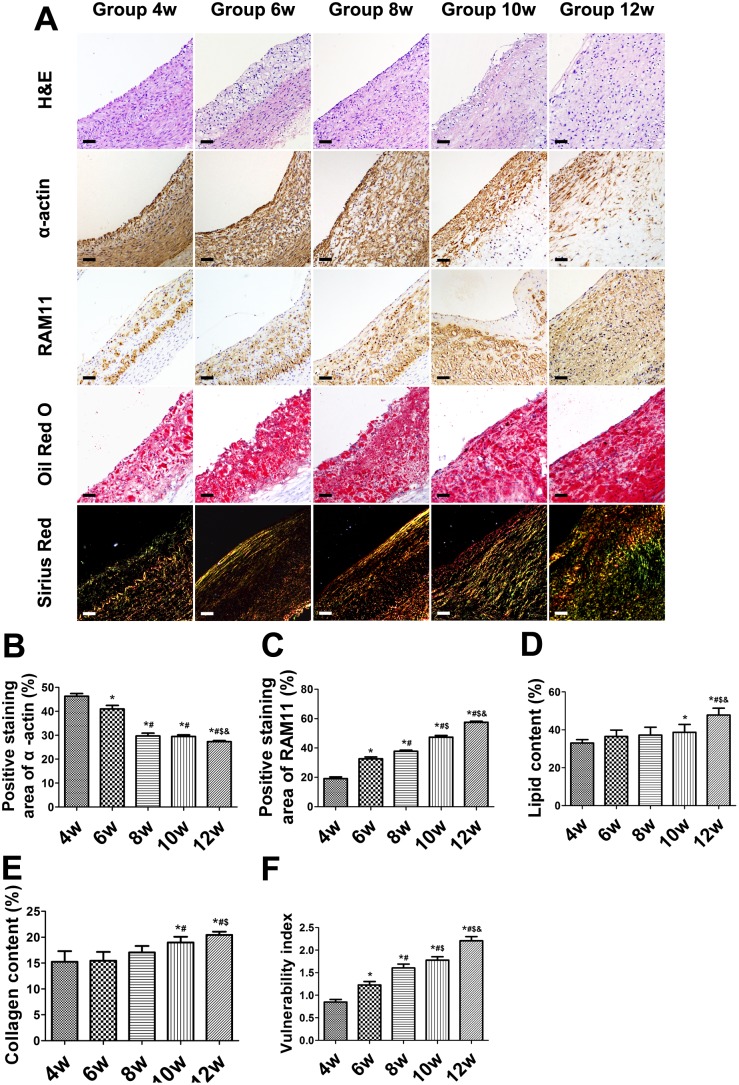
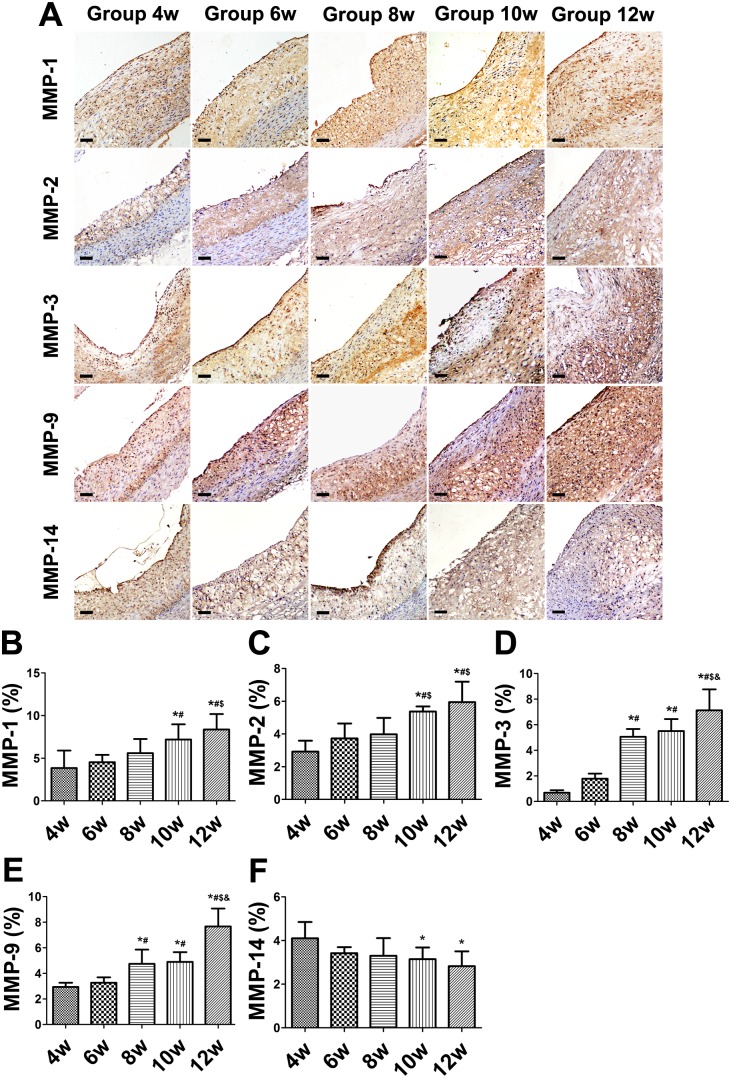
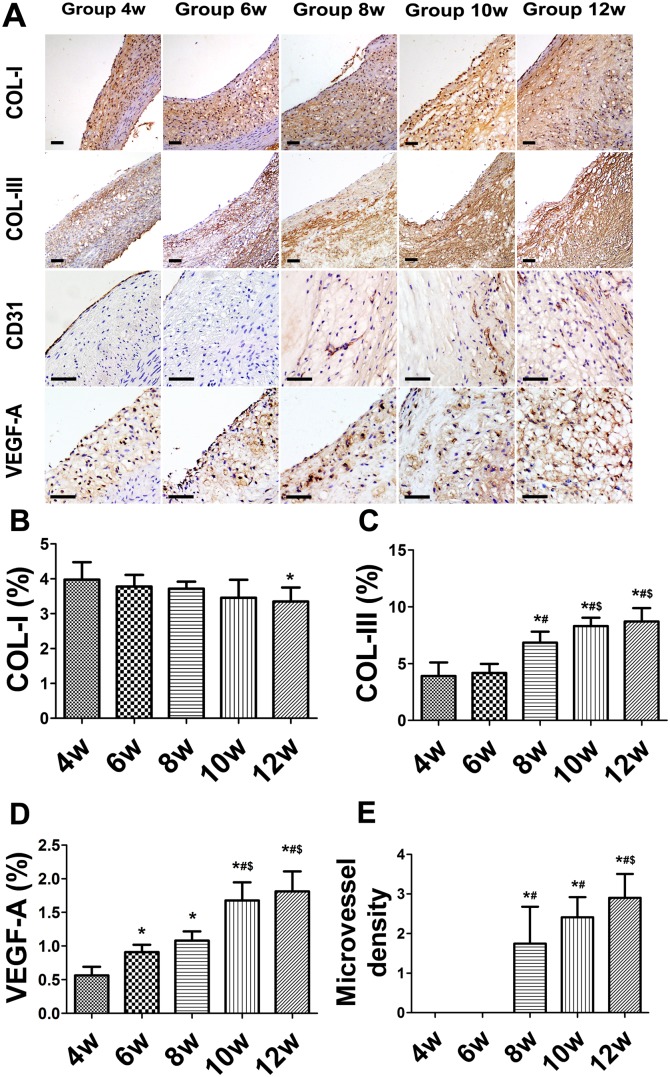
New Zealand rabbits underwent balloon injury of the abdominal artery and ingestion of a high-cholesterol (1%) diet to establish an atherosclerotic animal model. At weeks 4, 6, 8, 10, and 12 after balloon injury, five rabbits were euthanized and the abdominal aorta was harvested. Blood lipid analysis, intravascular ultrasound imaging, pathologic and immunohistochemical expression studies, and western blotting were performed. From weeks 4 to 12, the expression of MMP-1, -2, -3, and -9 and vascular endothelial growth factor A (VEGF-A) increased with atherosclerotic plaque development in the abdominal aorta, while the expression of MMP-14 substantially decreased. The vulnerability index (VI) gradually increased over time. Intraplaque neovessels appeared at week 8. The microvessel density (MVD) was greater at week 12 than at week 8. The VI, MVD, and VEGF-A level were positively correlated with the MMP-1, -2,-3, and -9 levels within plaques. Negative correlations were noted between the MMP-14 level and the VI, MVD, and VEGF-A level.
Upregulation of MMP-1, -2, -3, and -9 and downregulation of MMP-14 may contribute to intraplaque angiogenesis and plaque instability at the advanced stage of atherosclerosis in rabbits.
内膜和中膜内的异位血管生成被认为是晚期易损动脉粥样硬化病变的一个标志。一些研究表明,特定的基质金属蛋白酶(MMPs)可能在血管生成中发挥不同作用。因此,我们在兔动脉粥样硬化模型中研究了特定MMPs在斑块内血管生成和斑块不稳定性中的主要作用。
新西兰兔接受腹主动脉球囊损伤并摄入高胆固醇(1%)饮食以建立动脉粥样硬化动物模型。在球囊损伤后第4、6、8、10和12周,对5只兔实施安乐死并采集腹主动脉。进行血脂分析、血管内超声成像、病理及免疫组化表达研究以及蛋白质印迹分析。从第4周到第12周,腹主动脉中MMP-1、-2、-3和-9以及血管内皮生长因子A(VEGF-A)的表达随动脉粥样硬化斑块发展而增加,而MMP-14的表达显著降低。易损指数(VI)随时间逐渐增加。斑块内新生血管在第8周出现。第12周时微血管密度(MVD)高于第8周。VI、MVD和VEGF-A水平与斑块内MMP-1、-2、-3和-9水平呈正相关。MMP-14水平与VI、MVD和VEGF-A水平呈负相关。
MMP-1、-2、-3和-9的上调以及MMP-14的下调可能促成兔动脉粥样硬化晚期斑块内血管生成和斑块不稳定性。