Damanik Febriyani F R, Rothuizen Tonia C, van Blitterswijk Clemens, Rotmans Joris I, Moroni Lorenzo
University of Twente, Drienerlolaan 5, Zuidhorst 145, 7522 NB Enschede, the Netherlands.
Department of Nephrology, Leiden University Medical Center, Albinusdreef 2, 2333ZA Leiden, The Netherlands.
Sci Rep. 2014 Sep 19;4:6325. doi: 10.1038/srep06325.
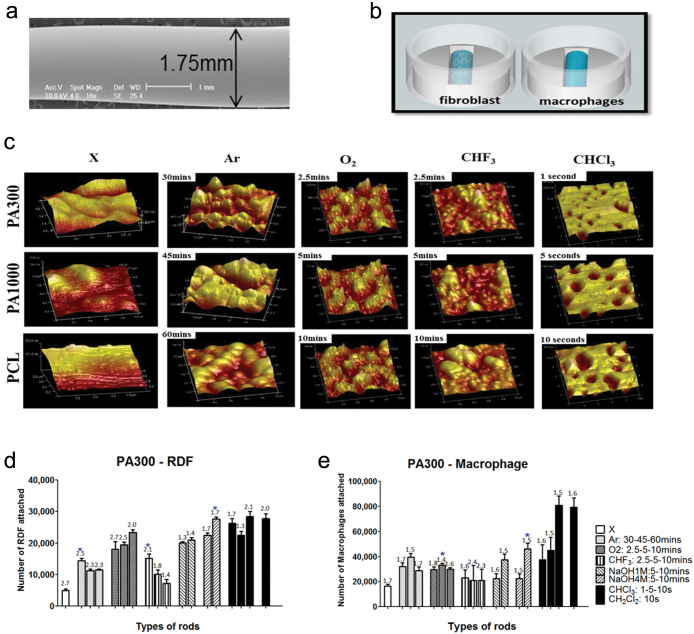
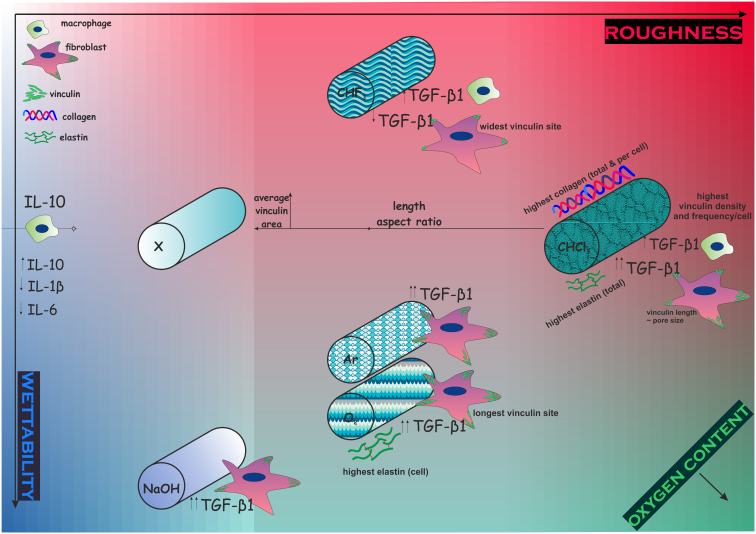
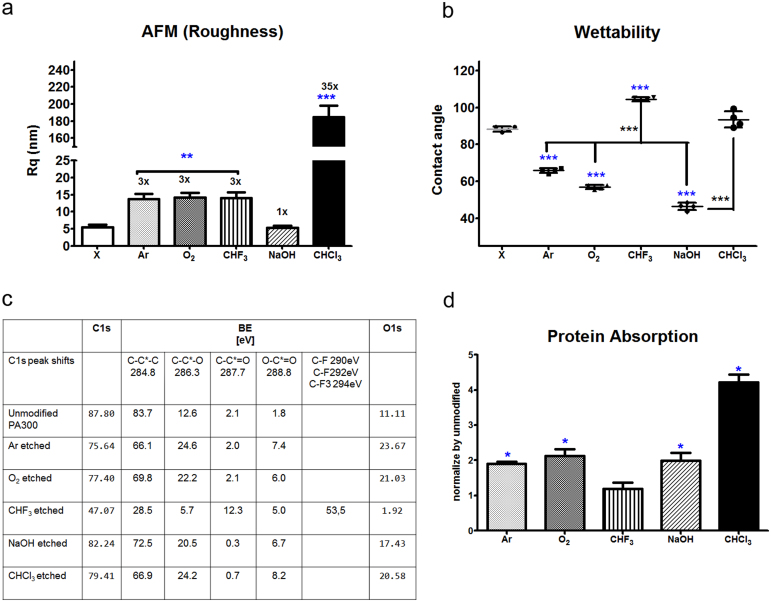
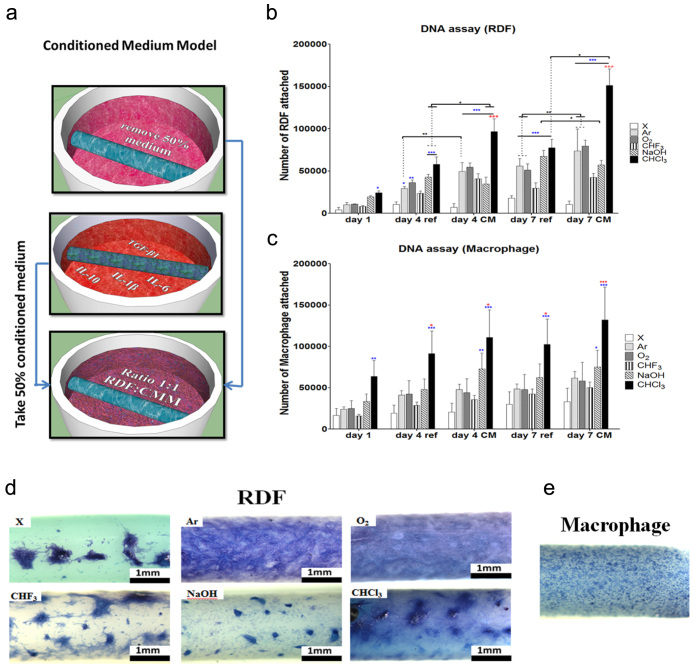
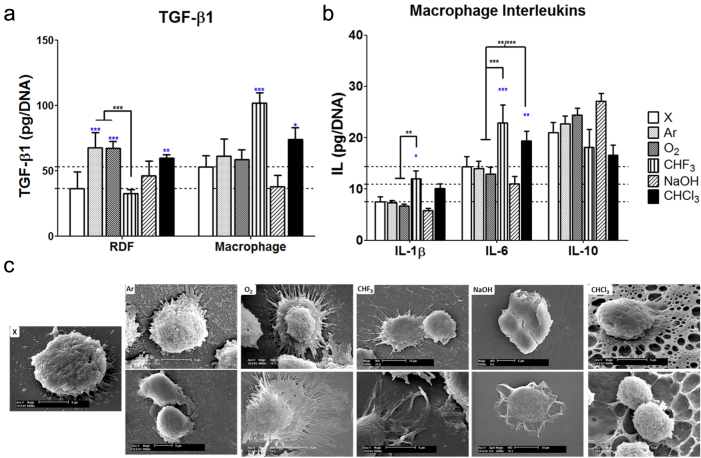
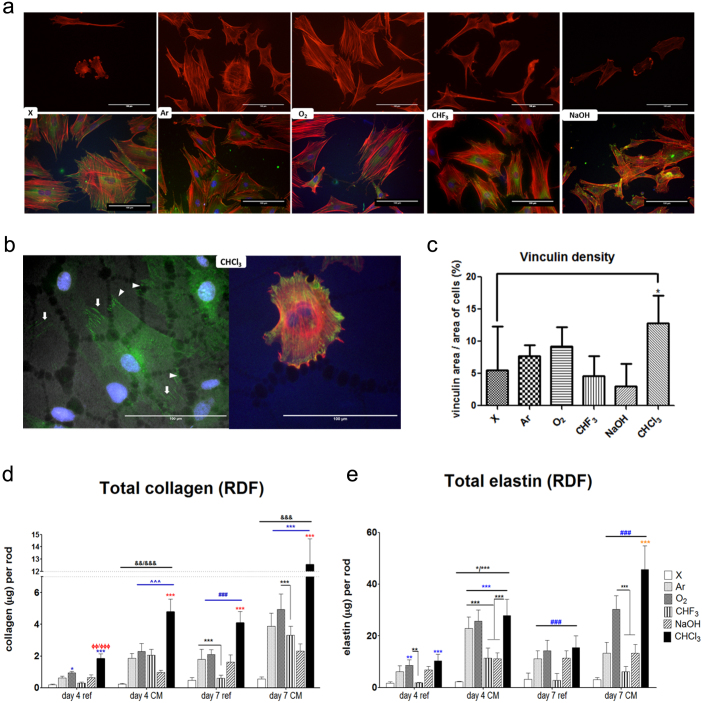
Despite various studies to minimize host reaction following a biomaterial implantation, an appealing strategy in regenerative medicine is to actively use such an immune response to trigger and control tissue regeneration. We have developed an in vitro model to modulate the host response by tuning biomaterials' surface properties through surface modifications techniques as a new strategy for tissue regeneration applications. Results showed tunable surface topography, roughness, wettability, and chemistry by varying treatment type and exposure, allowing for the first time to correlate the effect of these surface properties on cell attachment, morphology, strength and proliferation, as well as proinflammatory (IL-1β, IL-6) and antiinflammatory cytokines (TGF-β1, IL-10) secreted in medium, and protein expression of collagen and elastin. Surface microstructuring, derived from chloroform partial etching, increased surface roughness and oxygen content. This resulted in enhanced cell adhesion, strength and proliferation as well as a balance of soluble factors for optimum collagen and elastin synthesis for tissue regeneration. By linking surface parameters to cell activity, we could determine the fate of the regenerated tissue to create successful soft tissue-engineered replacement.
尽管有各种研究致力于将生物材料植入后的宿主反应降至最低,但再生医学中一个引人注目的策略是积极利用这种免疫反应来触发和控制组织再生。我们开发了一种体外模型,通过表面改性技术调整生物材料的表面特性来调节宿主反应,这是一种用于组织再生应用的新策略。结果表明,通过改变处理类型和暴露程度,可以调节表面形貌、粗糙度、润湿性和化学性质,首次能够将这些表面特性对细胞附着、形态、强度和增殖的影响,以及培养基中分泌的促炎细胞因子(IL-1β、IL-6)和抗炎细胞因子(TGF-β1、IL-10),与胶原蛋白和弹性蛋白的蛋白质表达联系起来。由氯仿部分蚀刻产生的表面微结构化增加了表面粗糙度和氧含量。这导致细胞黏附、强度和增殖增强,以及可溶性因子的平衡,以实现组织再生所需的最佳胶原蛋白和弹性蛋白合成。通过将表面参数与细胞活性联系起来,我们可以确定再生组织的命运,从而成功创建软组织工程替代物。