Figueroa Vania A, Retamal Mauricio A, Cea Luis A, Salas José D, Vargas Aníbal A, Verdugo Christian A, Jara Oscar, Martínez Agustín D, Sáez Juan C
Departamento de Fisiología, Facultad de Ciencias Biológicas, Pontificia Universidad Católica de Chile Santiago, Chile ; Centro de Fisiología Celular e Integrativa, Facultad de Medicina, Clínica Alemana Universidad del Desarrollo Santiago, Chile.
Centro de Fisiología Celular e Integrativa, Facultad de Medicina, Clínica Alemana Universidad del Desarrollo Santiago, Chile.
Front Cell Neurosci. 2014 Sep 4;8:265. doi: 10.3389/fncel.2014.00265. eCollection 2014.
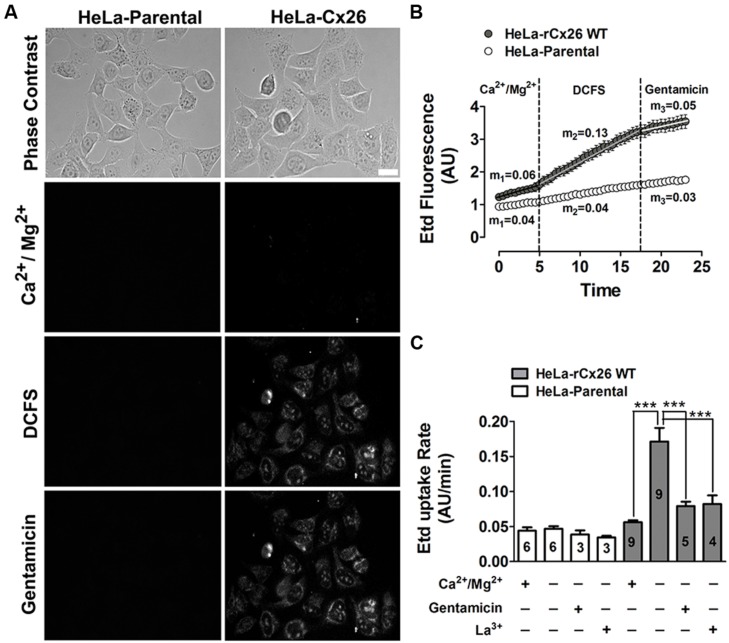
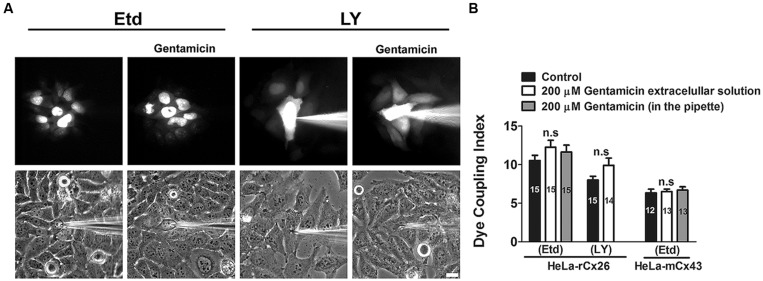
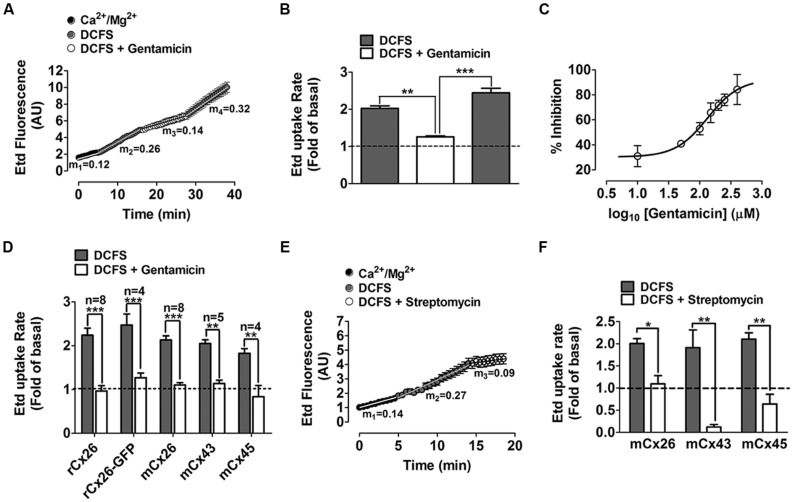
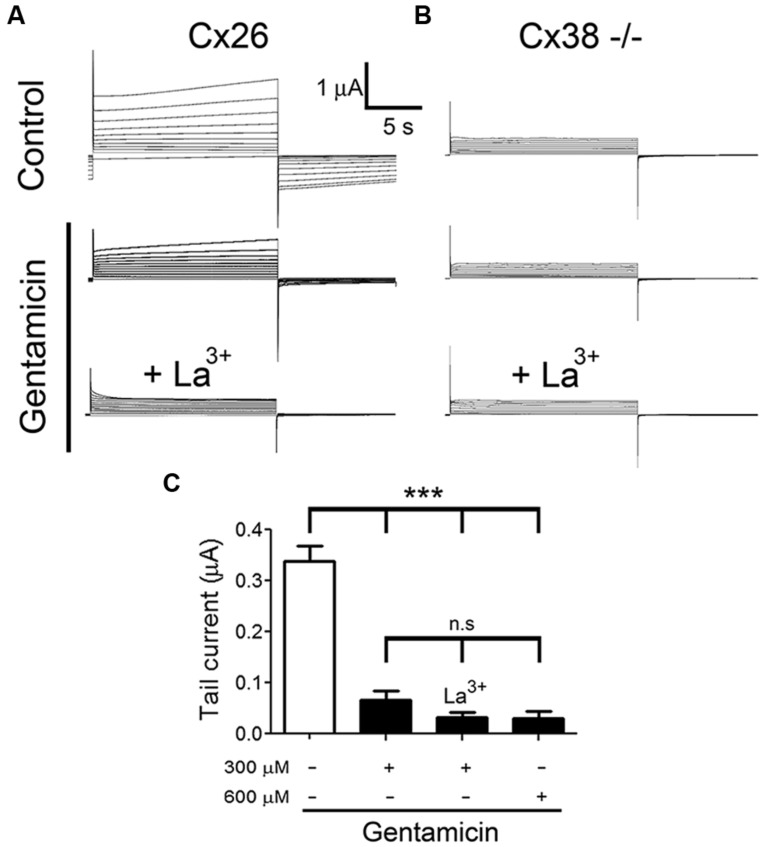
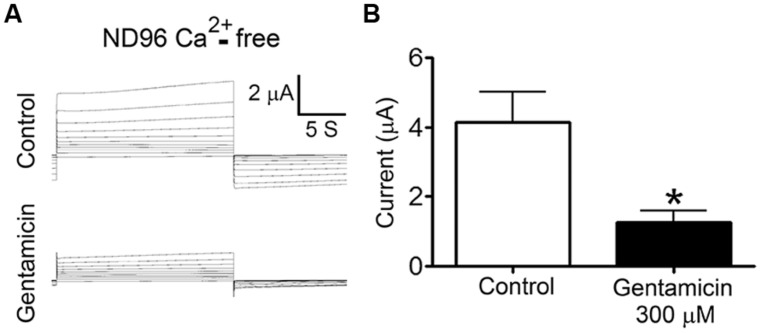
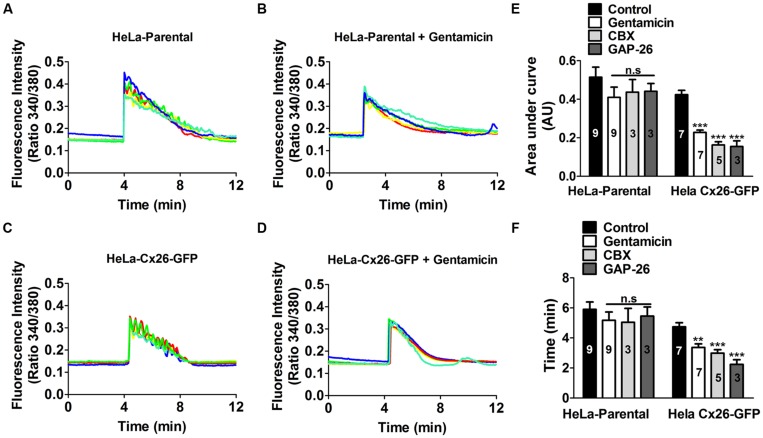
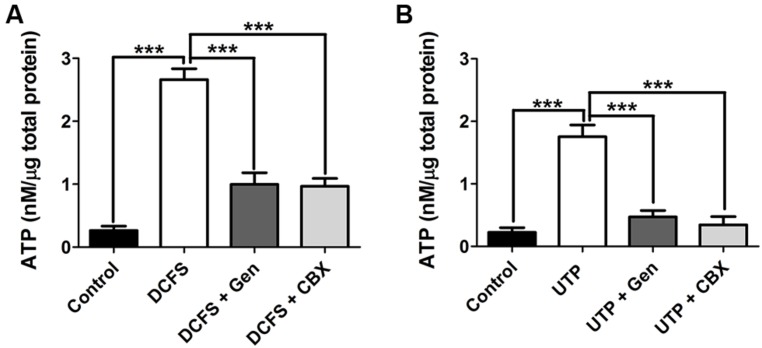
Gap junction channels (GJCs) and hemichannels (HCs) are composed of protein subunits termed connexins (Cxs) and are permeable to ions and small molecules. In most organs, GJCs communicate the cytoplasm of adjacent cells, while HCs communicate the intra and extracellular compartments. In this way, both channel types coordinate physiological responses of cell communities. Cx mutations explain several genetic diseases, including about 50% of autosomal recessive non-syndromic hearing loss. However, the possible involvement of Cxs in the etiology of acquired hearing loss remains virtually unknown. Factors that induce post-lingual hearing loss are diverse, exposure to gentamicin an aminoglycoside antibiotic, being the most common. Gentamicin has been proposed to block GJCs, but its effect on HCs remains unknown. In this work, the effect of gentamicin on the functional state of HCs was studied and its effect on GJCs was reevaluated in HeLa cells stably transfected with Cxs. We focused on Cx26 because it is the main Cx expressed in the cochlea of mammals where it participates in purinergic signaling pathways. We found that gentamicin applied extracellularly reduces the activity of HCs, while dye transfer across GJCs was not affected. HCs were also blocked by streptomycin, another aminoglycoside antibiotic. Gentamicin also reduced the adenosine triphosphate release and the HC-dependent oscillations of cytosolic free-Ca(2+) signal. Moreover, gentamicin drastically reduced the Cx26 HC-mediated membrane currents in Xenopus laevis oocytes. Therefore, the extracellular gentamicin-induced inhibition of Cx HCs may adversely affect autocrine and paracrine signaling, including the purinergic one, which might partially explain its ototoxic effects.
缝隙连接通道(GJCs)和半通道(HCs)由称为连接蛋白(Cxs)的蛋白质亚基组成,对离子和小分子具有通透性。在大多数器官中,GJCs使相邻细胞的细胞质相互连通,而HCs使细胞内和细胞外区室相互连通。通过这种方式,两种通道类型协调细胞群落的生理反应。Cx突变可解释几种遗传性疾病,包括约50%的常染色体隐性非综合征性听力损失。然而,Cxs在获得性听力损失病因中的可能作用几乎仍不为人所知。导致舌后听力损失的因素多种多样,接触庆大霉素(一种氨基糖苷类抗生素)是最常见的。有人提出庆大霉素可阻断GJCs,但其对HCs的作用仍不清楚。在这项研究中,我们研究了庆大霉素对HCs功能状态的影响,并在稳定转染Cxs的HeLa细胞中重新评估了其对GJCs的作用。我们聚焦于Cx26,因为它是哺乳动物耳蜗中表达的主要Cx,参与嘌呤能信号通路。我们发现细胞外应用庆大霉素会降低HCs的活性,而染料通过GJCs的转移不受影响。链霉素(另一种氨基糖苷类抗生素)也可阻断HCs。庆大霉素还减少了三磷酸腺苷的释放以及HCs依赖的胞质游离Ca(2+)信号振荡。此外,庆大霉素显著降低了非洲爪蟾卵母细胞中Cx26 HC介导的膜电流。因此,细胞外庆大霉素诱导的对Cx HCs的抑制可能会对自分泌和旁分泌信号产生不利影响,包括嘌呤能信号,这可能部分解释了其耳毒性作用。