Twito Dror, Sade Paul
Department of Oral Rehabilitation, Medical Corps, IDF , Tel-Hashomer , Israel.
PeerJ. 2014 Sep 2;2:e546. doi: 10.7717/peerj.546. eCollection 2014.
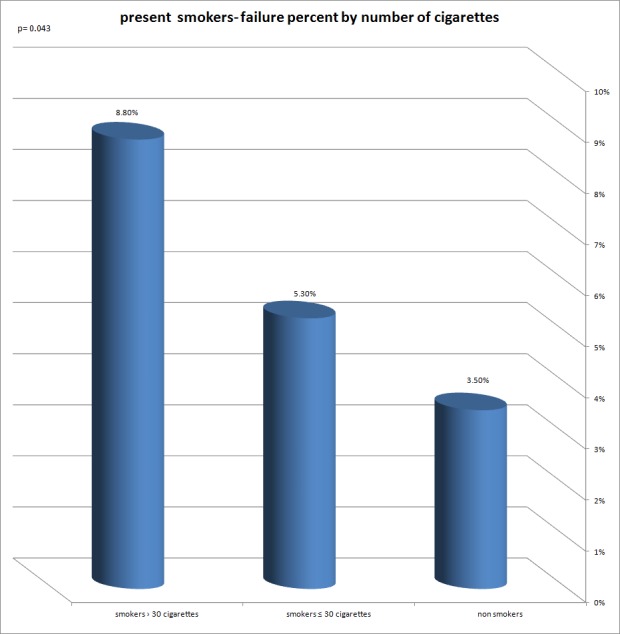
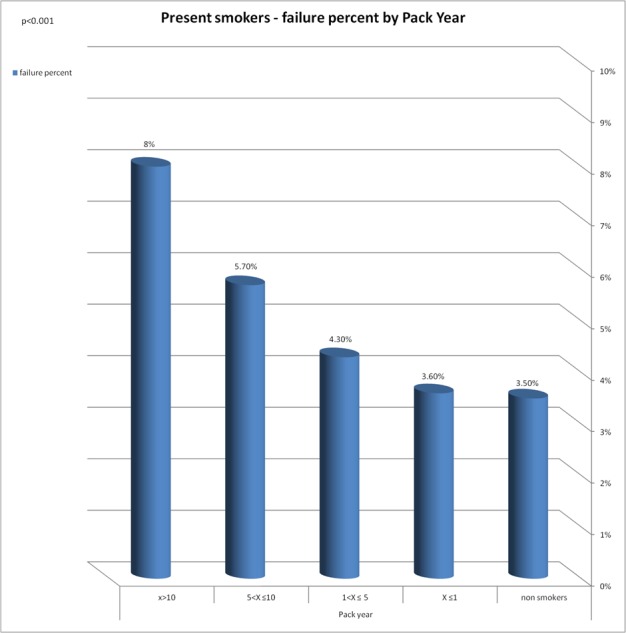
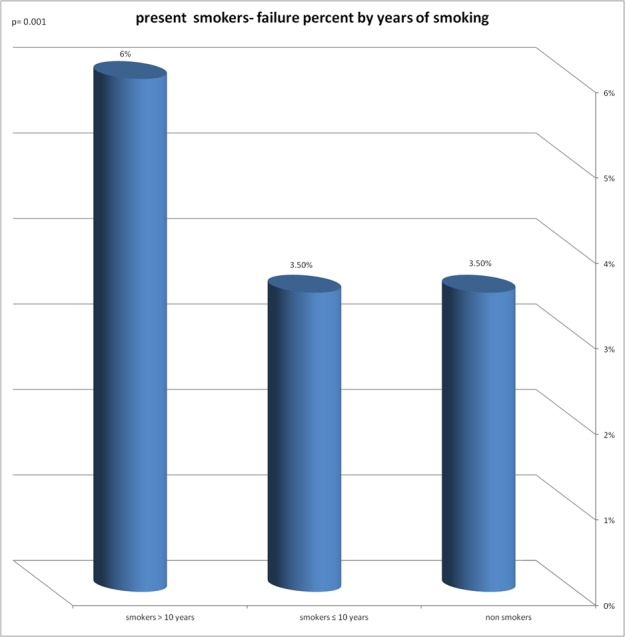
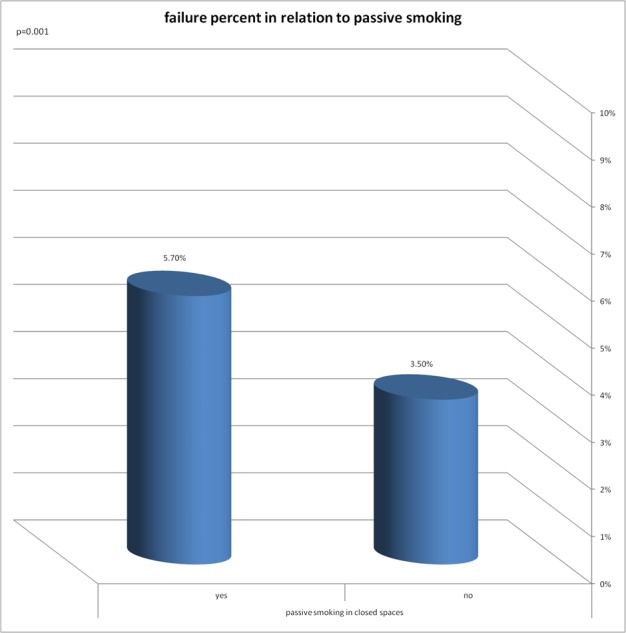
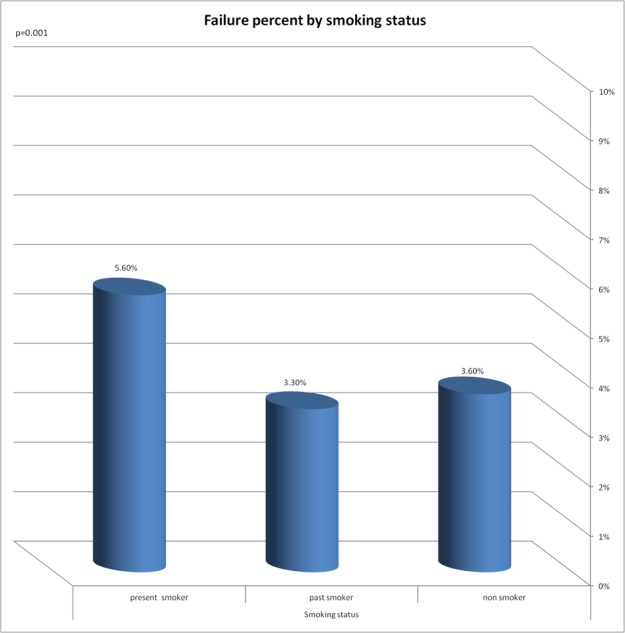
The aim of this study was to analyze the influence of smoking habits and other possibly relevant factors on dental implant survival. The study population included all patients who underwent dental implants between the years 1999 and 2008 at a large military dental clinic and were examined in the periodic medical examination center. Correlation between implant characteristics and patients' smoking habits, as mentioned in the questionnaire answered by patients in the periodic examination, was performed. Besides standard statistical methods, multiple linear regression models were constructed for estimation of the relative influence of some factors on implant survival rate. The long-term results of the implant treatment were good. The study refers to 7,680 implants. 7,359 (95.8%) survived and 321 (4.2%) did not survive. Concerning smoking habits, in a uni-variable analysis, factors found to have an association with implant survival were the smoking status of the patients (smoking/no smoking), the amount of smoking, passive smoking, and the time elapsed in ex-smokers from the time they ceased smoking to the time of implantation. In a multi-variable analysis, factors found to have an association with implant survival were smoking status (smoking/no smoking) and amounts of smoking as expressed in pack years.
本研究的目的是分析吸烟习惯及其他可能相关因素对牙种植体存留率的影响。研究人群包括1999年至2008年间在一家大型军队牙科诊所接受牙种植体植入并在定期体检中心接受检查的所有患者。对定期检查中患者问卷所提及的种植体特征与患者吸烟习惯之间的相关性进行了分析。除了标准统计方法外,还构建了多元线性回归模型以评估某些因素对种植体存留率的相对影响。种植治疗的长期效果良好。该研究涉及7680颗种植体。7359颗(95.8%)存活,321颗(4.2%)未存活。关于吸烟习惯,在单变量分析中,发现与种植体存留相关的因素有患者的吸烟状况(吸烟/不吸烟)、吸烟量、被动吸烟以及戒烟者从戒烟到植入种植体时所经过的时间。在多变量分析中,发现与种植体存留相关的因素有吸烟状况(吸烟/不吸烟)以及以包年表示的吸烟量。