Lai Meng-Chuan, Lombardo Michael V, Ecker Christine, Chakrabarti Bhismadev, Suckling John, Bullmore Edward T, Happé Francesca, Murphy Declan G M, Baron-Cohen Simon
Autism Research Centre, Department of Psychiatry, University of Cambridge, Cambridge CB2 8AH, UK Department of Psychiatry, National Taiwan University Hospital and College of Medicine, Taipei 10051, Taiwan.
Autism Research Centre, Department of Psychiatry, University of Cambridge, Cambridge CB2 8AH, UK Department of Psychology and Center for Applied Neuroscience, University of Cyprus, Nicosia CY 1678, Cyprus.
Cereb Cortex. 2015 Oct;25(10):3613-28. doi: 10.1093/cercor/bhu211. Epub 2014 Sep 23.
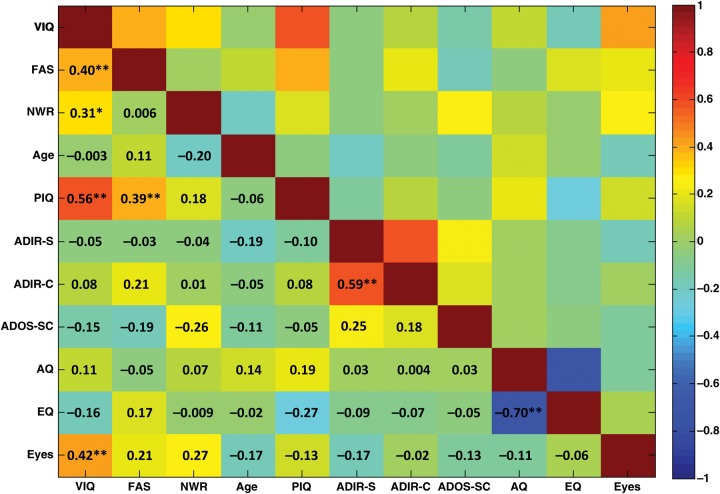
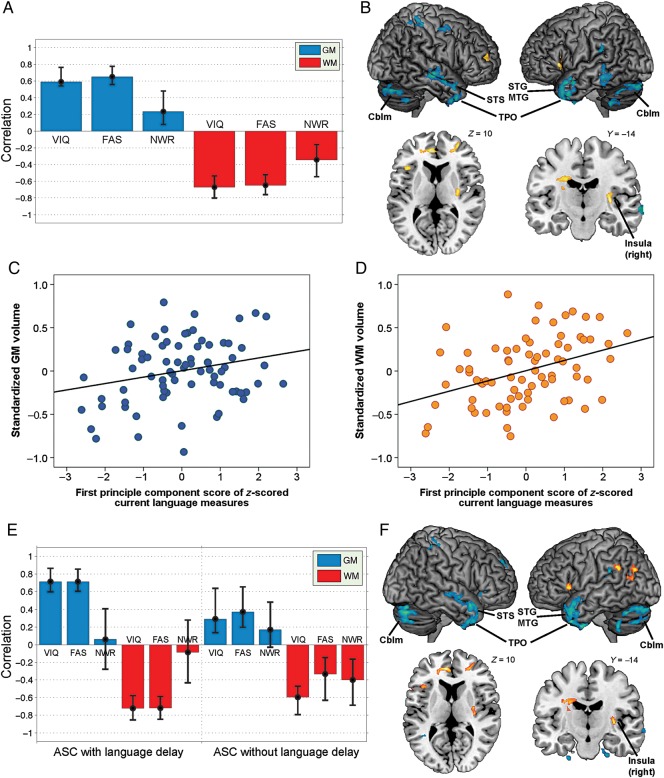
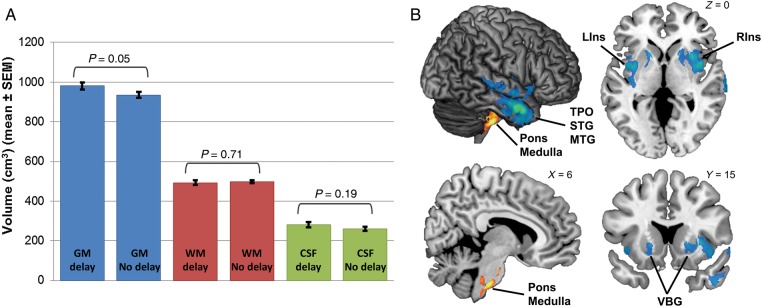
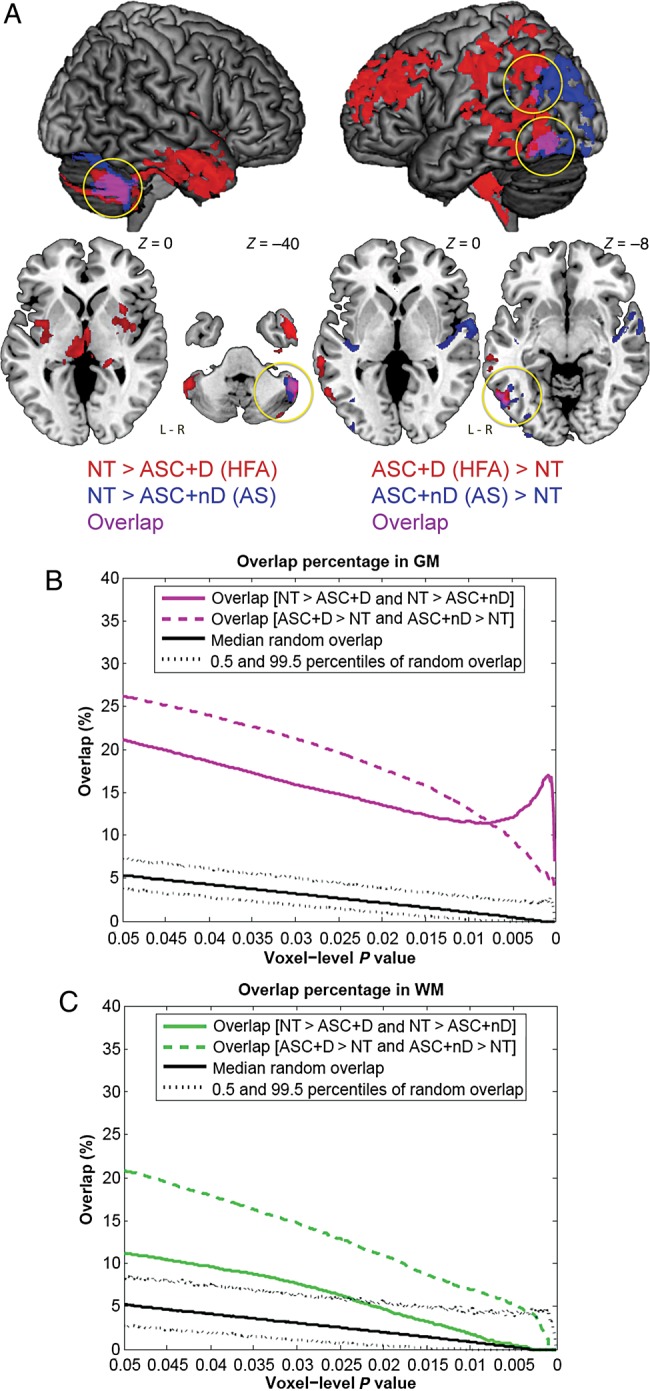
One potential source of heterogeneity within autism spectrum conditions (ASC) is language development and ability. In 80 high-functioning male adults with ASC, we tested if variations in developmental and current structural language are associated with current neuroanatomy. Groups with and without language delay differed behaviorally in early social reciprocity, current language, but not current autistic features. Language delay was associated with larger total gray matter (GM) volume, smaller relative volume at bilateral insula, ventral basal ganglia, and right superior, middle, and polar temporal structures, and larger relative volume at pons and medulla oblongata in adulthood. Despite this heterogeneity, those with and without language delay showed significant commonality in morphometric features when contrasted with matched neurotypical individuals (n = 57). In ASC, better current language was associated with increased GM volume in bilateral temporal pole, superior temporal regions, dorsolateral fronto-parietal and cerebellar structures, and increased white matter volume in distributed frontal and insular regions. Furthermore, current language-neuroanatomy correlation patterns were similar across subgroups with or without language delay. High-functioning adult males with ASC show neuroanatomical variations associated with both developmental and current language characteristics. This underscores the importance of including both developmental and current language as specifiers for ASC, to help clarify heterogeneity.
自闭症谱系障碍(ASC)中一个潜在的异质性来源是语言发展和能力。在80名患有ASC的高功能成年男性中,我们测试了发育性和当前结构性语言的差异是否与当前的神经解剖结构有关。有语言延迟和无语言延迟的组在早期社交互动、当前语言方面存在行为差异,但在当前自闭症特征方面没有差异。语言延迟与成年期更大的总灰质(GM)体积、双侧岛叶、腹侧基底神经节以及右侧颞叶上、中、极结构相对体积较小,以及脑桥和延髓相对体积较大有关。尽管存在这种异质性,但与匹配的神经典型个体(n = 57)相比,有语言延迟和无语言延迟的个体在形态特征上显示出显著的共性。在ASC中,更好的当前语言与双侧颞极、颞上区、背外侧额顶叶和小脑结构中GM体积增加,以及分布在额叶和岛叶区域的白质体积增加有关。此外,有或无语言延迟的亚组之间当前语言-神经解剖学相关模式相似。患有ASC的高功能成年男性表现出与发育性和当前语言特征相关的神经解剖学差异。这突出了将发育性和当前语言都作为ASC的特定指标的重要性,以帮助阐明异质性。