Chen Yuanyuan, Luo Guangyan, Yuan Jiao, Wang Yuanyuan, Yang Xiaoqiong, Wang Xiaoyun, Li Guoping, Liu Zhiguang, Zhong Nanshan
Respiratory Section, Affiliated Hospital of Luzhou Medical College, Luzhou 646000, China.
Hygiene Section, Luzhou Medical College, Luzhou, Sichuan 646000, China.
Mediators Inflamm. 2014;2014:426740. doi: 10.1155/2014/426740. Epub 2014 Sep 1.
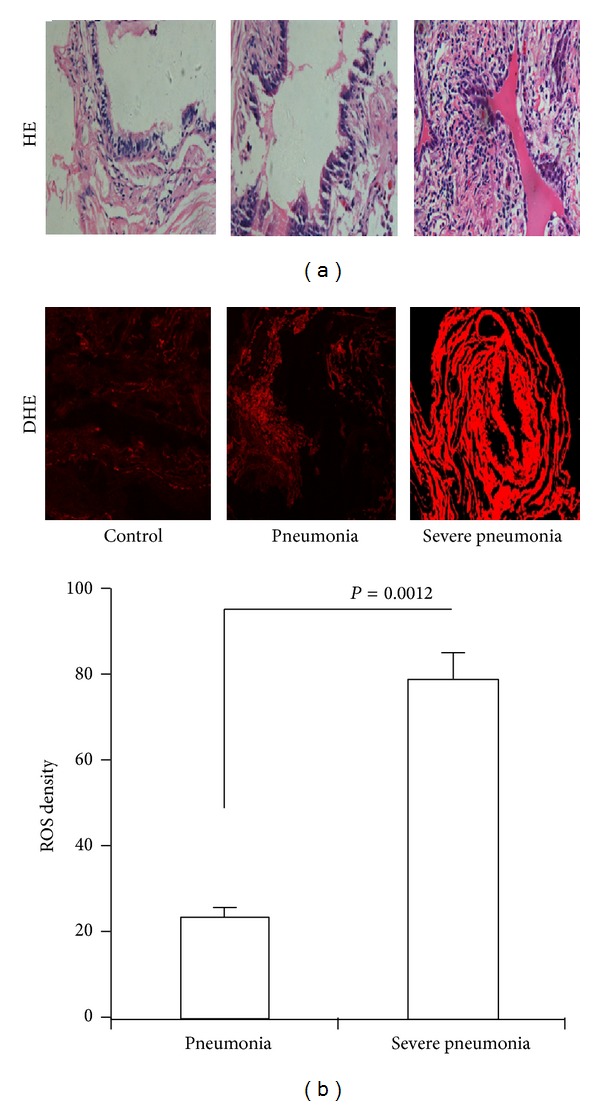
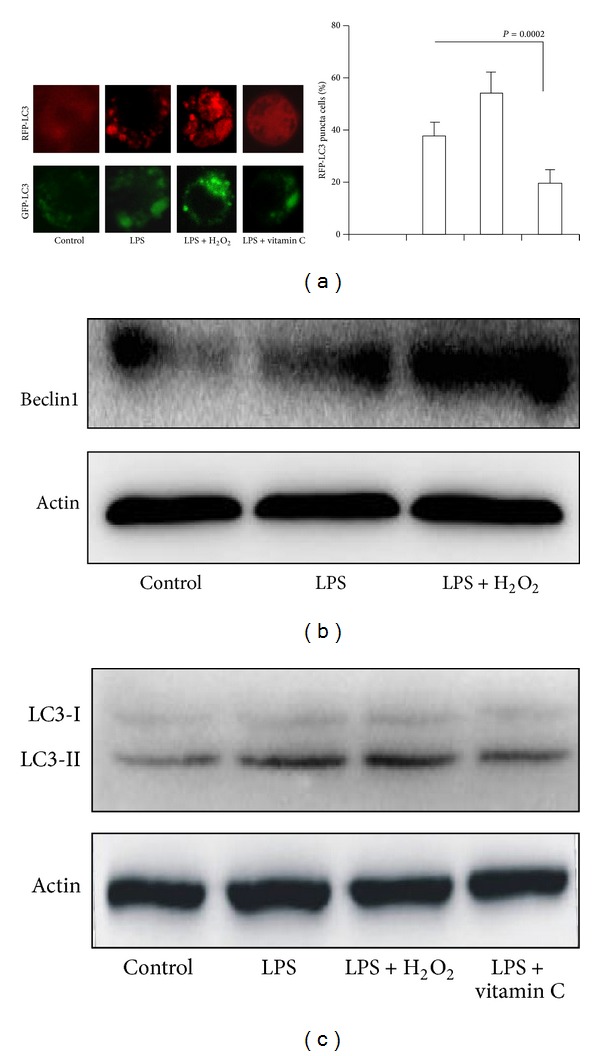
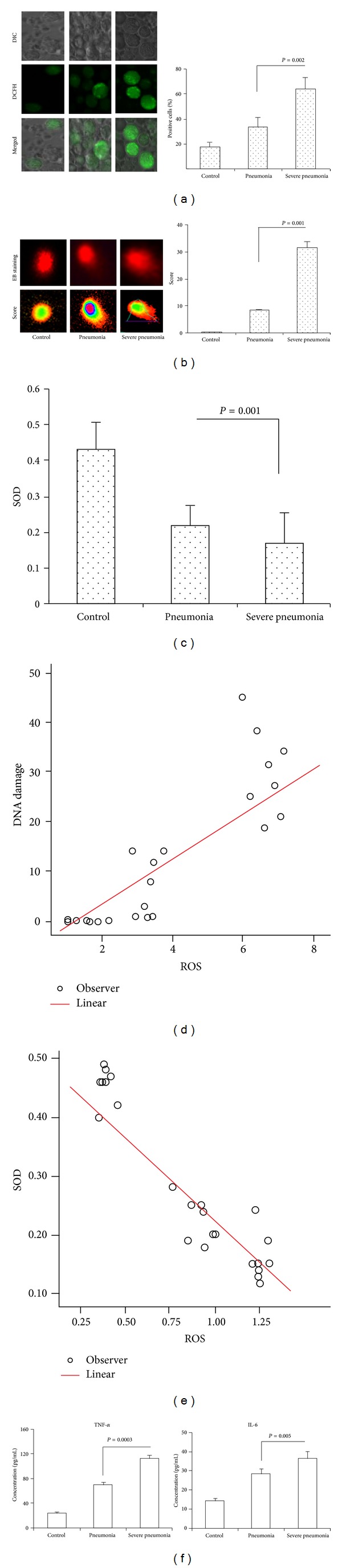
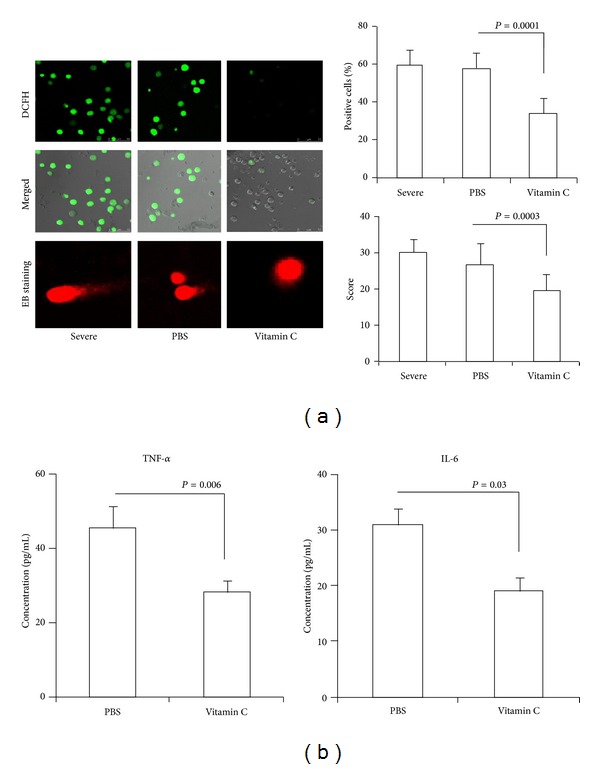
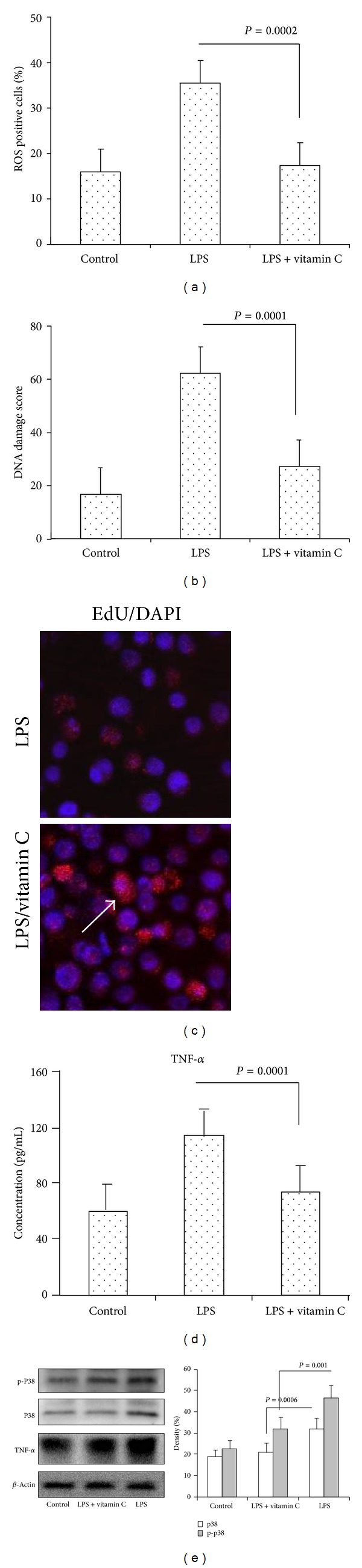
Oxidative stress is an important part of host innate immune response to foreign pathogens. However, the impact of vitamin C on oxidative stress and inflammation remains unclear in community-acquired pneumonia (CAP). We aimed to determine the effect of vitamin C on oxidative stress and inflammation. CAP patients were enrolled. Reactive oxygen species (ROS), DNA damage, superoxide dismutases (SOD) activity, tumor necrosis factor-alpha (TNF-α), and IL-6 were analyzed in CAP patients and LPS-stimulated macrophages cells. MH-S cells were transfected with RFP-LC3 plasmids. Autophagy was measured in LPS-stimulated macrophages cells. Severe CAP patients showed significantly increased ROS, DNA damage, TNF-α, and IL-6. SOD was significantly decreased in severe CAP. Vitamin C significantly decreased ROS, DNA damage, TNF-α, and IL-6. Vitamin C inhibited LPS-induced ROS, DNA damage, TNF-α, IL-6, and p38 in macrophages cells. Vitamin C inhibited autophagy in LPS-induced macrophages cells. These findings indicated that severe CAP exhibited significantly increased oxidative stress, DNA damage, and proinflammatory mediator. Vitamin C mitigated oxidative stress and proinflammatory mediator suggesting a possible mechanism for vitamin C in severe CAP.
氧化应激是宿主对外来病原体固有免疫反应的重要组成部分。然而,维生素C对社区获得性肺炎(CAP)中氧化应激和炎症的影响仍不明确。我们旨在确定维生素C对氧化应激和炎症的影响。纳入了CAP患者。对CAP患者和脂多糖(LPS)刺激的巨噬细胞进行了活性氧(ROS)、DNA损伤、超氧化物歧化酶(SOD)活性、肿瘤坏死因子-α(TNF-α)和白细胞介素-6(IL-6)分析。用红色荧光蛋白-微管相关蛋白1轻链3(RFP-LC3)质粒转染小鼠肺泡巨噬细胞系(MH-S)细胞。检测LPS刺激的巨噬细胞中的自噬。重度CAP患者的ROS、DNA损伤、TNF-α和IL-6显著增加。重度CAP患者的SOD显著降低。维生素C显著降低了ROS、DNA损伤、TNF-α和IL-6。维生素C抑制LPS诱导的巨噬细胞中的ROS、DNA损伤、TNF-α、IL-6和p38。维生素C抑制LPS诱导的巨噬细胞中的自噬。这些发现表明,重度CAP表现出氧化应激、DNA损伤和促炎介质显著增加。维生素C减轻了氧化应激和促炎介质,提示了维生素C在重度CAP中的一种可能机制。