Jiang Yanliang, Zhang Songhao, Xu Jian, Feng Jianxin, Mahboob Shahid, Al-Ghanim Khalid A, Sun Xiaowen, Xu Peng
CAFS Key Laboratory of Aquatic Genomics and Beijing Key Laboratory of Fishery Biotechnology, Centre for Applied Aquatic Genomics, Chinese Academy of Fishery Sciences, Beijing, China.
Henan Academy of Fishery Sciences, Zhengzhou, Henan, China.
PLoS One. 2014 Sep 25;9(9):e108200. doi: 10.1371/journal.pone.0108200. eCollection 2014.
The common carp is an important aquaculture species that is widely distributed across the world. During the long history of carp domestication, numerous carp strains with diverse skin colors have been established. Skin color is used as a visual criterion to determine the market value of carp. However, the genetic basis of common carp skin color has not been extensively studied.
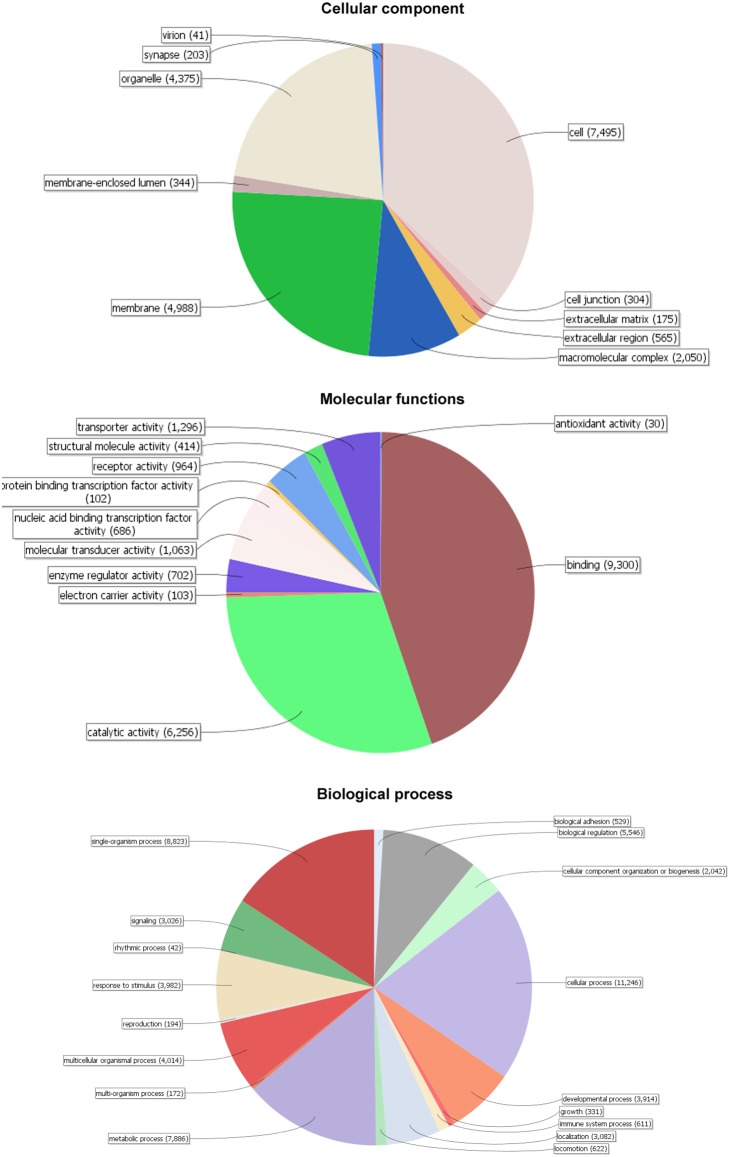
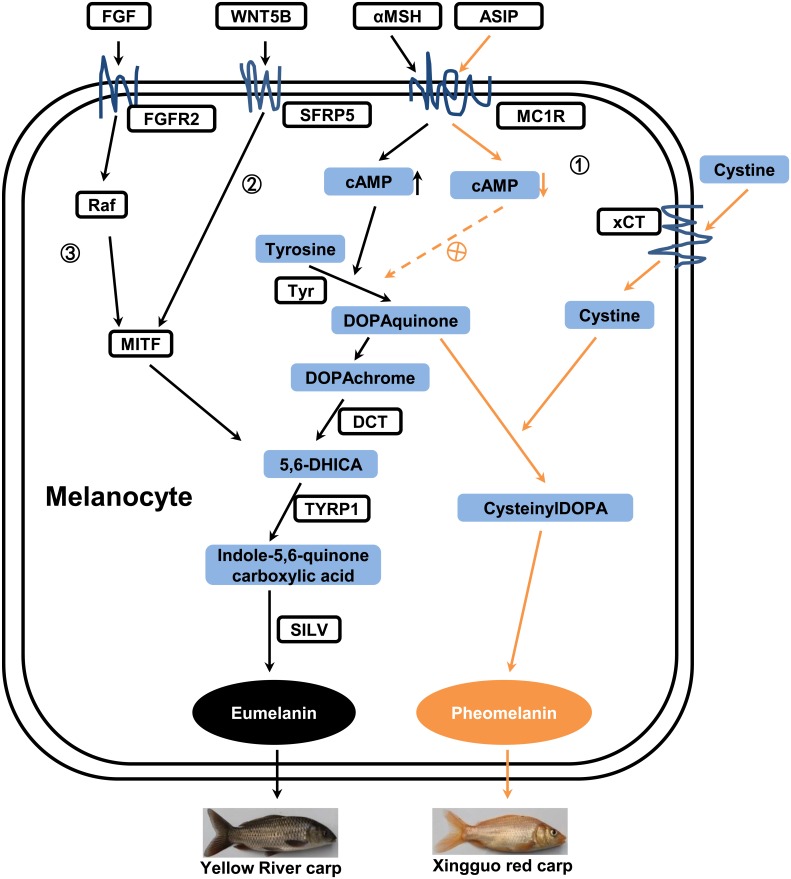
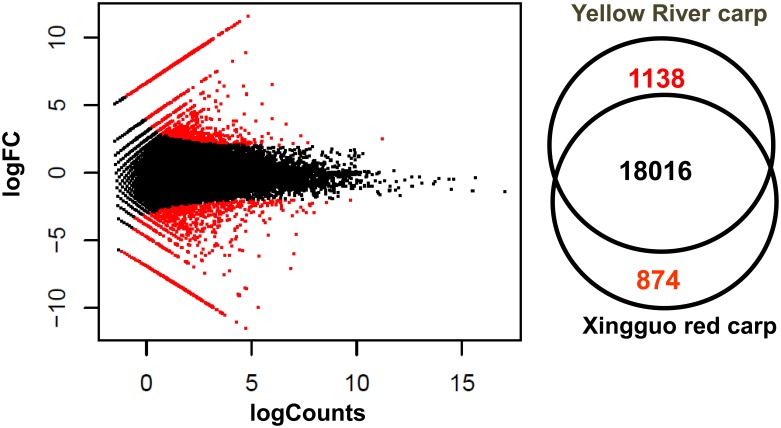
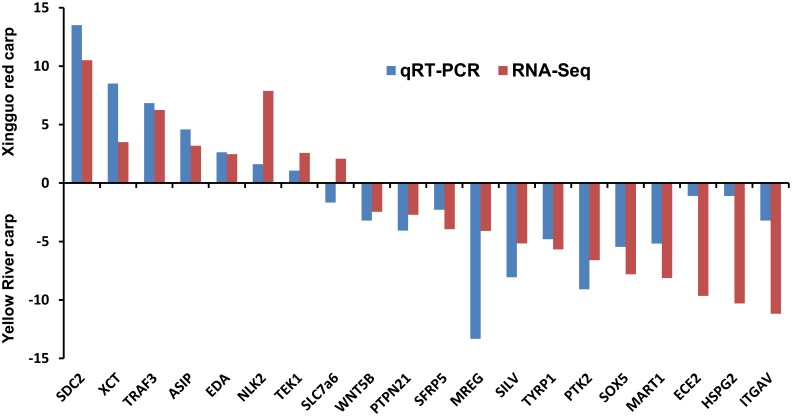
METHODOLOGY/PRINCIPAL FINDINGS: In this study, we performed Illumina sequencing on two common carp strains: the reddish Xingguo red carp and the brownish-black Yellow River carp. A total of 435,348,868 reads were generated, resulting in 198,781 assembled contigs that were used as reference sequences. Comparisons of skin transcriptome files revealed 2,012 unigenes with significantly different expression in the two common carp strains, including 874 genes that were up-regulated in Xingguo red carp and 1,138 genes that were up-regulated in Yellow River carp. The expression patterns of 20 randomly selected differentially expressed genes were validated using quantitative RT-PCR. Gene pathway analysis of the differentially expressed genes indicated that melanin biosynthesis, along with the Wnt and MAPK signaling pathways, is highly likely to affect the skin pigmentation process. Several key genes involved in the skin pigmentation process, including TYRP1, SILV, ASIP and xCT, showed significant differences in their expression patterns between the two strains.
In this study, we conducted a comparative transcriptome analysis of Xingguo red carp and Yellow River carp skins, and we detected key genes involved in the common carp skin pigmentation process. We propose that common carp skin pigmentation depends upon at least three pathways. Understanding fish skin color genetics will facilitate future molecular selection of the fish skin colors with high market values.
鲤鱼是一种重要的水产养殖物种,广泛分布于世界各地。在鲤鱼驯化的漫长历史中,已培育出许多具有不同肤色的鲤鱼品系。肤色被用作判断鲤鱼市场价值的视觉标准。然而,鲤鱼肤色的遗传基础尚未得到广泛研究。
方法/主要发现:在本研究中,我们对两种鲤鱼品系进行了Illumina测序:红色的兴国红鲤和棕黑色的黄河鲤。共产生了435,348,868条 reads,得到198,781个组装的重叠群,用作参考序列。皮肤转录组文件的比较揭示了两种鲤鱼品系中2,012个具有显著差异表达的单基因,其中包括在兴国红鲤中上调的874个基因和在黄河鲤中上调的1,138个基因。使用定量RT-PCR验证了20个随机选择的差异表达基因的表达模式。差异表达基因的基因通路分析表明,黑色素生物合成以及Wnt和MAPK信号通路极有可能影响皮肤色素沉着过程。参与皮肤色素沉着过程的几个关键基因,包括TYRP1、SILV、ASIP和xCT,在两种品系之间的表达模式存在显著差异。
在本研究中,我们对兴国红鲤和黄河鲤的皮肤进行了比较转录组分析,并检测到参与鲤鱼皮肤色素沉着过程的关键基因。我们提出鲤鱼皮肤色素沉着至少依赖于三条通路。了解鱼类肤色遗传学将有助于未来对具有高市场价值的鱼类肤色进行分子选择。