Alvarez-González Isela, Garcia-Melo Fernando, Vásquez-Garzón Verónica R, Villa-Treviño Saúl, Madrigal-Santillán E Osiris, Morales-González José A, Mendoza-Pérez Jorge A, Madrigal-Bujaidar Eduardo
Laboratorio de Genética, Escuela Nacional de Ciencias Biológicas, IPN, Unidad Profesional A. López Mateos, Avenida Wilfredo Massieu s/n, Zacatenco, Colonia, Lindavista, CP 07738, México, DF, Mexico.
Departamento de Biología Celular, Centro de Investigación y Estudios Avanzados, IPN, Avenida Instituto Politécnico 2508, Colonia San Pedro Zacatenco, Del. Gustavo A. Madero, CP 06360, México, DF, Mexico.
Evid Based Complement Alternat Med. 2014;2014:379890. doi: 10.1155/2014/379890. Epub 2014 Sep 3.
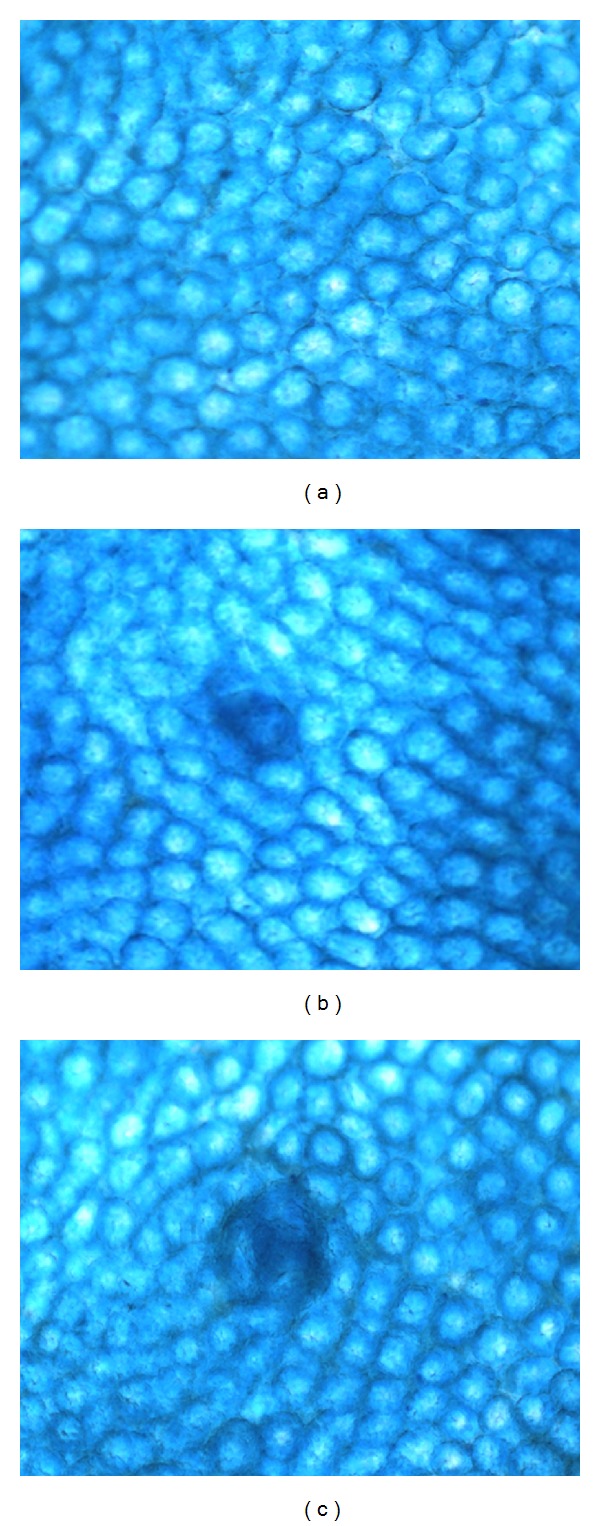
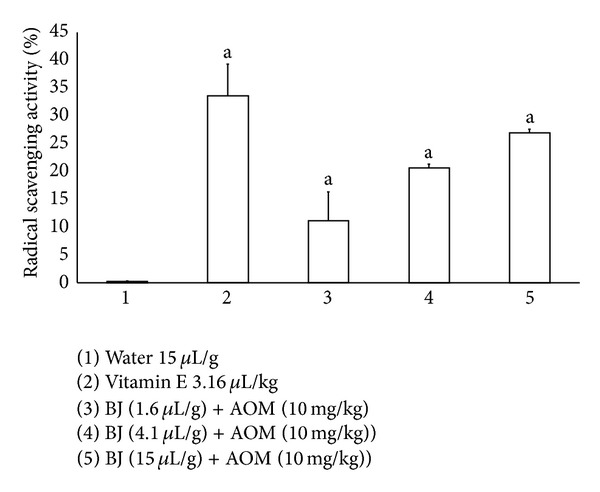
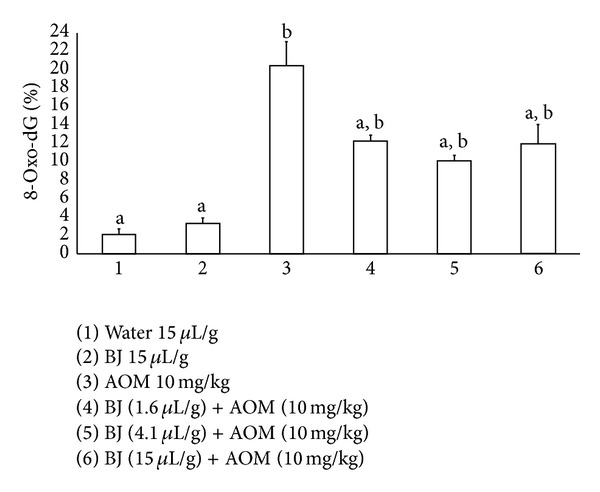
Blueberry is a plant with a number of nutritional and biomedical capabilities. In the present study we initially evaluated the capacity of its juice (BJ) to inhibit the number of aberrant crypts (AC) induced with azoxymethane (AOM) in mouse. BJ was administered daily by the oral route to three groups of animals during four weeks (1.6, 4.1, and 15.0 μL/g), respectively, while AOM (10 mg/kg) was intraperitoneally injected to the mentioned groups, twice a week, in weeks two and three of the assay. We also included two control groups of mice, one administered distilled water and the other the high dose of BJ. A significant increase of AC was observed in the AOM treated animals, and a mean protection of 75.6% was determined with the two low doses of BJ tested; however, the high dose of the juice administered together with AOM increased the number of crypts more than four times the value observed in animals administered only AOM. Furthermore, we determined the antioxidant potential of BJ with an ex vivo DPPH assay and found a dose-dependent decrease with a mean of 19.5%. We also determined the DNA oxidation/antioxidation by identifying 8-hydroxy-2'-deoxyguanosine adducts and found a mean decrease of 44.3% with the BJ administration with respect to the level induced by AOM. Our results show a complex differential effect of BJ related to the tested doses, opening the need to further evaluate a number of factors so as to determine the possibility of a cocarcinogenic potential.
蓝莓是一种具有多种营养和生物医学功能的植物。在本研究中,我们首先评估了其果汁(BJ)抑制小鼠中由氧化偶氮甲烷(AOM)诱导的异常隐窝(AC)数量的能力。在四周内,分别以每日经口途径向三组动物给予BJ(1.6、4.1和15.0 μL/g),而在实验的第二周和第三周,向上述组腹腔注射AOM(10 mg/kg),每周两次。我们还设置了两组小鼠对照组,一组给予蒸馏水,另一组给予高剂量的BJ。在接受AOM处理的动物中观察到AC显著增加,并且在所测试的两种低剂量BJ下确定平均保护率为75.6%;然而,与AOM一起给予的高剂量果汁使隐窝数量增加到仅接受AOM处理的动物中观察值的四倍以上。此外,我们通过体外DPPH试验测定了BJ的抗氧化潜力,发现其呈剂量依赖性降低,平均降低19.5%。我们还通过鉴定8-羟基-2'-脱氧鸟苷加合物来确定DNA氧化/抗氧化情况,发现与AOM诱导的水平相比,给予BJ后平均降低了44.3%。我们的结果显示BJ与所测试剂量相关的复杂差异效应,这表明需要进一步评估多个因素,以确定其是否具有共致癌潜力。