Chwała Wiesław, Koziana Agnieszka, Kasperczyk Tadeusz, Walaszek Robert, Płaszewski Maciej
Section of Biomechanics of the University School of Physical Education in Kraków, Al. Jana Pawła II 78, 31-571 Kraków, Poland.
Institute of Physiotherapy of the Podhale State Higher Vocational School in Nowy Targ, ul. Kokoszków 71, 34-400 Nowy Targ, Poland.
Biomed Res Int. 2014;2014:573276. doi: 10.1155/2014/573276. Epub 2014 Sep 2.
The question of how to correct and rehabilitate scoliosis remains one of the most difficult problems of orthopaedics. Controversies continue to arise regarding various types of both symmetric and asymmetric scoliosis-specific therapeutic exercises.
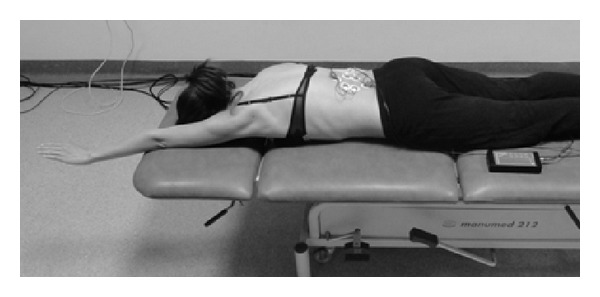
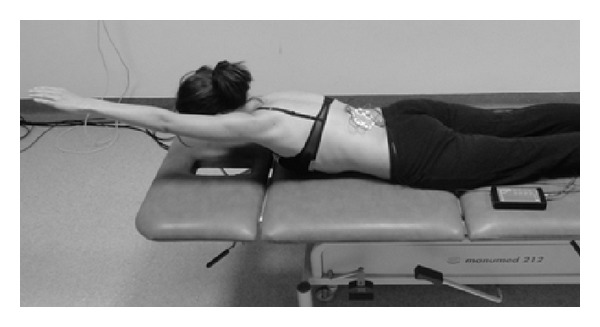
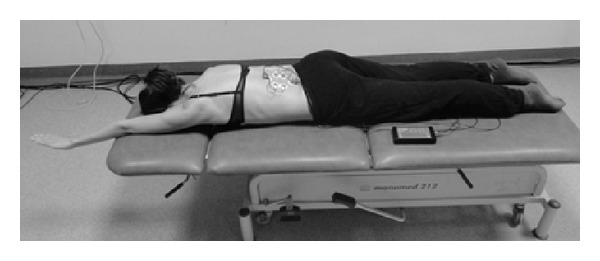
The aim of the present paper was to conduct an electromyographic assessment of functional symmetry of paraspinal muscles during symmetric and asymmetric exercises in adolescents with idiopathic scoliosis.
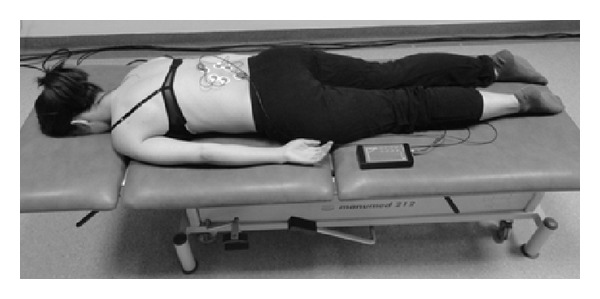
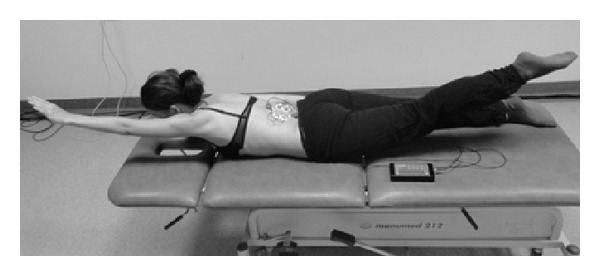
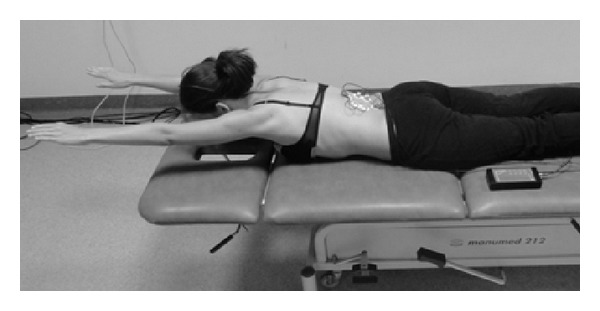
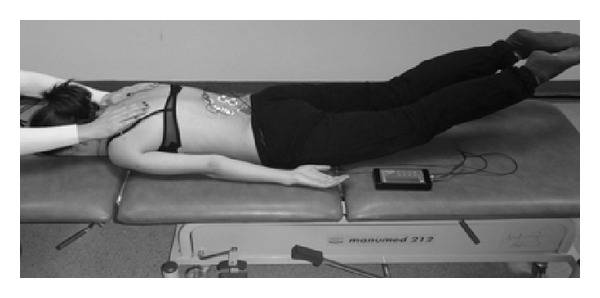
The study was conducted in a group of 82 girls, mean age 12.4 ± 2.3 years with single- or double-major-idiopathic scoliosis, Cobb angle 24 ± 9.4°. The functional biopotentials during isometric work of paraspinal muscles in "at rest" position and during two symmetric and four asymmetric exercises were measured with the use of the Muscle Tester ME 6000 electromyograph.
In general, asymmetric exercises were characterised by larger differences in bioelectrical activity of paraspinal muscles, in comparison with symmetric exercises, both in the groups of patients with single-curve and double-curve scoliosis.
During symmetric and asymmetric exercises, muscle tension patterns differed significantly in both groups, in comparison with the examination at rest, in most cases generating positive corrective patterns. Asymmetric exercises generated divergent muscle tension patterns on the convex and concave sides of the deformity.
如何矫正和康复脊柱侧弯仍然是骨科最棘手的问题之一。关于各种类型的对称性和非对称性脊柱侧弯特异性治疗性锻炼,争议不断。
本文旨在对特发性脊柱侧弯青少年在进行对称和不对称锻炼时椎旁肌功能对称性进行肌电图评估。
该研究纳入了82名女孩,平均年龄12.4±2.3岁,患有单主弯或双主弯特发性脊柱侧弯,Cobb角为24±9.4°。使用肌肉测试仪ME 6000肌电图仪测量椎旁肌在“休息”位置等长收缩时以及在两种对称和四种不对称锻炼过程中的功能性生物电位。
总体而言,与对称锻炼相比,单弯和双弯脊柱侧弯患者组在不对称锻炼时椎旁肌生物电活动差异更大。
在对称和不对称锻炼期间,与静息检查相比,两组的肌肉张力模式均有显著差异,在大多数情况下产生了积极的矫正模式。不对称锻炼在畸形的凸侧和凹侧产生了不同的肌肉张力模式。