Casarejos Maria Jose, Perucho Juan, López-Sendón Jose Luis, García de Yébenes Justo, Bettencourt Conceição, Gómez Ana, Ruiz Carolina, Heutink Peter, Rizzu Patrizia, Mena Maria Angeles
Department of Neurobiology, Hospital Ramón y Cajal, Madrid, Spain; CIBERNED, Instituto de Salud Carlos III, Madrid, Spain.
Department of Neurology, Hospital Ramón y Cajal, Madrid, Spain; CIBERNED, Instituto de Salud Carlos III, Madrid, Spain.
PLoS One. 2014 Sep 26;9(9):e106931. doi: 10.1371/journal.pone.0106931. eCollection 2014.
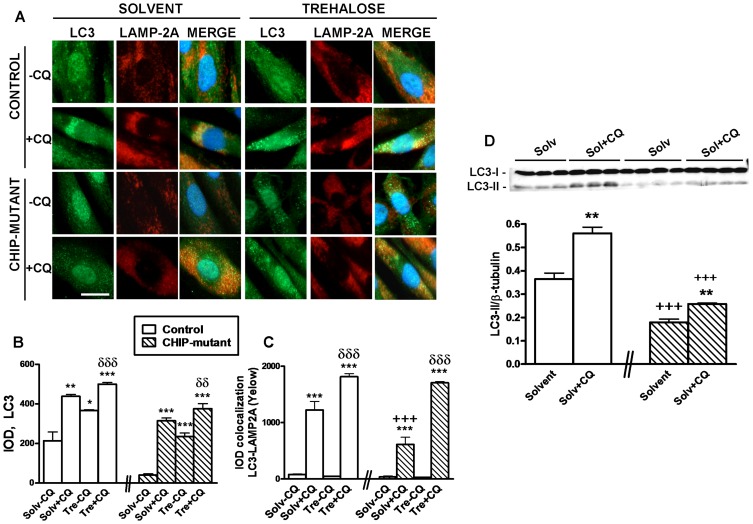
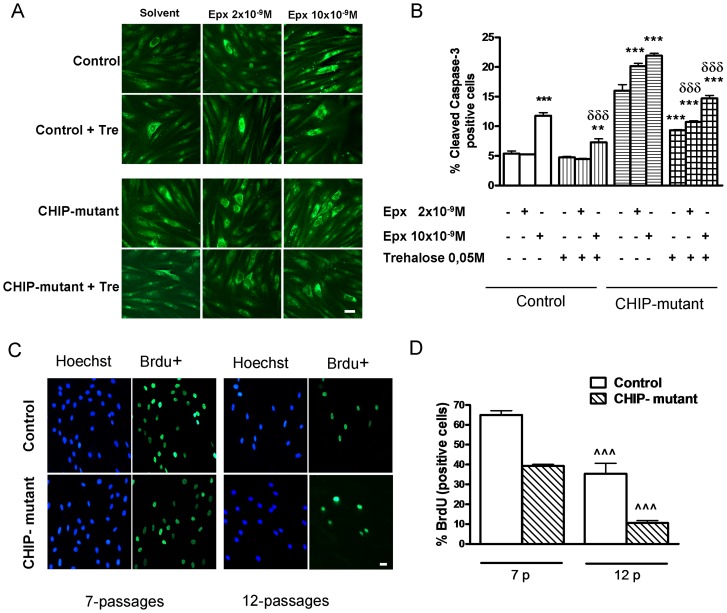
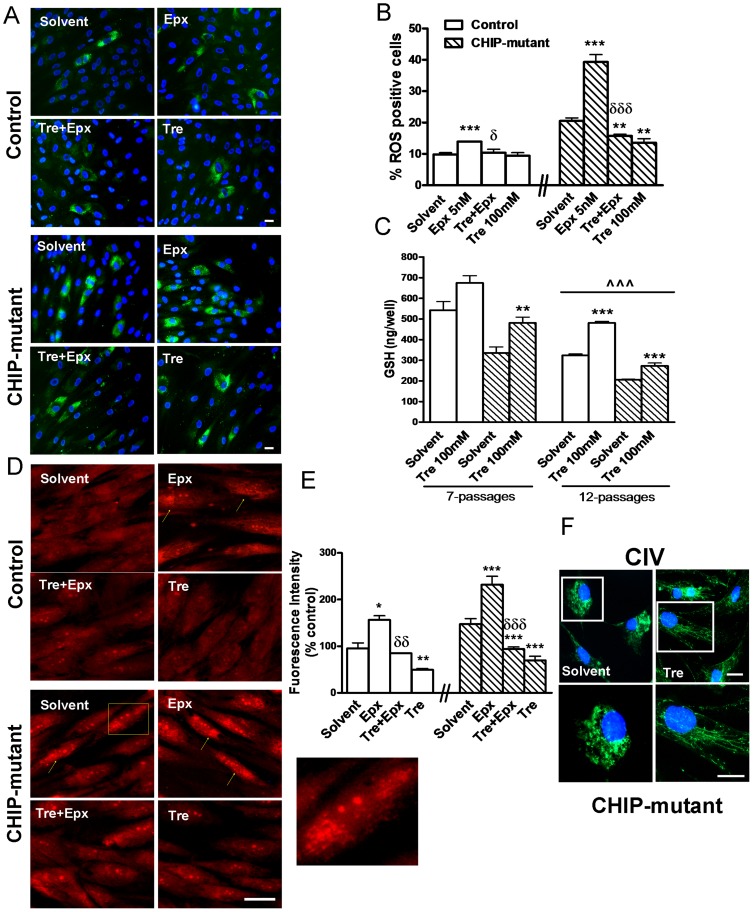
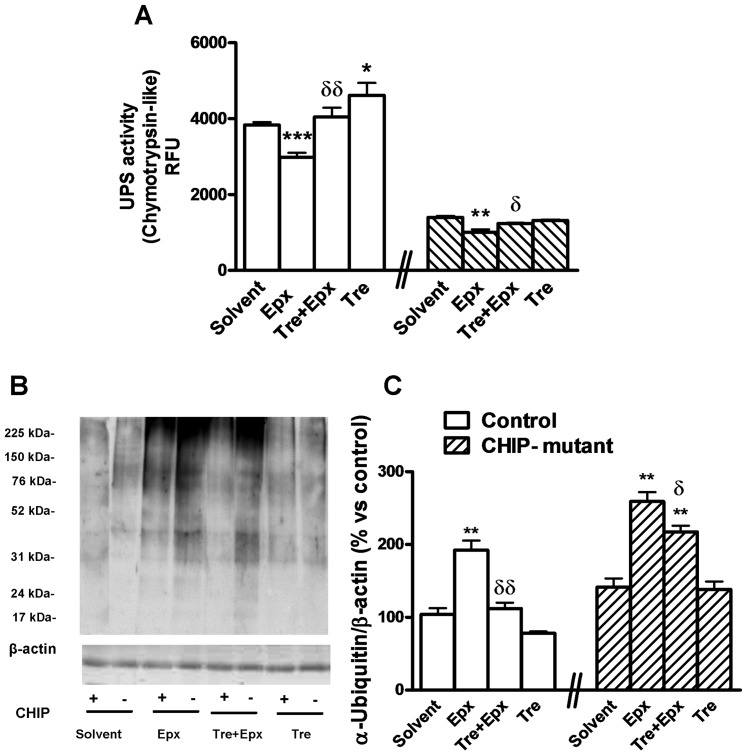
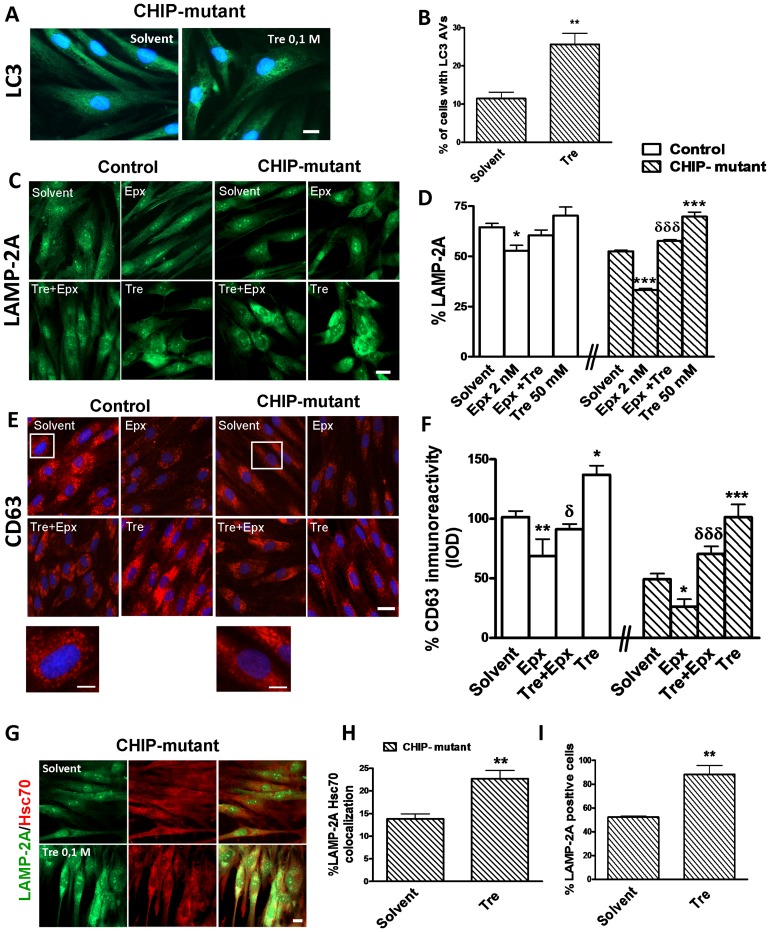
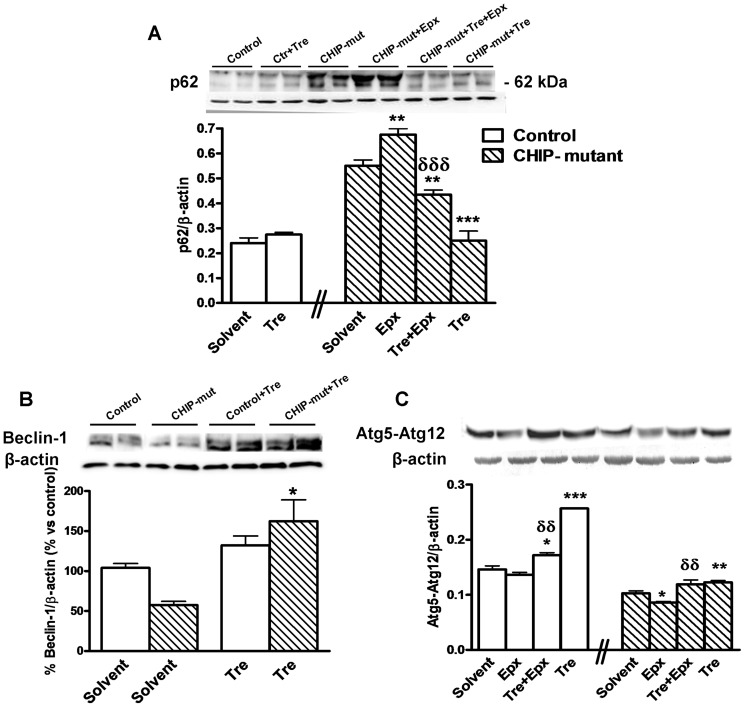
In this work we investigate the role of CHIP in a new CHIP-mutation related ataxia and the therapeutic potential of trehalose. The patient's fibroblasts with a new form of hereditary ataxia, related to STUB1 gene (CHIP) mutations, and three age and sex-matched controls were treated with epoxomicin and trehalose. The effects on cell death, protein misfolding and proteostasis were evaluated. Recent studies have revealed that mutations in STUB-1 gene lead to a growing list of molecular defects as deregulation of protein quality, inhibition of proteasome, cell death, decreased autophagy and alteration in CHIP and HSP70 levels. In this CHIP-mutant patient fibroblasts the inhibition of proteasome with epoxomicin induced severe pathophysiological age-associated changes, cell death and protein ubiquitination. Additionally, treatment with epoxomicin produced a dose-dependent increase in the number of cleaved caspase-3 positive cells. However, co-treatment with trehalose, a disaccharide of glucose present in a wide variety of organisms and known as a autophagy enhancer, reduced these pathological events. Trehalose application also increased CHIP and HSP70 expression and GSH free radical levels. Furthermore, trehalose augmented macro and chaperone mediated autophagy (CMA), rising the levels of LC3, LAMP2, CD63 and increasing the expression of Beclin-1 and Atg5-Atg12. Trehalose treatment in addition increased the percentage of immunoreactive cells to HSC70 and LAMP2 and reduced the autophagic substrate, p62. Although this is an individual case based on only one patient and the statistical comparisons are not valid between controls and patient, the low variability among controls and the obvious differences with this patient allow us to conclude that trehalose, through its autophagy activation capacity, anti-aggregation properties, anti-oxidative effects and lack of toxicity, could be very promising for the treatment of CHIP-mutation related ataxia, and possibly a wide spectrum of neurodegenerative disorders related to protein disconformation.
在本研究中,我们探究了CHIP在一种新的与CHIP突变相关的共济失调中的作用以及海藻糖的治疗潜力。将携带与STUB1基因(CHIP)突变相关的新型遗传性共济失调的患者成纤维细胞,以及三名年龄和性别匹配的对照,用环氧霉素和海藻糖进行处理。评估其对细胞死亡、蛋白质错误折叠和蛋白质稳态的影响。最近的研究表明,STUB-1基因突变导致越来越多的分子缺陷,如蛋白质质量调控异常、蛋白酶体抑制、细胞死亡、自噬减少以及CHIP和HSP70水平改变。在这些CHIP突变患者的成纤维细胞中,用环氧霉素抑制蛋白酶体可诱导严重的与年龄相关的病理生理变化、细胞死亡和蛋白质泛素化。此外,用环氧霉素处理会使裂解的半胱天冬酶-3阳性细胞数量呈剂量依赖性增加。然而,与海藻糖(一种存在于多种生物中的葡萄糖二糖,已知为自噬增强剂)联合处理可减少这些病理事件。海藻糖的应用还增加了CHIP和HSP70的表达以及谷胱甘肽自由基水平。此外,海藻糖增强了巨自噬和伴侣介导的自噬(CMA)水平,提高了LC3、LAMP2、CD63的水平,并增加了Beclin-1和Atg5-Atg12的表达。海藻糖处理还增加了对HSC70和LAMP2免疫反应性细胞的百分比,并减少了自噬底物p62。尽管这只是基于一名患者的个案,对照组和患者之间的统计比较无效,但对照组之间的低变异性以及与该患者的明显差异使我们得出结论,海藻糖通过其自噬激活能力、抗聚集特性、抗氧化作用和无毒性,对于治疗与CHIP突变相关的共济失调以及可能的一系列与蛋白质构象异常相关的神经退行性疾病可能非常有前景。