Teo Grace Sock Leng, Yang Zijiang, Carman Christopher V, Karp Jeffrey M, Lin Charles P
Harvard-MIT Health Sciences and Technology, Cambridge, Massachusetts, USA; Harvard Medical School, Boston, Massachusetts, USA; Center for Vascular Biology, Beth Israel Deaconess Medical Center, Boston, Massachusetts, USA; Brigham and Women's Hospital, Department of Biomedical Engineering, Harvard Stem Cell Institute, Cambridge, Massachusetts, USA; Wellman Center for Photomedicine, Massachusetts General Hospital, Boston, Massachusetts, USA.
Stem Cells. 2015 Jan;33(1):265-77. doi: 10.1002/stem.1848.
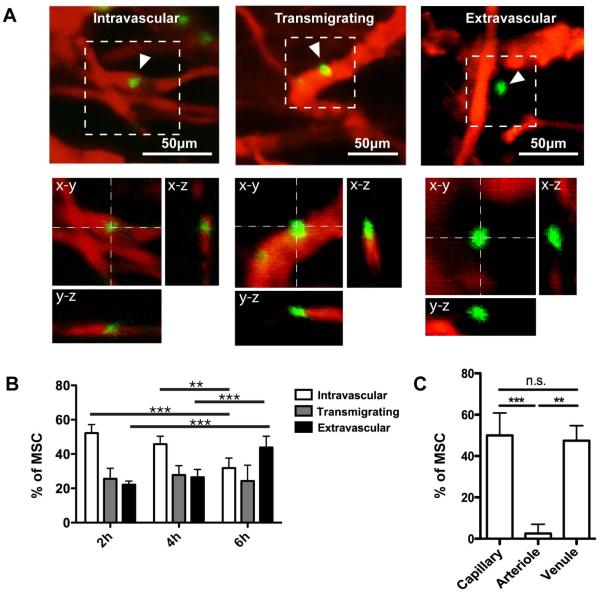
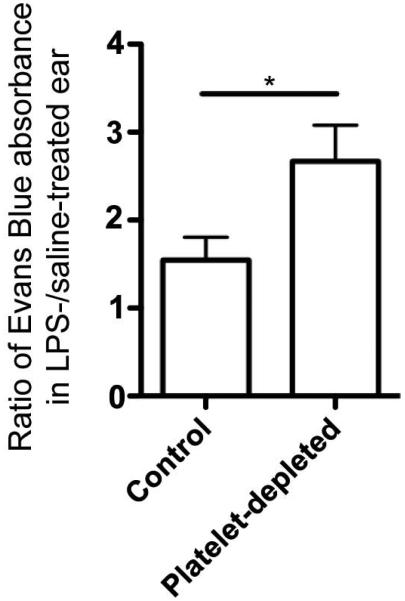
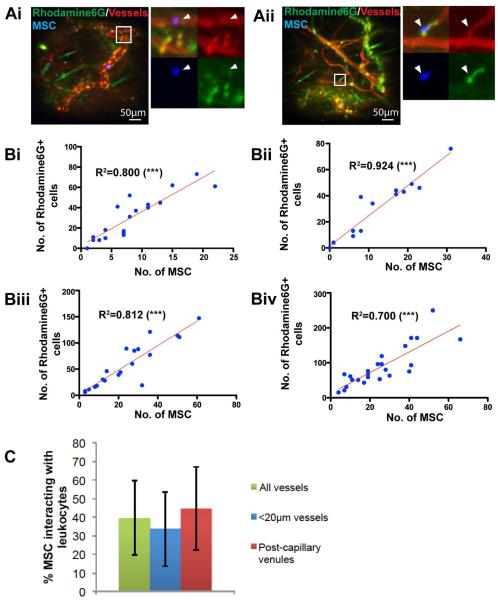
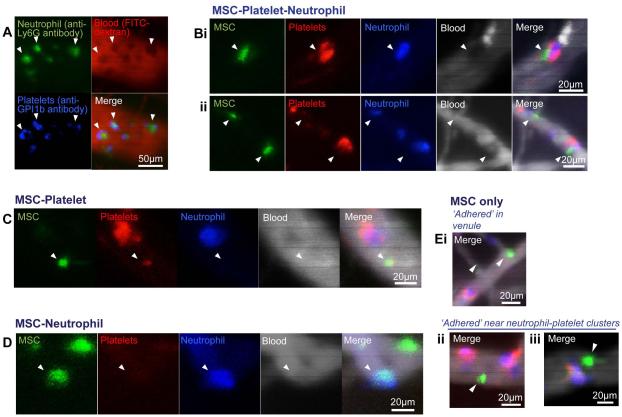
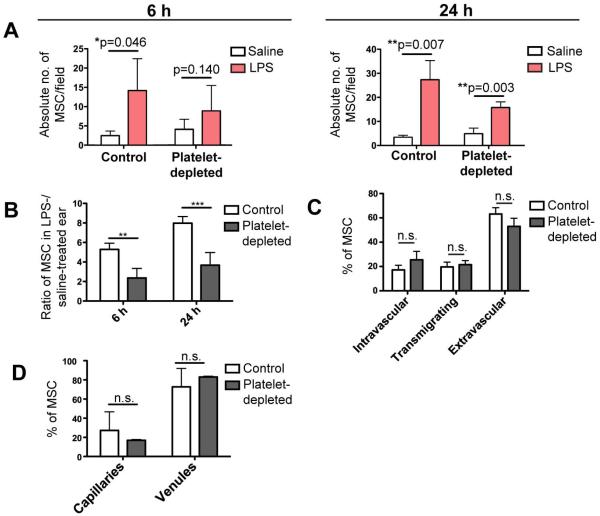
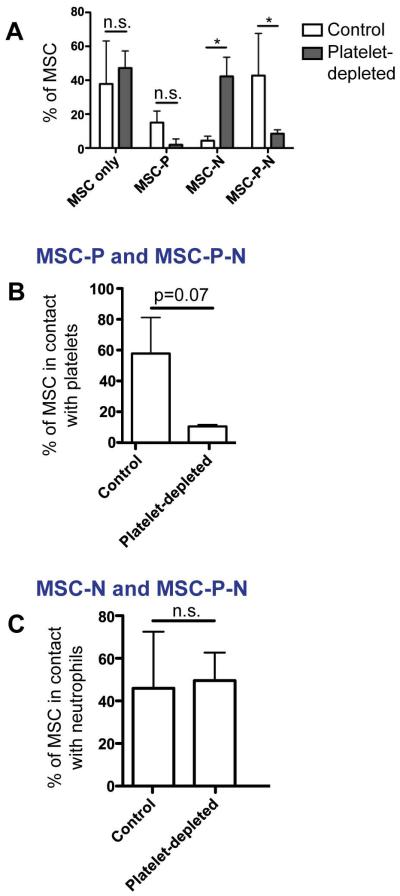
Early events of mesenchymal stem/stromal cell (MSC) adhesion to and transmigration through the vascular wall following systemic infusion are important for MSC trafficking to inflamed sites, yet are poorly characterized in vivo. Here, we used intravital confocal imaging to determine the acute extravasation kinetics and distribution of culture-expanded MSC (2-6 hours postinfusion) in a murine model of dermal inflammation. By 2 hours postinfusion, among the MSC that arrested within the inflamed ear dermis, 47.8% ± 8.2% of MSC had either initiated or completed transmigration into the extravascular space. Arrested and transmigrating MSCs were equally distributed within both small capillaries and larger venules. This suggested existence of an active adhesion mechanism, since venule diameters were greater than those of the MSC. Heterotypic intravascular interactions between distinct blood cell types have been reported to facilitate the arrest and extravasation of leukocytes and circulating tumor cells. We found that 42.8% ± 24.8% of intravascular MSC were in contact with neutrophil-platelet clusters. A role for platelets in MSC trafficking was confirmed by platelet depletion, which significantly reduced the preferential homing of MSC to the inflamed ear, although the total percentage of MSC in contact with neutrophils was maintained. Interestingly, although platelet depletion increased vascular permeability in the inflamed ear, there was decreased MSC accumulation. This suggests that increased vascular permeability is unnecessary for MSC trafficking to inflamed sites. These findings represent the first glimpse into MSC extravasation kinetics and microvascular distribution in vivo, and further clarify the roles of active adhesion, the intravascular cellular environment, and vascular permeability in MSC trafficking.
间充质干/基质细胞(MSC)经全身输注后与血管壁的黏附及穿越血管壁的早期事件对于MSC向炎症部位的迁移很重要,但在体内的特征尚不明确。在此,我们利用活体共聚焦成像技术来确定培养扩增的MSC(输注后2 - 6小时)在小鼠皮肤炎症模型中的急性渗出动力学及分布情况。输注后2小时,在滞留于炎症耳部真皮内的MSC中,47.8%±8.2%的MSC已开始或完成向血管外间隙的迁移。滞留和迁移的MSC在小毛细血管和较大静脉中分布均匀。这表明存在一种主动黏附机制,因为静脉直径大于MSC。据报道,不同血细胞类型之间的异型血管内相互作用有助于白细胞和循环肿瘤细胞的滞留及渗出。我们发现42.8%±24.8%的血管内MSC与中性粒细胞 - 血小板簇接触。血小板耗竭证实了血小板在MSC迁移中的作用,这显著降低了MSC向炎症耳部的优先归巢,尽管与中性粒细胞接触的MSC的总百分比保持不变。有趣的是,尽管血小板耗竭增加了炎症耳部的血管通透性,但MSC的积累却减少了。这表明增加的血管通透性对于MSC向炎症部位的迁移并非必要。这些发现首次揭示了体内MSC的渗出动力学及微血管分布,并进一步阐明了主动黏附、血管内细胞环境和血管通透性在MSC迁移中的作用。