Unitat de Micologia, Facultat de Medicina i Ciències de la Salut and IISPV, Universitat Rovira i Virgili, Sant Llorenç 21, 43201 Reus, Tarragona, Spain;
Fungus Testing Laboratory, University of Texas Health Science Center, San Antonio, Texas, USA.
Persoonia. 2014 Jun;32:102-14. doi: 10.3767/003158514X680207. Epub 2014 Mar 10.
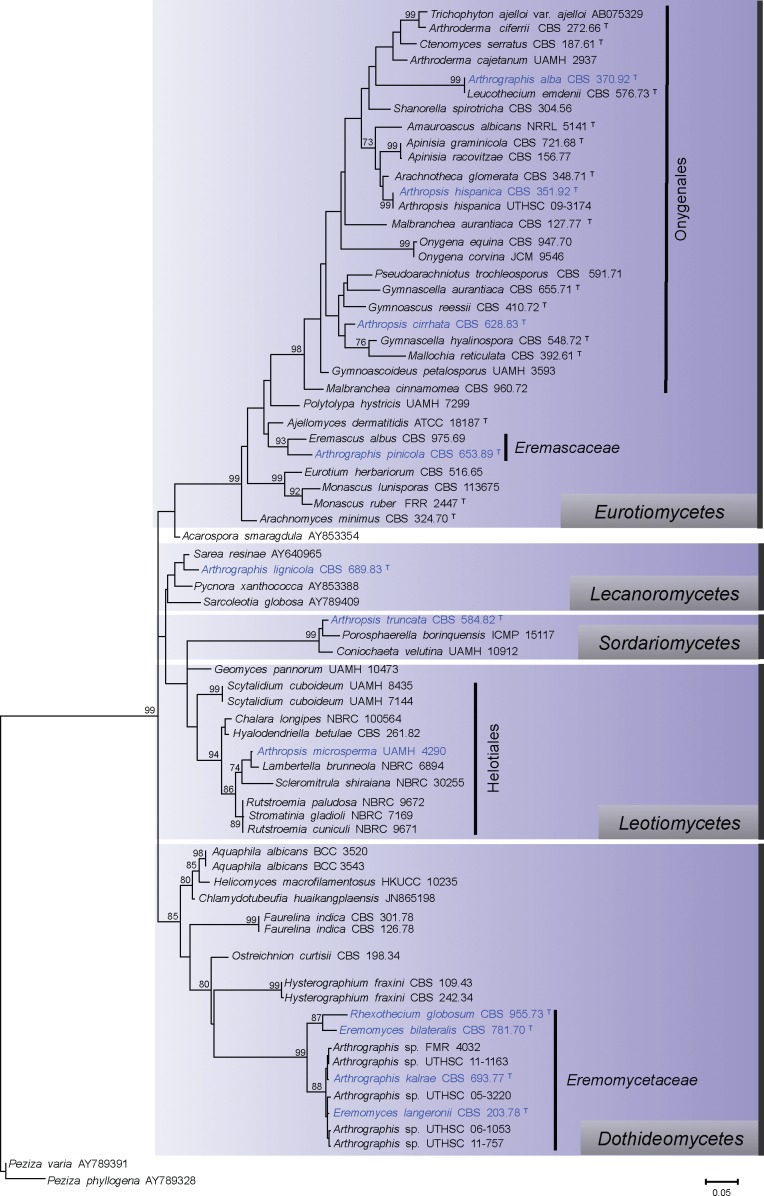
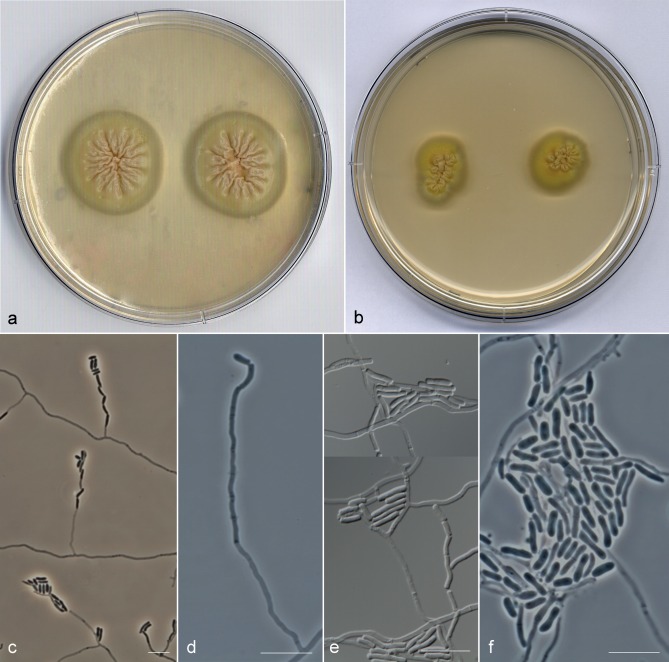
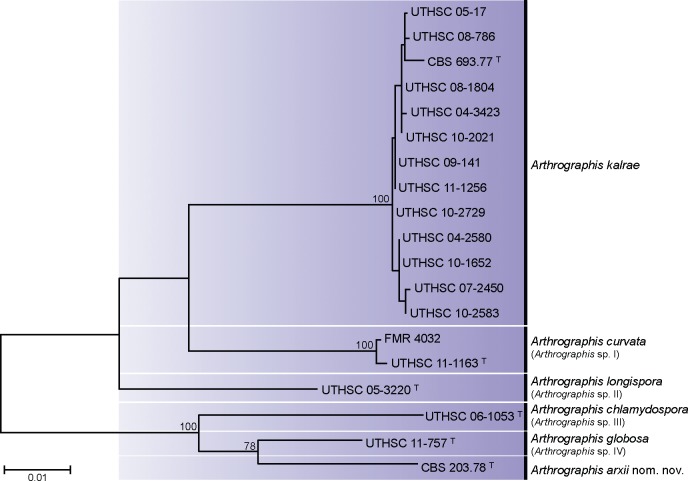
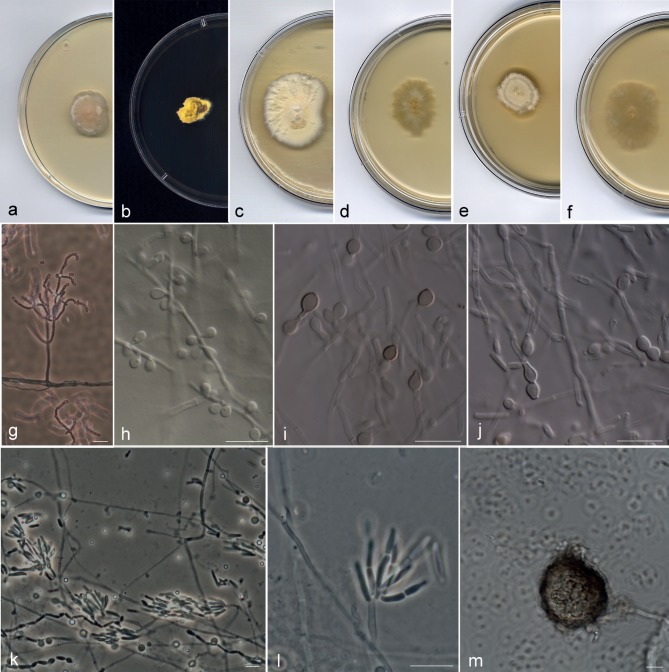
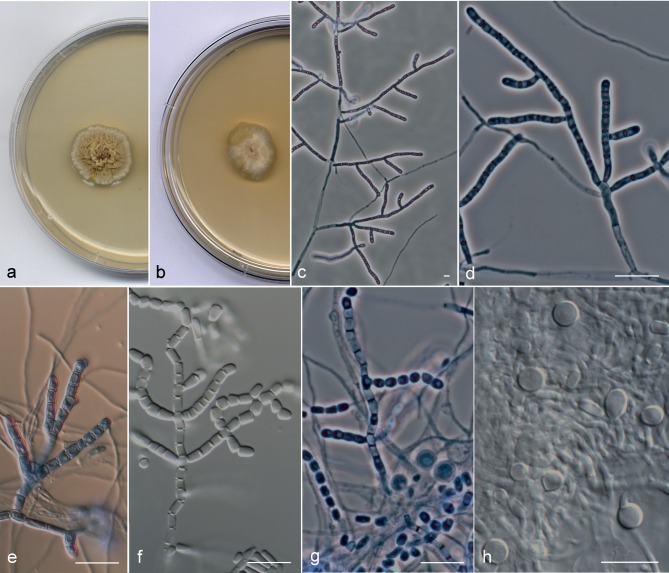
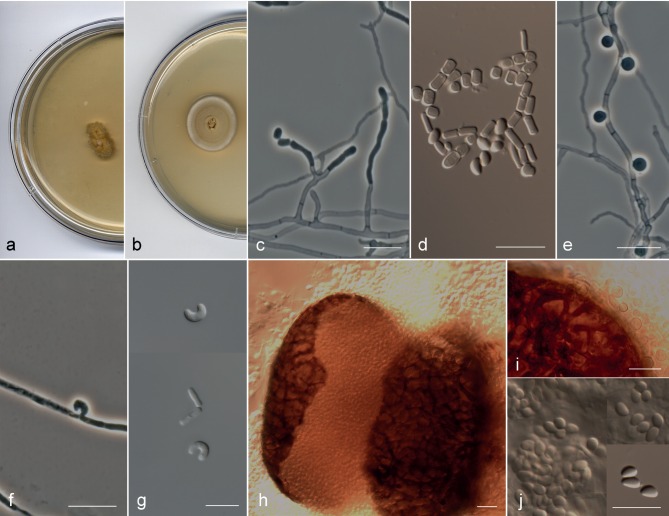
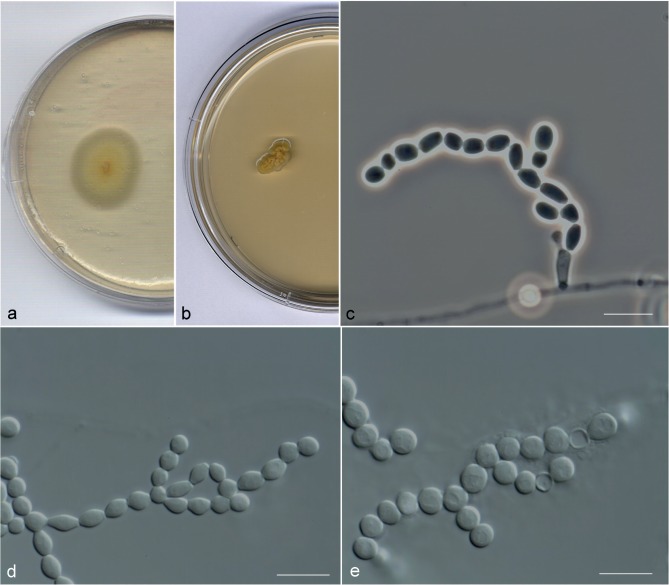
Numerous members of Ascomycota and Basidiomycota produce only poorly differentiated arthroconidial asexual morphs in culture. These arthroconidial fungi are grouped in genera where the asexual-sexual connections and their taxonomic circumscription are poorly known. In the present study we explored the phylogenetic relationships of two of these ascomycetous genera, Arthrographis and Arthropsis. Analysis of D1/D2 sequences of all species of both genera revealed that both are polyphyletic, with species being accommodated in different orders and classes. Because genetic variability was detected among reference strains and fresh isolates resembling the genus Arthrographis, we carried out a detailed phenotypic and phylogenetic analysis based on sequence data of the ITS region, actin and chitin synthase genes. Based on these results, four new species are recognised, namely Arthrographis chlamydospora, A. curvata, A. globosa and A. longispora. Arthrographis chlamydospora is distinguished by its cerebriform colonies, branched conidiophores, cuboid arthroconidia and terminal or intercalary globose to subglobose chlamydospores. Arthrographis curvata produced both sexual and asexual morphs, and is characterised by navicular ascospores and dimorphic conidia, namely cylindrical arthroconidia and curved, cashewnut-shaped conidia formed laterally on vegetative hyphae. Arthrographis globosa produced membranous colonies, but is mainly characterised by doliiform to globose arthroconidia. Arthrographis longispora also produces membranous colonies, but has poorly differentiated conidiophores and long arthroconidia. Morphological variants are described for A. kalrae and our results also revealed that Eremomyces langeronii and A. kalrae, traditionally considered the sexual and asexual morphs of the same species, are not conspecific.
许多子囊菌和担子菌在培养中仅产生形态分化较差的节孢子无性型。这些节孢子真菌被归入无性-有性连接及其分类界限知之甚少的属中。在本研究中,我们探讨了两个子囊菌属 Arthrographis 和 Arthropsis 的系统发育关系。对这两个属的所有种的 D1/D2 序列分析表明,它们都是多系的,种被归入不同的目和纲中。由于在参考菌株和类似 Arthrographis 属的新鲜分离物中检测到遗传变异性,我们进行了详细的表型和基于 ITS 区、肌动蛋白和几丁质合成酶基因序列数据的系统发育分析。基于这些结果,识别出四个新种,即 Arthrographis chlamydospora、A. curvata、A. globosa 和 A. longispora。Arthrographis chlamydospora 的特征为脑形菌落、分枝的分生孢子梗、立方体型节孢子和末端或中间球形至近球形的厚垣孢子。Arthrographis curvata 产生有性和无性两种形态,其特征为舟形子囊孢子和二态分生孢子,即圆柱形节孢子和在营养菌丝上侧向形成的弯曲、腰果形分生孢子。Arthrographis globosa 产生膜状菌落,但主要特征为杆状至球形节孢子。Arthrographis longispora 也产生膜状菌落,但分生孢子梗分化较差,节孢子较长。还描述了 A. kalrae 的形态变体,我们的结果还表明,传统上被认为是同一物种的有性和无性形态的 Eremomyces langeronii 和 A. kalrae 不是同物种。