Sandoval-Denis M, Gené J, Sutton D A, Cano-Lira J F, de Hoog G S, Decock C A, Wiederhold N P, Guarro J
Unitat de Micologia, Facultat de Medicina i Ciències de la Salut, IISPV, Universitat Rovira i Virgili, Reus, Spain;
Fungus Testing Laboratory, Department of Pathology, University of Texas Health Science Center, San Antonio, Texas, USA.
Persoonia. 2016 Jun;36:1-36. doi: 10.3767/003158516X688027. Epub 2015 Apr 15.
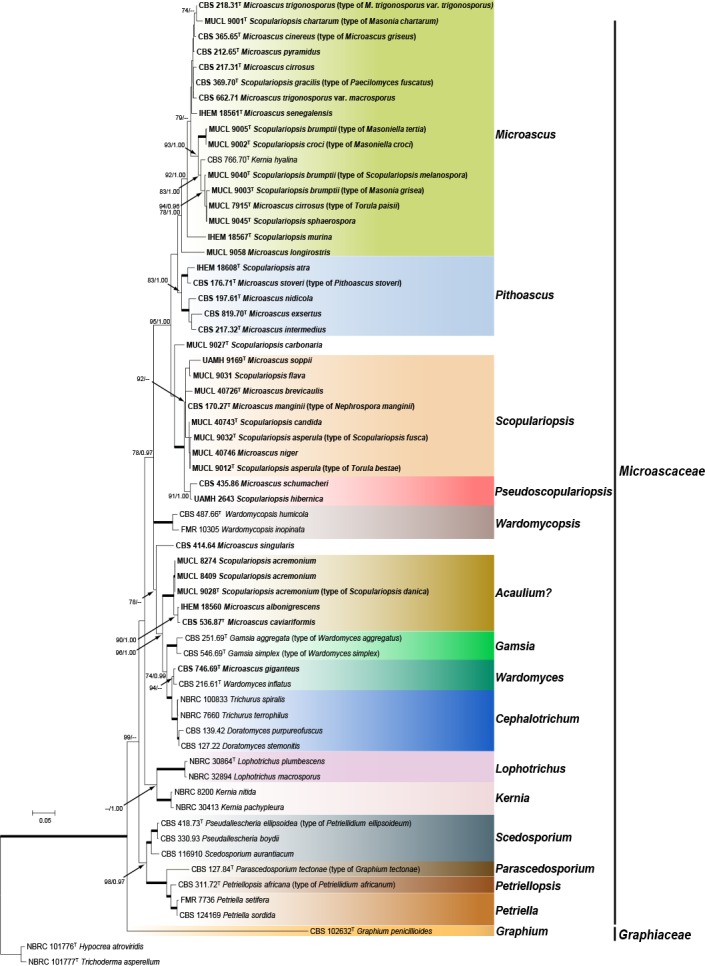
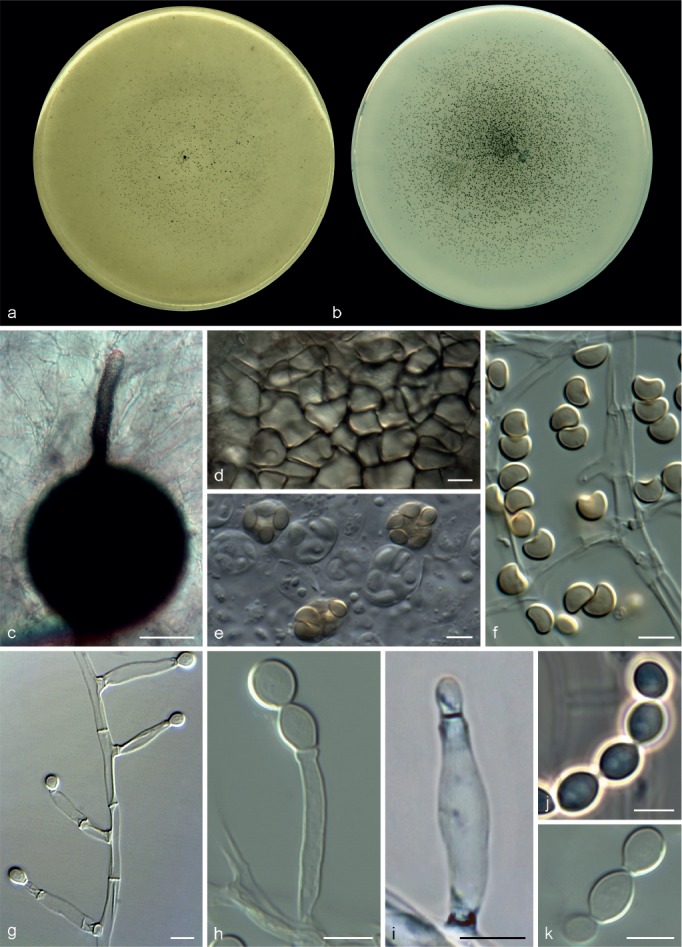
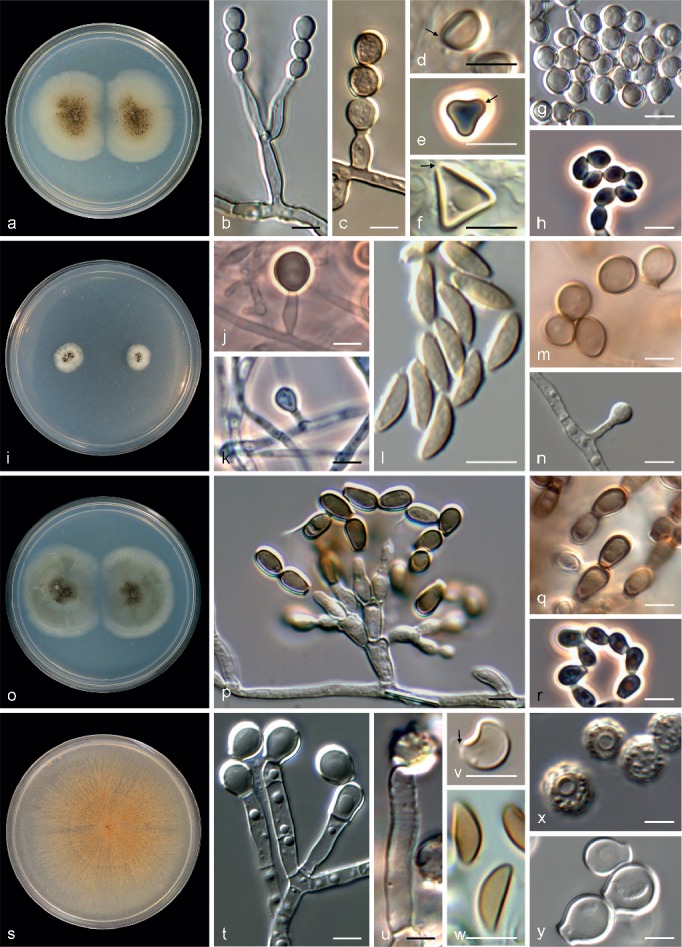
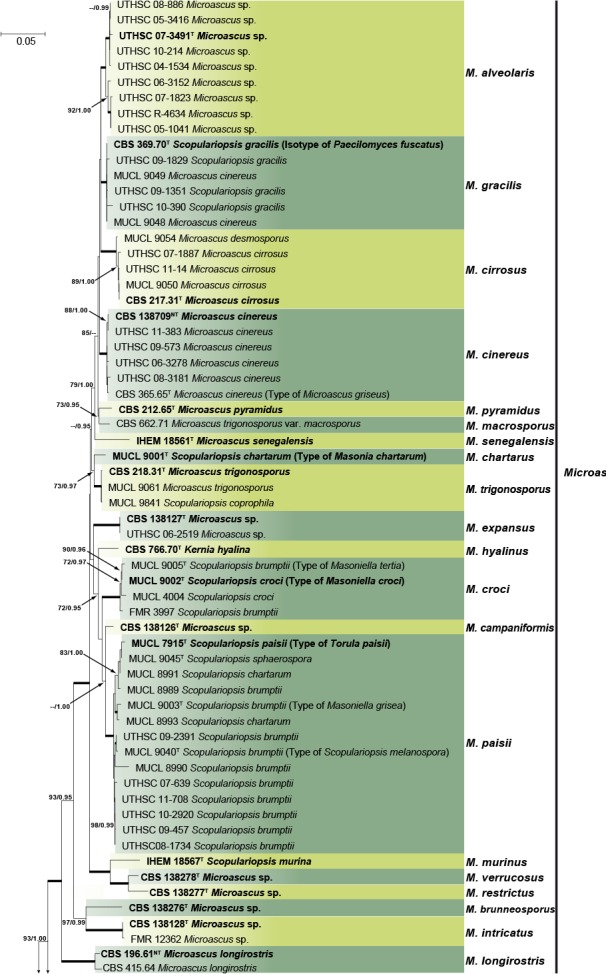
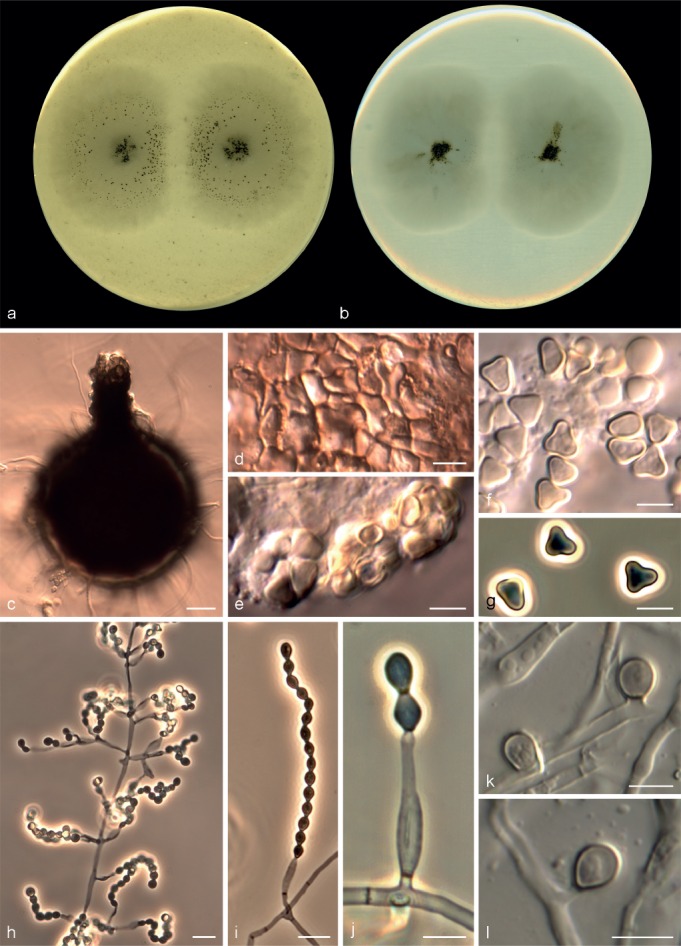
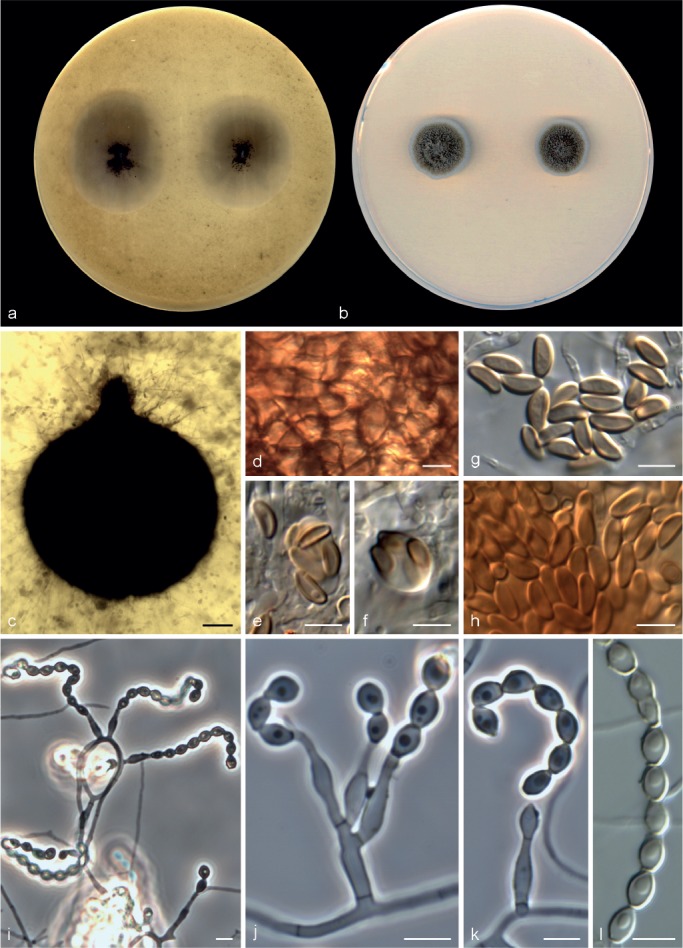
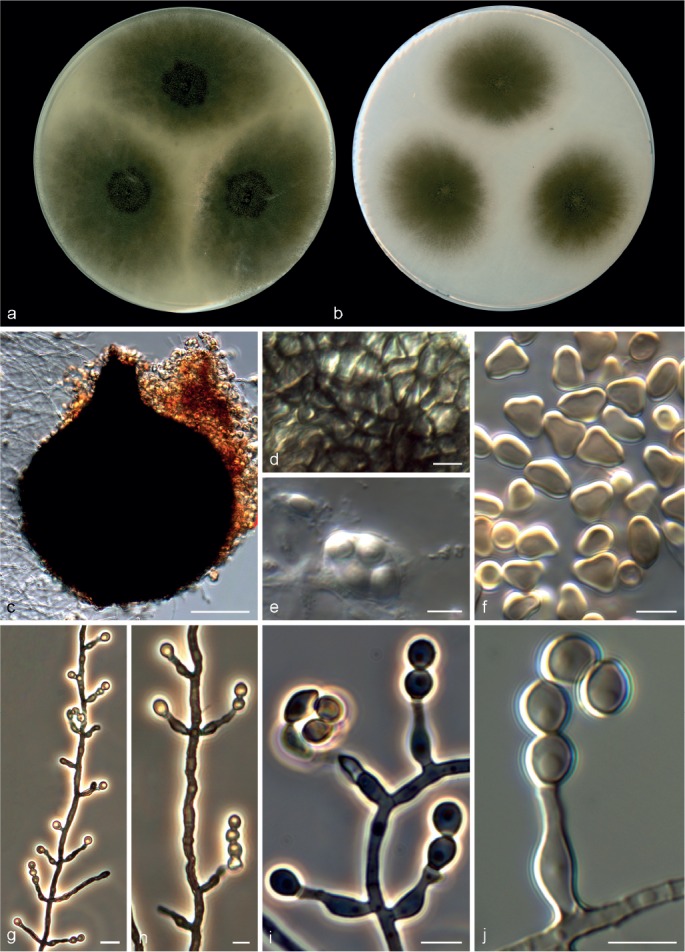
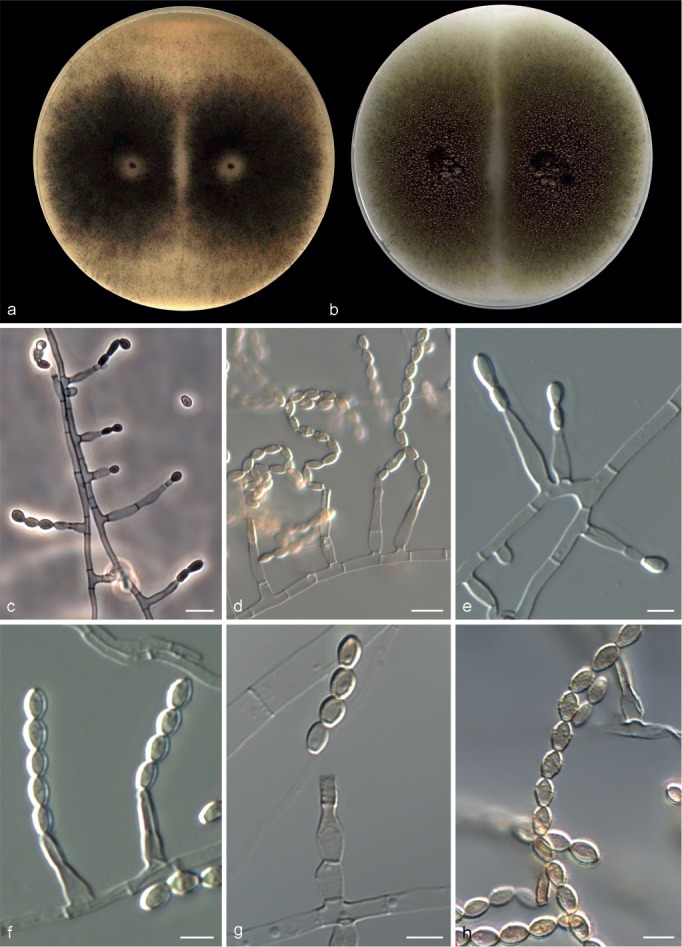
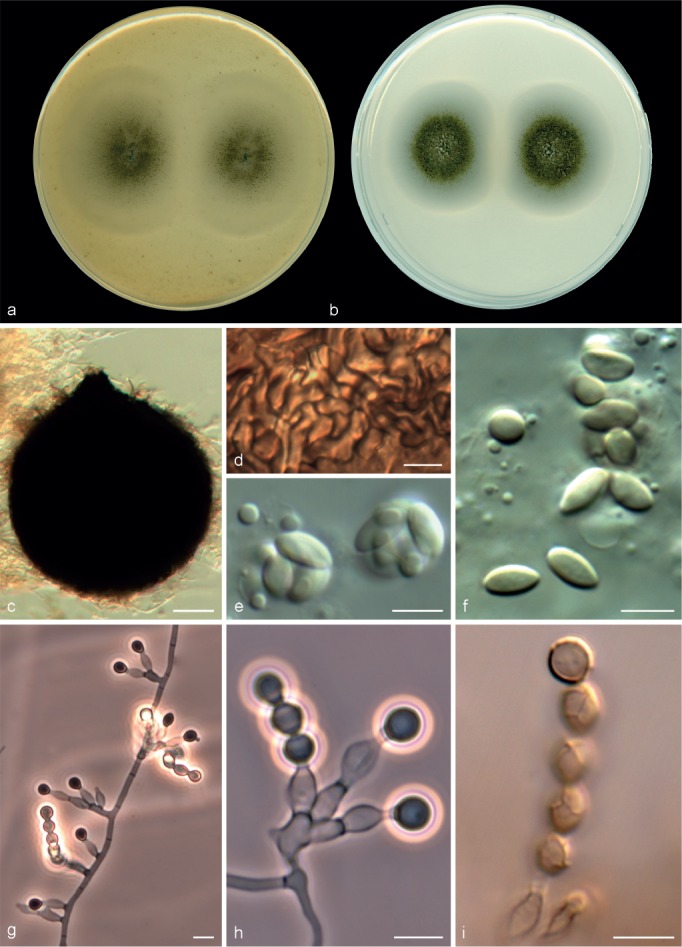
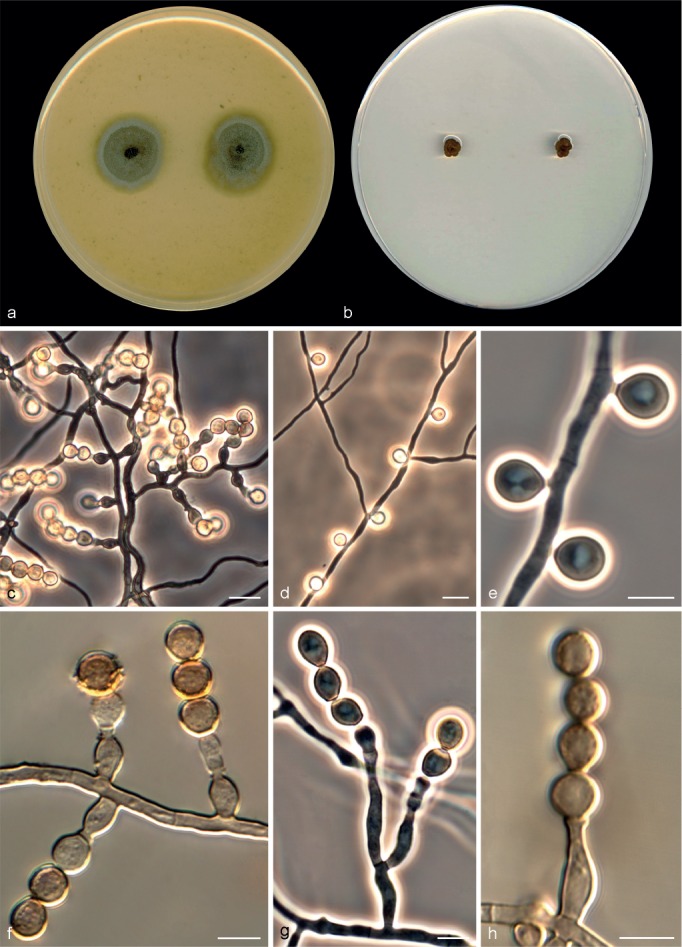
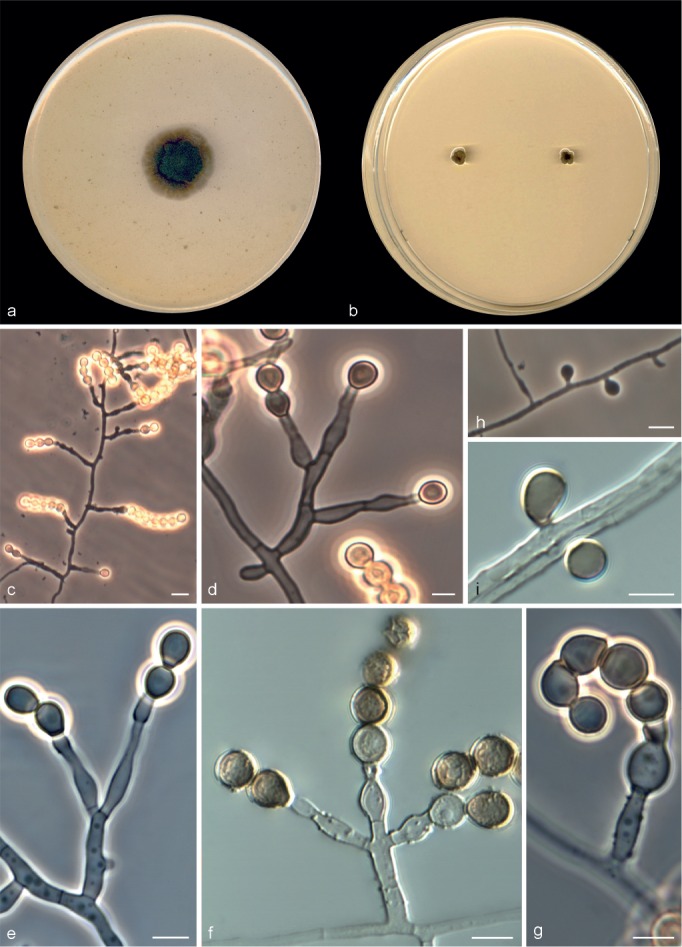
The genera Microascus and Scopulariopsis comprise species commonly isolated from soil, decaying plant material and indoor environments. A few species are also recognised as opportunistic pathogens of insects and animals, including humans. In the past, the taxonomy of these fungi has been based on morphology only. With the aim to clarify the taxonomy and phylogeny of these fungi, we studied a large set of clinical and environmental isolates, including the available ex-type strains of numerous species, by means of morphological, physiological and molecular analyses. Species delineation was assessed under the Genealogical Phylogenetic Species Recognition (GCPSR) criterion using DNA sequence data of four loci (ITS region, and fragments of rDNA LSU, translation elongation factor 1-α and β-tubulin). The genera Microascus and Scopulariopsis were found to be separated in two distinct lineages. The genus Pithoascus is reinstated and the new genus Pseudoscopulariopsis is erected, typified by P. schumacheri. Seven new species of Microascus and one of Scopulariopsis are described, namely M. alveolaris, M. brunneosporus, M. campaniformis, M. expansus, M. intricatus, M. restrictus, M. verrucosus and Scopulariopsis cordiae. Microascus trigonosporus var. macrosporus is accepted as a species distinct from M. trigonosporus. Nine new combinations are introduced. Microascus cinereus, M. longirostris, P. schumacheri and S. flava are neotypified. A table summarising the morphological features of the species treated and identification keys for each genus are provided.
微小曲霉属和帚霉属包含常见于土壤、腐烂植物材料及室内环境中分离出的物种。少数物种也被认为是昆虫和动物(包括人类)的机会致病菌。过去,这些真菌的分类仅基于形态学。为了阐明这些真菌的分类和系统发育,我们通过形态学、生理学和分子分析研究了大量临床和环境分离株,包括众多物种的可用模式菌株。使用四个基因座(ITS区域、rDNA LSU片段、翻译延伸因子1-α和β-微管蛋白)的DNA序列数据,根据系统发育物种识别(GCPSR)标准评估物种划分。发现微小曲霉属和帚霉属分属于两个不同的谱系。恢复了皮托曲霉属,并建立了新属假帚霉属,以舒马赫假帚霉为模式种。描述了7个微小曲霉新种和1个帚霉新种,即肺泡微小曲霉、褐孢微小曲霉、钟形微小曲霉、扩展微小曲霉、复杂微小曲霉、受限微小曲霉、疣状微小曲霉和科氏帚霉。大孢三角孢微小曲霉被认为是与三角孢微小曲霉不同的一个物种。引入了9个新组合。对灰绿微小曲霉、长喙微小曲霉、舒马赫皮托曲霉和黄帚霉进行了新模式指定。提供了一个总结所处理物种形态特征的表格以及每个属的鉴定检索表。