Bode Stefan, Bennett Daniel, Stahl Jutta, Murawski Carsten
Melbourne School of Psychological Sciences, The University of Melbourne, Parkville, Victoria, Australia.
Melbourne School of Psychological Sciences, The University of Melbourne, Parkville, Victoria, Australia; Department of Finance, The University of Melbourne, Australia, The University of Melbourne, Parkville, Victoria, Australia.
PLoS One. 2014 Oct 1;9(10):e109070. doi: 10.1371/journal.pone.0109070. eCollection 2014.
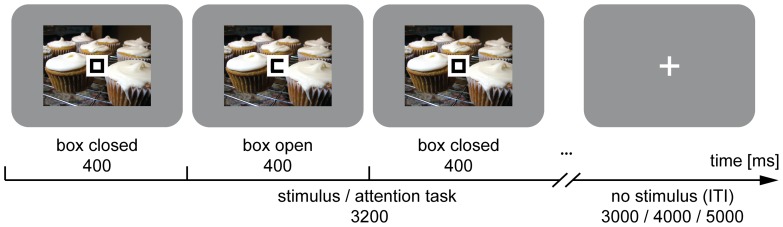
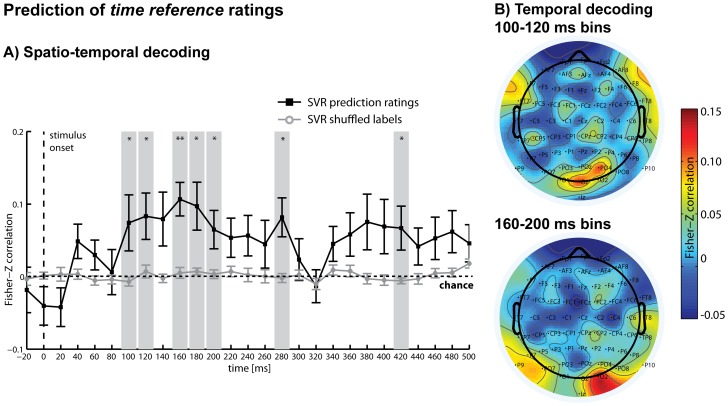
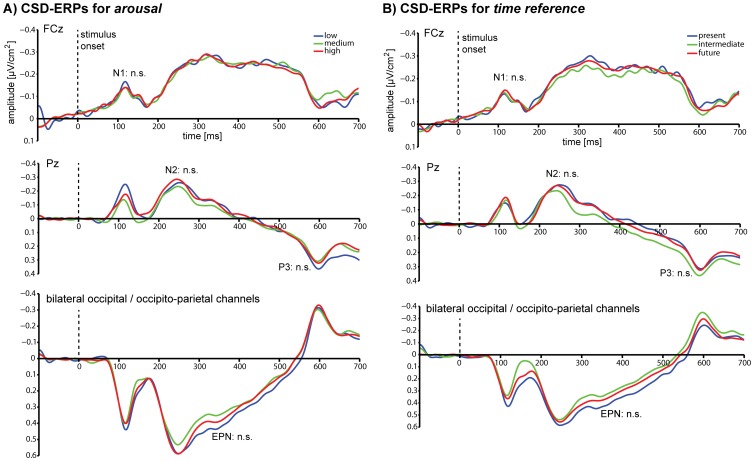
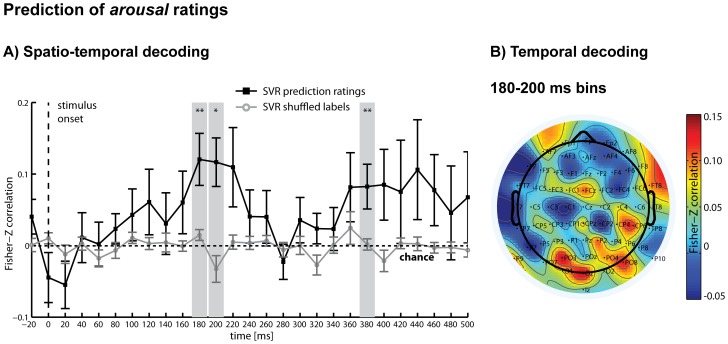
Exposure to pleasant and rewarding visual stimuli can bias people's choices towards either immediate or delayed gratification. We hypothesised that this phenomenon might be based on carry-over effects from a fast, unconscious assessment of the abstract 'time reference' of a stimuli, i.e. how the stimulus relates to one's personal understanding and connotation of time. Here we investigated whether participants' post-experiment ratings of task-irrelevant, positive background visual stimuli for the dimensions 'arousal' (used as a control condition) and 'time reference' were related to differences in single-channel event-related potentials (ERPs) and whether they could be predicted from spatio-temporal patterns of ERPs. Participants performed a demanding foreground choice-reaction task while on each trial one task-irrelevant image (depicting objects, people and scenes) was presented in the background. Conventional ERP analyses as well as multivariate support vector regression (SVR) analyses were conducted to predict participants' subsequent ratings. We found that only SVR allowed both 'arousal' and 'time reference' ratings to be predicted during the first 200 ms post-stimulus. This demonstrates an early, automatic semantic stimulus analysis, which might be related to the high relevance of 'time reference' to everyday decision-making and preference formation.
接触愉悦且有益的视觉刺激会使人们的选择偏向即时满足或延迟满足。我们假设这种现象可能基于对刺激的抽象“时间参照”进行快速、无意识评估所产生的延续效应,即刺激如何与个人对时间的理解和内涵相关联。在此,我们研究了参与者对与任务无关的、积极的背景视觉刺激在“唤醒度”(用作对照条件)和“时间参照”维度上的实验后评分,是否与单通道事件相关电位(ERP)的差异有关,以及是否可以从ERP的时空模式中预测这些评分。参与者执行一项要求较高的前景选择反应任务,同时在每次试验中,背景中会呈现一张与任务无关的图像(描绘物体、人物和场景)。我们进行了传统的ERP分析以及多变量支持向量回归(SVR)分析,以预测参与者随后的评分。我们发现,只有SVR能够在刺激后的前200毫秒内预测“唤醒度”和“时间参照”评分。这表明存在早期的、自动的语义刺激分析,这可能与“时间参照”对日常决策和偏好形成的高度相关性有关。