Department of Health Economics, National School of Public Health, 196 Alexandras Ave., 115 21, Athens, Greece.
Pfizer Hellas, Athens, Greece.
Infect Dis Ther. 2014 Dec;3(2):257-68. doi: 10.1007/s40121-014-0044-8. Epub 2014 Oct 7.
Meticillin-resistant staphylococcus aureus (MRSA) is an important cause of antimicrobial-resistant infections worldwide. Its prevalence remains high in the Greek hospital setting. Complicated skin and soft tissue infections (cSSTIs) due to MRSA are associated with prolonged hospitalization, additional healthcare costs and significant morbidity. The purpose of this study was to conduct a cost analysis and a budget impact analysis relative to different management scenarios for MRSA-cSSTIs from a hospital perspective.
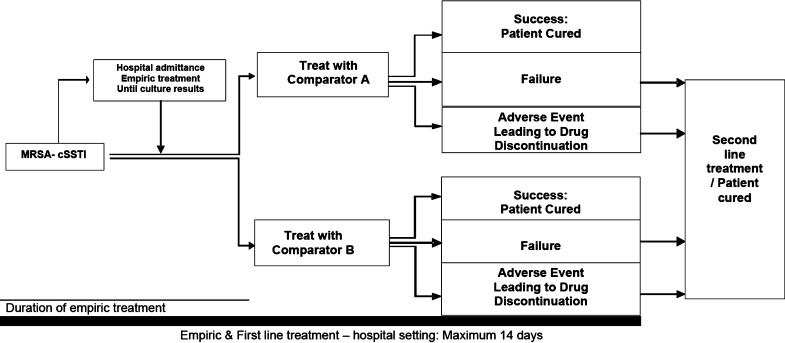
Equal efficacy was assumed for the pharmacotherapies under evaluation and resource use was elicited via an expert panel of seven local infectious disease specialists. The model was based on a previously published economic model that was adapted for the Greek hospital setting and included a decision tree for the management of hospitalized patients with MRSA-cSSTIs, which simulated costs and outcomes for the duration of hospitalization according to the therapeutic scenario. Inpatient costs consisted of hospitalization, diagnostic/laboratory testing, physician visits and antibiotic treatment.
Current economic impact of MRSA-cSSTIs for the inpatient setting in Greek hospitals was estimated at €29,196,218. Total per patient cost according to first-line agent was €2,457, €2,762, €2,850, €3,494 and €3,094 and mean length of stay was 9.2, 12.5, 10.3, 13.0 and 14.0 days for linezolid, vancomycin, daptomycin, tigecycline, and teicoplanin, respectively. An estimated 10,287 MRSA-cSSTI patients are treated annually in Greek hospitals. Thus, increasing the use of linezolid by 11% over a 3-year period (current use 19%; 3 year projection 30%), for the management of MRSA-cSSTIs, could result in 3-year savings of €896,065.
Management of MRSA-cSSTI requires intensive resource use; overall healthcare costs differ according to the chosen first-line treatment. In light of considerable budget constraints, development of hospital strategies which facilitate early discharge, such as the introduction of clinical criteria and guidelines for switching from intravenous to oral MRSA-cSSTI therapy, could result in substantial savings for the Greek hospital budget.
耐甲氧西林金黄色葡萄球菌(MRSA)是全球范围内导致抗菌药物耐药感染的重要原因。在希腊医院环境中,其流行率仍然很高。由 MRSA 引起的复杂性皮肤和软组织感染(cSSTIs)与住院时间延长、额外的医疗保健费用和显著的发病率有关。本研究的目的是从医院的角度对 MRSA-cSSTIs 的不同管理方案进行成本分析和预算影响分析。
评估的药物治疗方案假设具有同等疗效,并通过七位当地传染病专家组成的专家小组获得资源使用情况。该模型基于之前发表的经济模型进行了调整,适用于希腊医院环境,并包括了治疗耐甲氧西林金黄色葡萄球菌引起的 cSSTIs 住院患者的决策树,根据治疗方案模拟了住院期间的成本和结果。住院费用包括住院、诊断/实验室检查、医生就诊和抗生素治疗。
目前,希腊医院住院环境中耐甲氧西林金黄色葡萄球菌引起的 cSSTIs 的经济影响估计为 2919.6218 万欧元。根据一线药物,每位患者的总费用分别为 2457 欧元、2762 欧元、2850 欧元、3494 欧元和 3094 欧元,平均住院时间分别为 9.2 天、12.5 天、10.3 天、13.0 天和 14.0 天,分别为利奈唑胺、万古霉素、达托霉素、替加环素和替考拉宁。估计每年有 10287 例耐甲氧西林金黄色葡萄球菌引起的 cSSTI 患者在希腊医院接受治疗。因此,在 3 年内将利奈唑胺的使用率提高 11%(当前使用率为 19%,3 年预测为 30%),用于治疗耐甲氧西林金黄色葡萄球菌引起的 cSSTIs,可在 3 年内节省 896065 欧元。
耐甲氧西林金黄色葡萄球菌引起的 cSSTI 管理需要大量资源;根据所选的一线治疗方案,整体医疗保健成本有所不同。鉴于预算限制较大,制定促进患者早日出院的医院策略,例如引入治疗耐甲氧西林金黄色葡萄球菌引起的 cSSTI 的静脉到口服转换的临床标准和指南,可能会为希腊医院预算节省大量资金。