Yu Zhe, Geng Jie, Gao Haoran, Zhao Xinwen, Chen Jingyuan
Department of Orthopedic Surgery, Tangdu Hospital, Fourth Military Medical University, Xi'an, 710038, Shaanxi, People's Republic of China,
J Orthop Traumatol. 2015 Jun;16(2):133-40. doi: 10.1007/s10195-014-0321-z. Epub 2014 Oct 12.
Although bone defect is one of the most common orthopaedic diseases, treatment remains a challenge and an issue of debate. Guided bone regeneration (GBR) is primarily accompanied by barrier membranes; however, optional membranes show some inherent flaws in clinical application. The purpose of this study was to observe the healing velocity and quality of repairing canine radius segmental defect using transferred autologous periosteum combined with fascia lata, which can provide better biological safety than other materials.
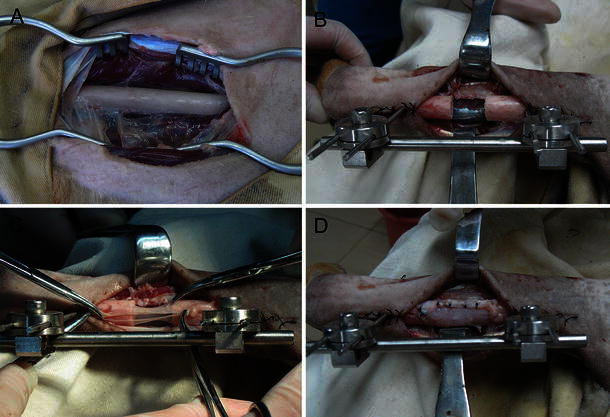
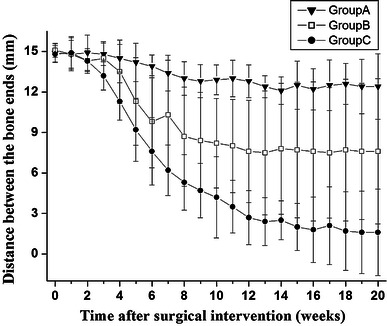
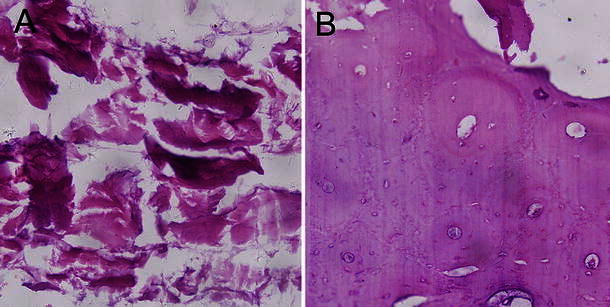
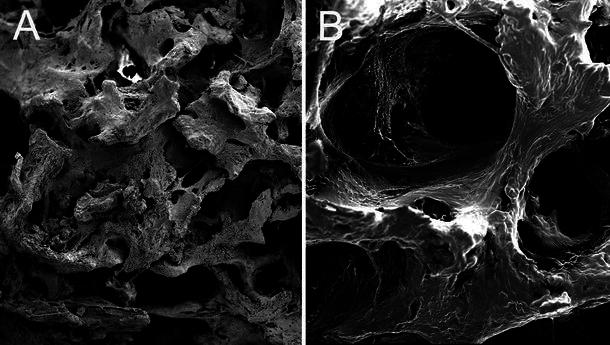
Twenty adult male beagles weighing 11.45 ± 1.29 kg were used as animal models. The animals were randomly allocated into three groups, a blank control group, a fascia lata control group and a combined fascia lata and periosteum group. Standardised artificial bony defects were prepared at the radius and treated with autologous periosteum combined with fascia lata under stable external fixation. The newly formed bone-growth curve was made according to ultrasound (US) detection, and histopathologic and scanning electronic microscope (SEM) evaluations were also performed.
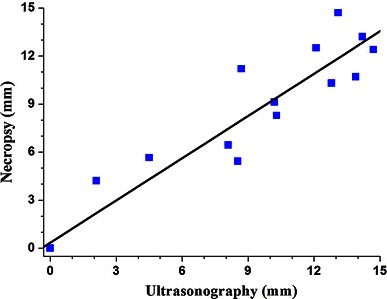
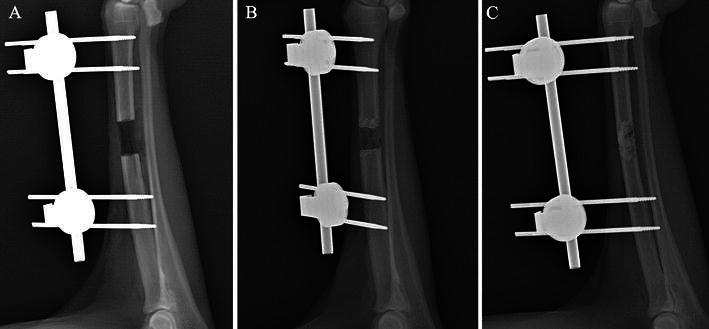
Bone union was seen in most individuals from the autologous periosteum combined with fascia lata group, within an average of 14.2 weeks. Histopathologic and SEM examinations both showed the different osteogenesis state between groups. Necropsy confirmed US findings with regard to distance of bone defects and location.
These findings suggest that autologous periosteum combined with fascia lata is as effective as a GBR membrane, even in long tubular bone defects. With reliable biological safety, the autologous periosteum combined with fascia lata is expected to achieve increasing application in orthopaedic trauma patients.
Not applicable, animal study.
尽管骨缺损是最常见的骨科疾病之一,但治疗仍然是一项挑战且存在争议。引导性骨再生(GBR)主要伴随着屏障膜;然而,可选的膜在临床应用中存在一些固有缺陷。本研究的目的是观察使用自体骨膜联合阔筋膜修复犬桡骨节段性缺损的愈合速度和质量,其比其他材料具有更好的生物安全性。
选用20只体重为11.45±1.29千克的成年雄性比格犬作为动物模型。将动物随机分为三组,即空白对照组、阔筋膜对照组和阔筋膜与骨膜联合组。在桡骨处制备标准化人工骨缺损,并在稳定的外固定下用自体骨膜联合阔筋膜进行治疗。根据超声(US)检测绘制新形成骨的生长曲线,并进行组织病理学和扫描电子显微镜(SEM)评估。
自体骨膜联合阔筋膜组的大多数个体在平均14.2周内实现了骨愈合。组织病理学和SEM检查均显示了各组之间不同的成骨状态。尸检证实了US在骨缺损距离和位置方面的发现。
这些发现表明,自体骨膜联合阔筋膜与GBR膜一样有效,即使在长管状骨缺损中也是如此。由于具有可靠的生物安全性,自体骨膜联合阔筋膜有望在骨科创伤患者中得到越来越广泛的应用。
不适用,动物研究。