Ci Haipeng, Wu Nan, Su Yanjie
Department of Psychology, Peking University, Beijing, P.R. China.
Department of Psychology, Peking University, Beijing, P.R. China; Teachers' College of Beijing Union University, Beijing, P.R. China.
PLoS One. 2014 Oct 13;9(10):e109086. doi: 10.1371/journal.pone.0109086. eCollection 2014.
The arginine vasopressin receptor (AVPR) and oxytocin receptor (OXTR) genes have been demonstrated to contribute to prosocial behavior. Recent research has focused on the manner by which these simple receptor genes influence prosociality, particularly with regard to the AVP system, which is modulated by the clock gene. The clock gene is responsible for regulating the human biological clock, affecting sleep, emotion and behavior. The current study examined in detail whether the influences of the OXTR and AVPR1b genes on prosociality are dependent on the clock gene.
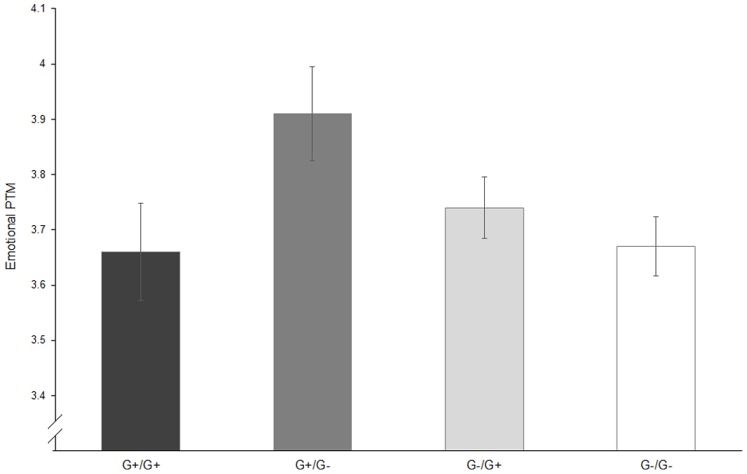
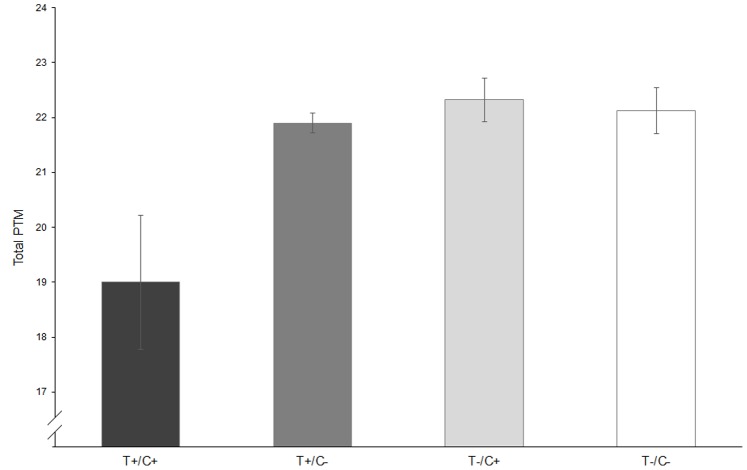
METHODOLOGY/PRINCIPAL FINDINGS: This study assessed interactions between the clock gene (rs1801260, rs6832769) and the OXTR (rs1042778, rs237887) and AVPR1b (rs28373064) genes in association with individual differences in prosociality in healthy male Chinese subjects (n = 436). The Prosocial Tendencies Measure (PTM-R) was used to assess prosociality. Participants carrying both the GG/GA variant of AVPR1b rs28373064 and the AA variant of clock rs6832769 showed the highest scores on the Emotional PTM. Carriers of both the T allele of OXTR rs1042778 and the C allele of clock rs1801260 showed the lowest total PTM scores compared with the other groups.
The observed interaction effects provide converging evidence that the clock gene and OXT/AVP systems are intertwined and contribute to human prosociality.
精氨酸加压素受体(AVPR)基因和催产素受体(OXTR)基因已被证明对亲社会行为有影响。最近的研究集中在这些简单的受体基因影响亲社会性的方式上,特别是关于由生物钟基因调节的AVP系统。生物钟基因负责调节人体生物钟,影响睡眠、情绪和行为。本研究详细考察了OXTR和AVPR1b基因对亲社会性的影响是否依赖于生物钟基因。
方法/主要发现:本研究评估了生物钟基因(rs1801260、rs6832769)与OXTR(rs1042778、rs237887)和AVPR1b(rs28373064)基因之间的相互作用,以及它们与健康中国男性受试者(n = 436)亲社会性个体差异的关系。采用亲社会倾向量表(PTM-R)评估亲社会性。携带AVPR1b rs28373064的GG/GA变体和生物钟rs6832769的AA变体的参与者在情感亲社会倾向量表上得分最高。与其他组相比,携带OXTR rs1042778的T等位基因和生物钟rs1801260的C等位基因的参与者亲社会倾向量表总分最低。
观察到的相互作用效应提供了一致的证据,表明生物钟基因与OXT/AVP系统相互交织,并对人类亲社会性有影响。