Zhu Wenliang, Kan Xuan
Institute of Clinical Pharmacology, the Second Affiliated Hospital of Harbin Medical University, Harbin, China.
Department of Otolaryngology, the Second Affiliated Hospital of Harbin Medical University, Harbin, China.
PLoS One. 2014 Oct 13;9(10):e110537. doi: 10.1371/journal.pone.0110537. eCollection 2014.
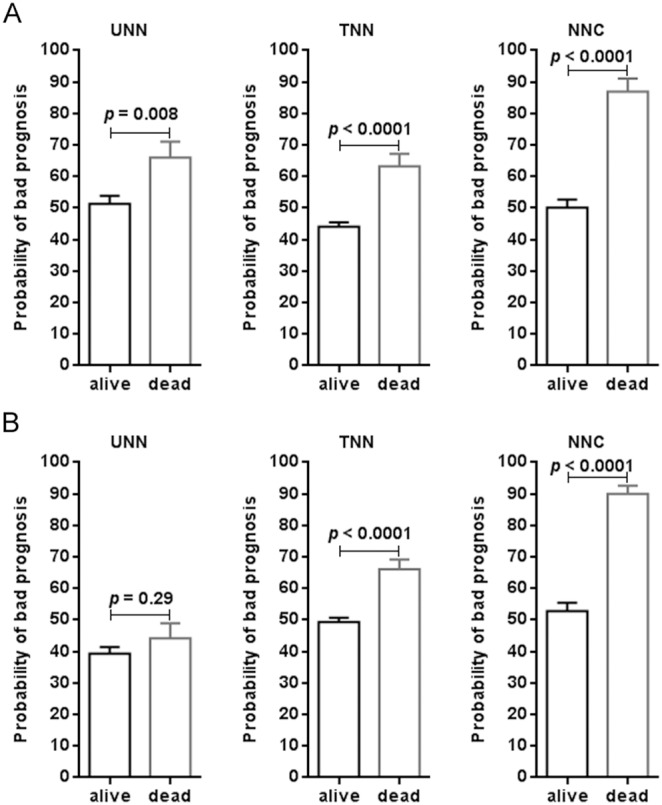
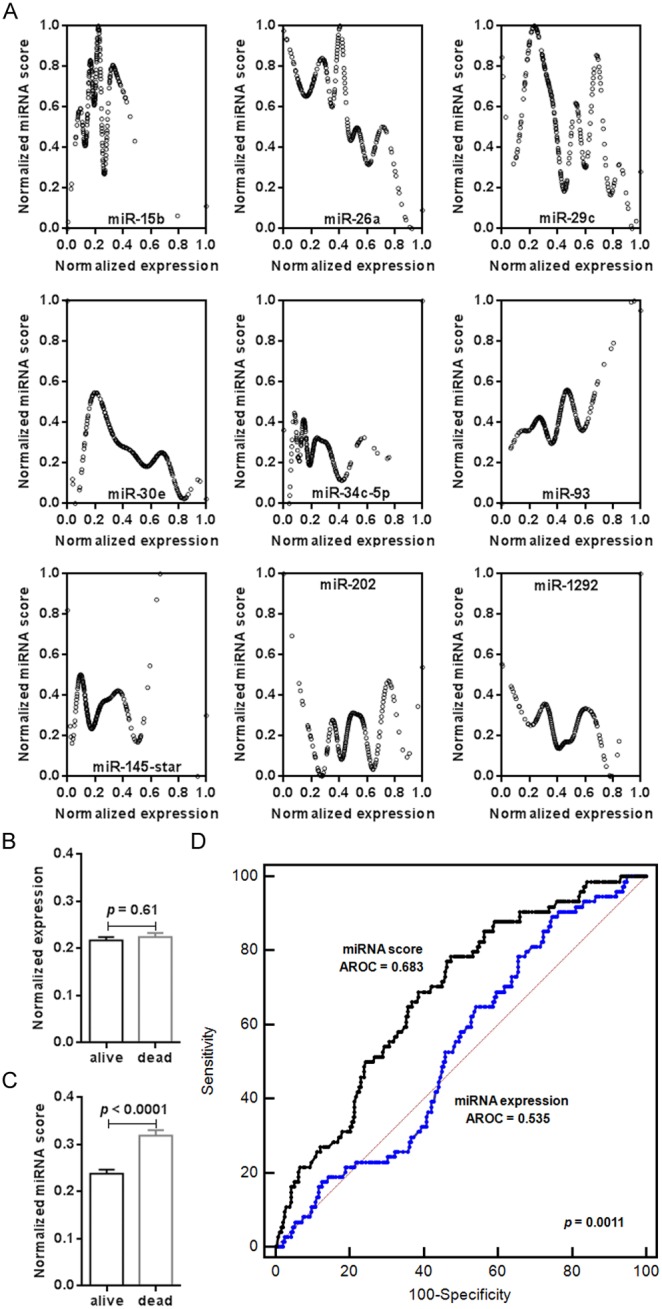
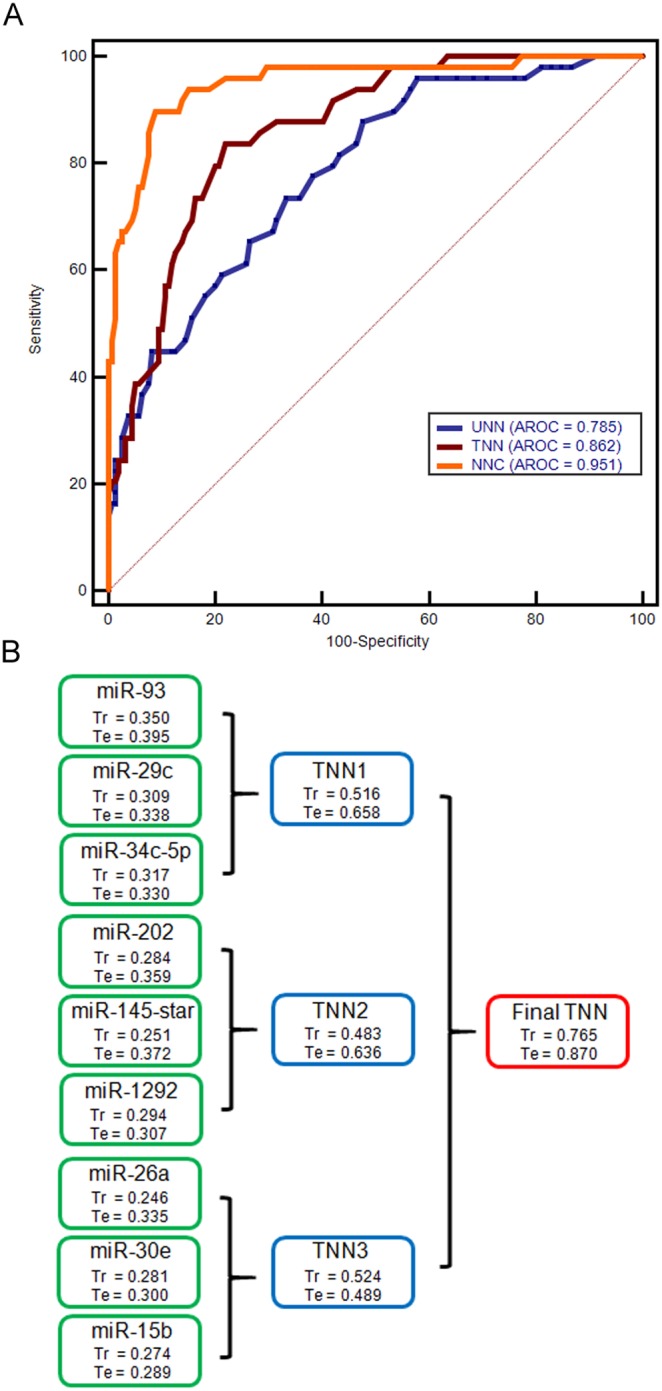
MicroRNAs (miRNAs) have been shown to be promising biomarkers in predicting cancer prognosis. However, inappropriate or poorly optimized processing and modeling of miRNA expression data can negatively affect prediction performance. Here, we propose a holistic solution for miRNA biomarker selection and prediction model building. This work introduces the use of a neural network cascade, a cascaded constitution of small artificial neural network units, for evaluating miRNA expression and patient outcome. A miRNA microarray dataset of nasopharyngeal carcinoma was retrieved from Gene Expression Omnibus to illustrate the methodology. Results indicated a nonlinear relationship between miRNA expression and patient death risk, implying that direct comparison of expression values is inappropriate. However, this method performs transformation of miRNA expression values into a miRNA score, which linearly measures death risk. Spearman correlation was calculated between miRNA scores and survival status for each miRNA. Finally, a nine-miRNA signature was optimized to predict death risk after nasopharyngeal carcinoma by establishing a neural network cascade consisting of 13 artificial neural network units. Area under the ROC was 0.951 for the internal validation set and had a prediction accuracy of 83% for the external validation set. In particular, the established neural network cascade was found to have strong immunity against noise interference that disturbs miRNA expression values. This study provides an efficient and easy-to-use method that aims to maximize clinical application of miRNAs in prognostic risk assessment of patients with cancer.
微小RNA(miRNA)已被证明是预测癌症预后的有前景的生物标志物。然而,miRNA表达数据处理不当或优化不佳会对预测性能产生负面影响。在此,我们提出了一种用于miRNA生物标志物选择和预测模型构建的整体解决方案。这项工作引入了神经网络级联的方法,即由小型人工神经网络单元组成的级联结构,用于评估miRNA表达和患者预后。从基因表达综合数据库中检索了一个鼻咽癌miRNA微阵列数据集来说明该方法。结果表明miRNA表达与患者死亡风险之间存在非线性关系,这意味着直接比较表达值是不合适的。然而,该方法将miRNA表达值转化为miRNA评分,该评分可线性测量死亡风险。计算每个miRNA的miRNA评分与生存状态之间的Spearman相关性。最后,通过建立一个由13个人工神经网络单元组成的神经网络级联,优化了一个九miRNA特征以预测鼻咽癌后的死亡风险。内部验证集的ROC曲线下面积为0.951,外部验证集的预测准确率为83%。特别是,发现所建立的神经网络级联对干扰miRNA表达值的噪声干扰具有很强的免疫力。本研究提供了一种高效且易于使用的方法,旨在最大限度地提高miRNA在癌症患者预后风险评估中的临床应用。