Department of Neurology, Qilu Hospital of Shandong University, Brain Science Research Institute of Shandong University, Jinan, Shandong Province, China ; Department of Neurology, Third Affiliated Hospital of Liaoning Medical University, Jinzhou, Liaoning Province, China.
Department of Neurology, Qilu Hospital of Shandong University, Brain Science Research Institute of Shandong University, Jinan, Shandong Province, China.
Neural Regen Res. 2014 Aug 1;9(15):1460-3. doi: 10.4103/1673-5374.139463.
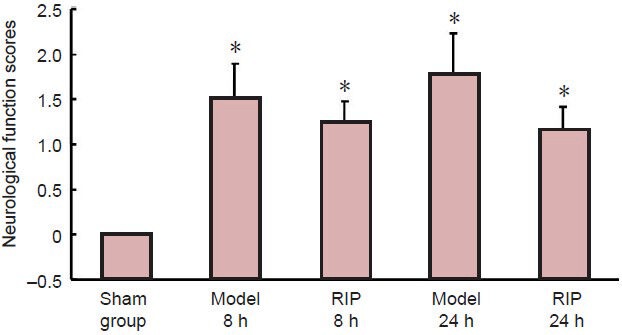
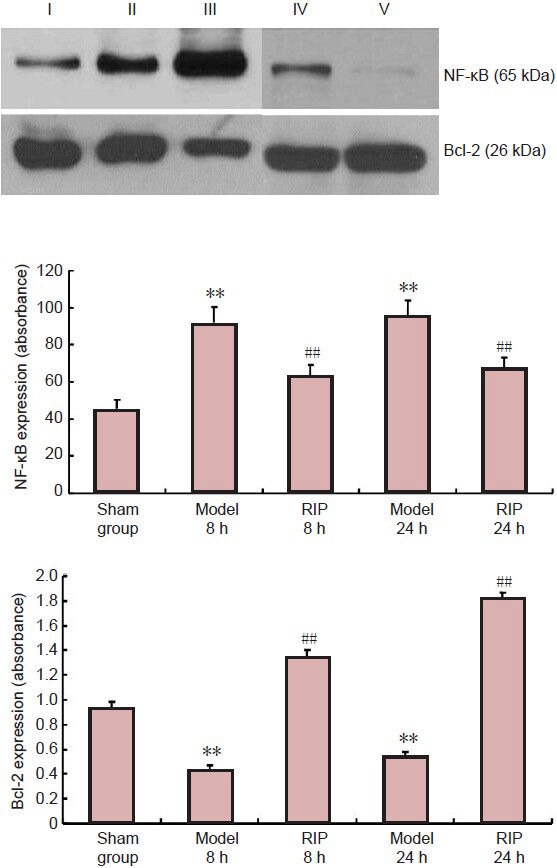
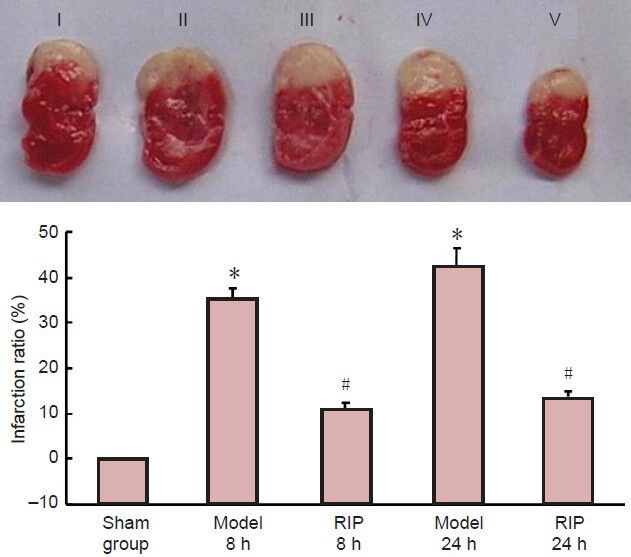
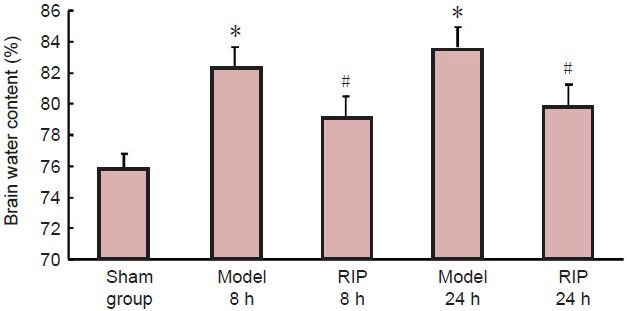
It is difficult to control the degree of ischemic postconditioning in the brain and other ischemia-sensitive organs. Remote ischemic postconditioning could protect some ischemia-sensitive organs through measures on terminal organs. In this study, a focal cerebral ischemia-reperfusion injury model was established using three cycles of remote ischemic postconditioning, each cycle consisted of 10-minute occlusion of the femoral artery and 10-minute opening. The results showed that, remote ischemic postconditioning significantly decreased the percentage of the infarct area and attenuated brain edema. In addition, inflammatory nuclear factor-κB expression was significantly lower, while anti-apoptotic Bcl-2 expression was significantly elevated in the cerebral cortex on the ischemic side. Our findings indicate that remote ischemic postconditioning attenuates focal cerebral ischemia/reperfusion injury, and that the neuroprotective mechanism is mediated by an anti-apoptotic effect and reduction of the inflammatory response.
在大脑和其他缺血敏感器官中很难控制缺血后处理的程度。远程缺血后处理可以通过对终末器官的措施来保护一些缺血敏感器官。在这项研究中,使用三次远程缺血后处理循环建立了局灶性脑缺血再灌注损伤模型,每个循环包括股动脉闭塞 10 分钟和开放 10 分钟。结果表明,远程缺血后处理显著降低了梗死面积的百分比,并减轻了脑水肿。此外,在缺血侧大脑皮质中,炎症核因子-κB 的表达明显降低,而抗凋亡 Bcl-2 的表达明显升高。我们的研究结果表明,远程缺血后处理可减轻局灶性脑缺血再灌注损伤,其神经保护机制是通过抗凋亡作用和减轻炎症反应介导的。