Hadidi Naghmeh, Hosseini Shirazi Seyed Farshad, Kobarfard Farzad, Nafissi-Varchehd Nastaran, Aboofazeli Reza
Department of Pharmaceutics, School of Pharmacy, Shaheed Beheshti University of MedicalmSciences, Tehran, Iran.
Department of Pharmacology & Toxicology, School of Pharmacy, Shaheed Beheshti University of Medical Sciences, Tehran, Iran.
Iran J Pharm Res. 2012 Winter;11(1):27-37.
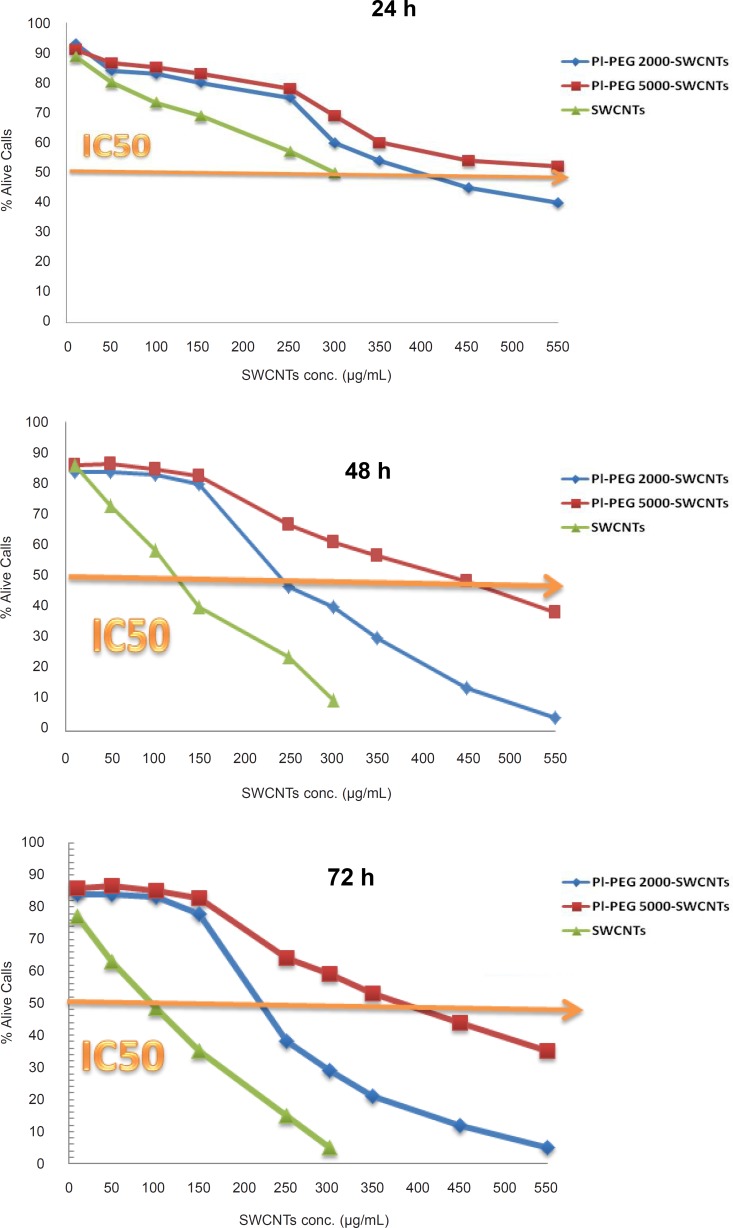
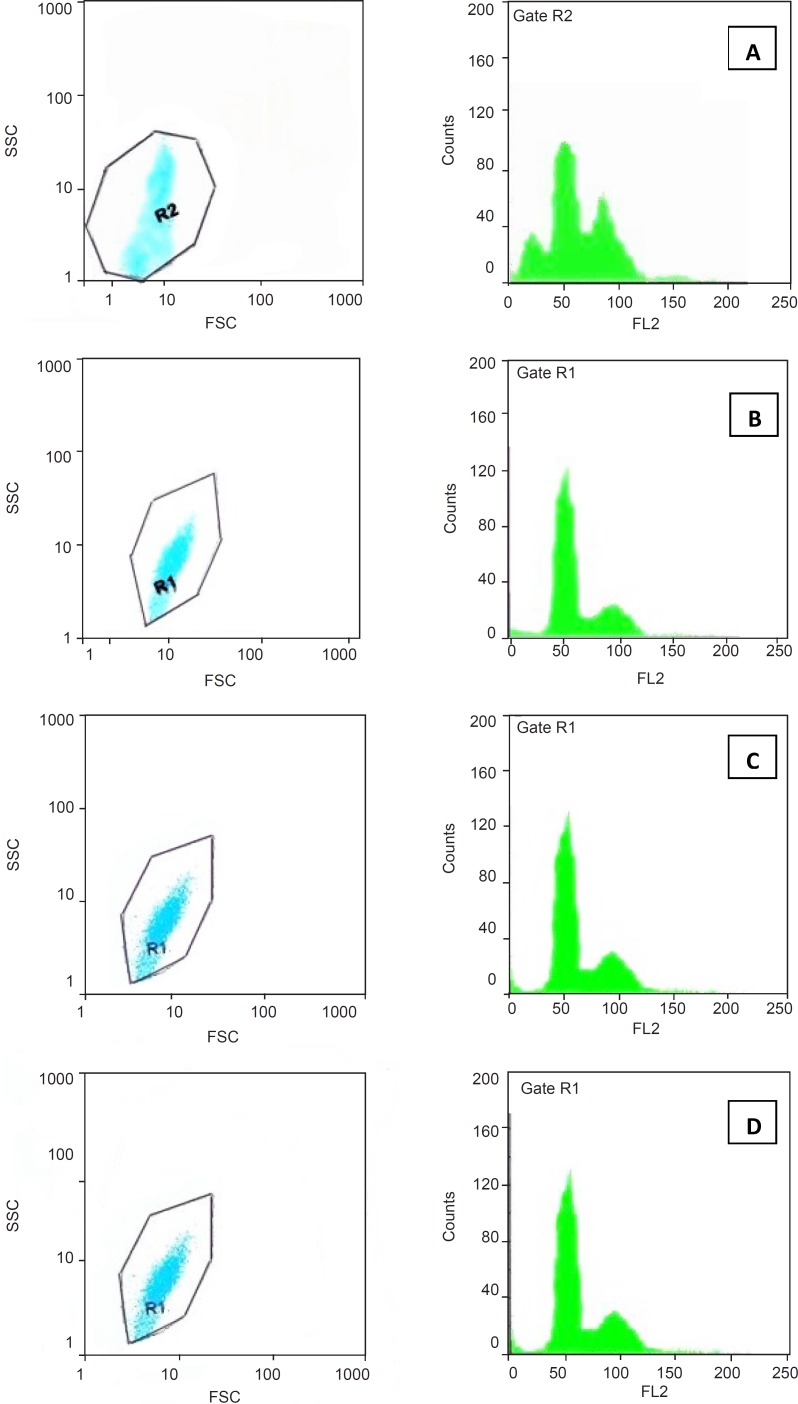
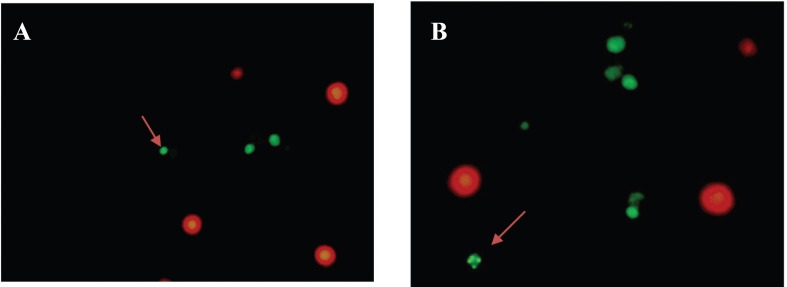
Among the numerous nanosized drug delivery systems currently under investigation, carbon nanotubes (CNTs), regardless of being single or multiple-walled, offer several advantages and are considered as promising candidates for drug targeting. Despite the valuable potentials of CNTs in drug delivery, their toxicity still remains an important issue. After the PEGylation of single-walled CNTs (SWCNTs) with phospholipid-PEG (Pl-PEG) conjugates to prepare water-dispersible nanostructures, the present study was designed to evaluate whether the functionalization with Pl-PEG derivatives could alter the cytotoxic response of cells in culture, affect their viability and proliferation. In-vitro cytotoxicity screens were performed on cultured Jurkat cells. The SWCNTs samples used in this exposure were pristine SWCNTs, Pl-PEG 2000/5000-SWCNTs at various concentrations. Jurkat cells were first incubated for 3 h at 37°C with test materials and seeded in 6-well culture plates at a given concentration. The plates were then incubated for 24, 48 and 72 h at 37°C in a 5% CO2 humidified incubator. Cell Viability and proliferation assay were performed using trypan blue exclusion test and the cell cycle kinetic status of Jurkat cells was analyzed by flow cytometry. Cell morphology was finally studied using double staining technique and a fluorescence microscope. We found that, regardless of the duration of exposure, functionalized SWCNTs were substantially less toxic, compared to pure SWCNTs and that the molecular weight of Pl-PEGs played an important role at higher concentrations. In conclusion, our noncovalent protocol seemed to be effective for increasing SWCNTs biocompatibility.
在目前正在研究的众多纳米药物递送系统中,碳纳米管(CNT),无论其为单壁还是多壁,都具有若干优势,被视为药物靶向的有前景候选物。尽管碳纳米管在药物递送方面具有宝贵潜力,但其毒性仍是一个重要问题。在用磷脂 - 聚乙二醇(Pl - PEG)共轭物对单壁碳纳米管(SWCNT)进行聚乙二醇化以制备水分散性纳米结构后,本研究旨在评估用Pl - PEG衍生物进行功能化是否会改变培养细胞的细胞毒性反应,影响其活力和增殖。对培养的Jurkat细胞进行了体外细胞毒性筛选。此次暴露中使用的SWCNT样品为原始SWCNT、不同浓度的Pl - PEG 2000/5000 - SWCNT。首先将Jurkat细胞与测试材料在37°C孵育3小时,然后以给定浓度接种于6孔培养板中。接着将培养板在37°C、5% CO₂ 湿度的培养箱中孵育24、48和72小时。使用台盼蓝排斥试验进行细胞活力和增殖测定,并通过流式细胞术分析Jurkat细胞的细胞周期动力学状态。最后使用双重染色技术和荧光显微镜研究细胞形态。我们发现,无论暴露持续时间如何,与纯SWCNT相比,功能化的SWCNT毒性显著更低,并且在较高浓度下Pl - PEG的分子量发挥了重要作用。总之,我们的非共价方案似乎对提高SWCNT的生物相容性有效。