Løes Inger Marie, Immervoll Heike, Angelsen Jon-Helge, Horn Arild, Geisler Jürgen, Busch Christian, Lønning Per Eystein, Knappskog Stian
Department of Clinical Science, University of Bergen, Post box 7804, 5021, Bergen, Norway.
Tumour Biol. 2015 Feb;36(2):1003-13. doi: 10.1007/s13277-014-2711-5. Epub 2014 Oct 16.
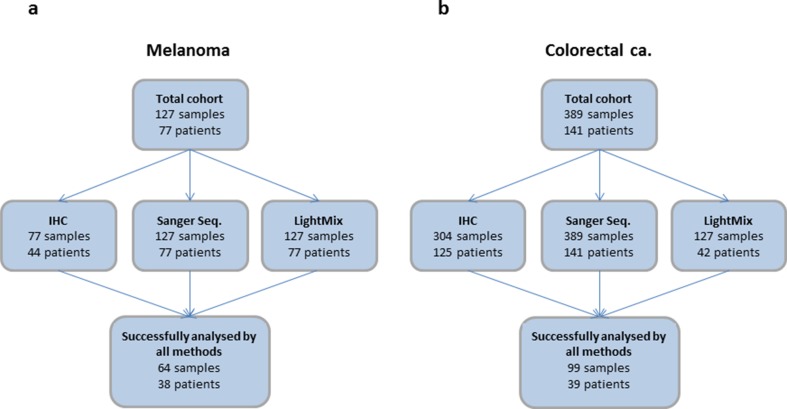
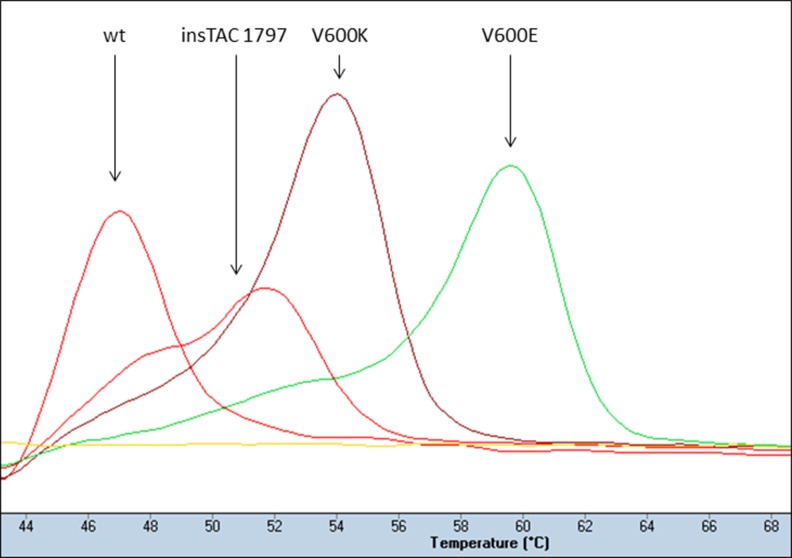
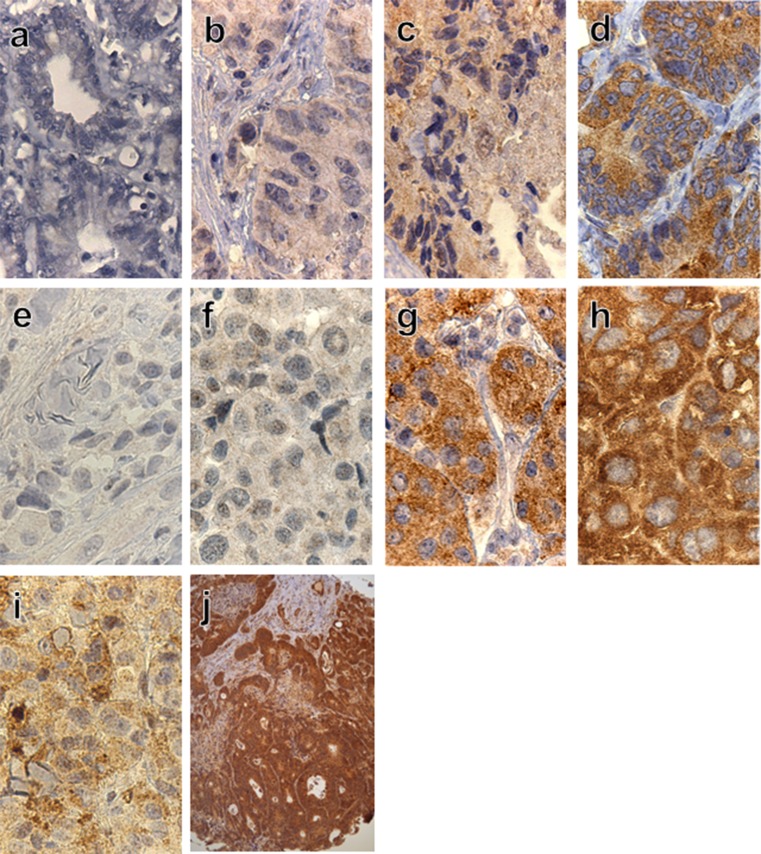
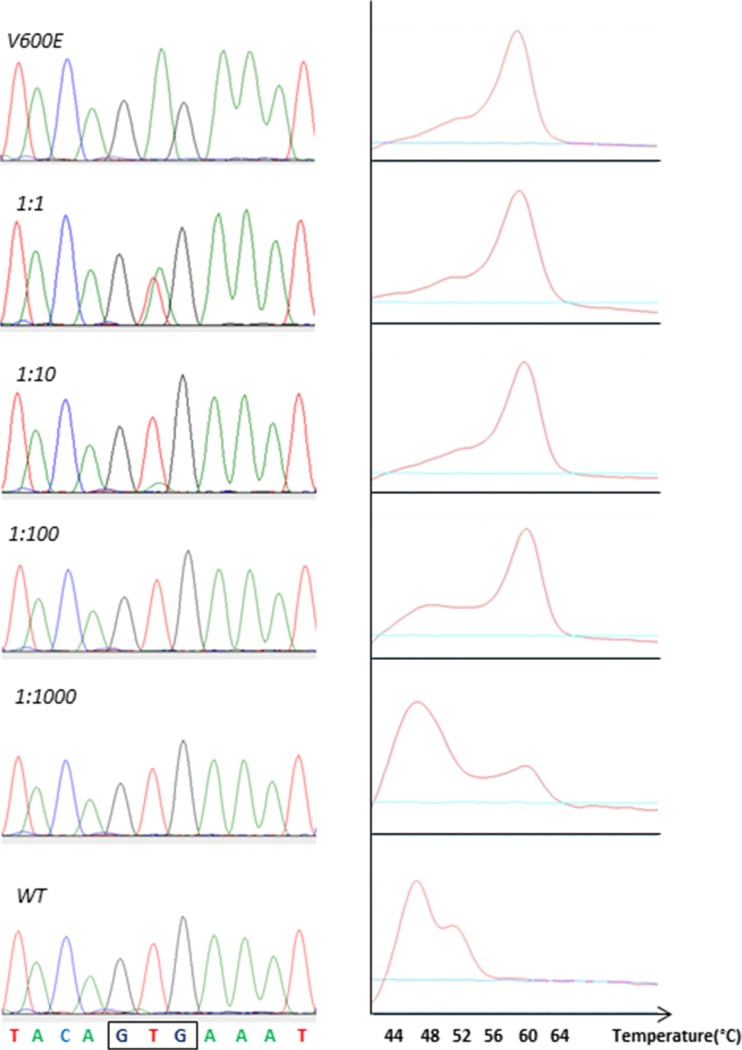
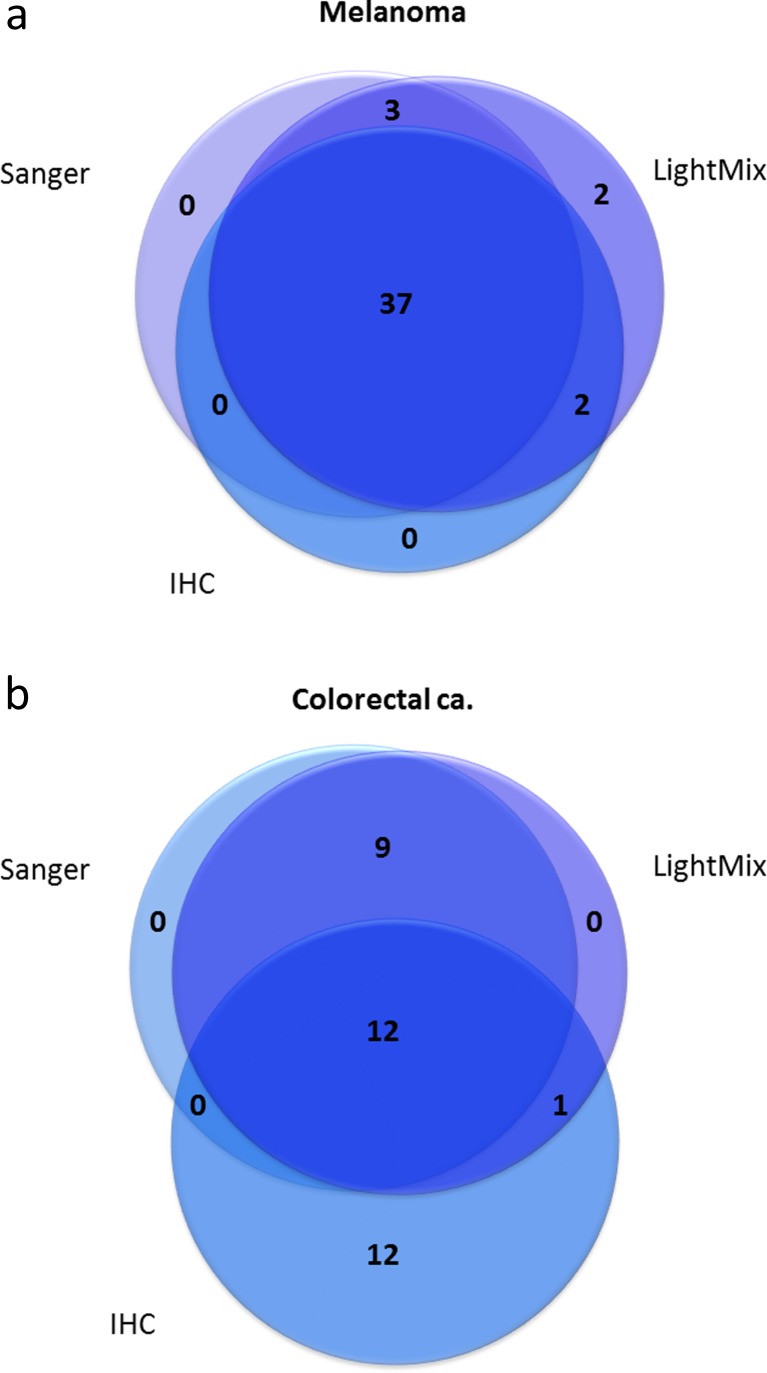
Personalized cancer care requires reliable biomarkers. While the BRAF V600E mutation is implemented in the clinic, no method for its detection has so far been established as reference. We aimed to perform a comprehensive comparison of three methods currently being used for V600E detection in clinical samples. We analysed genomic DNA from 127 malignant melanomas (77 patients) and 389 tumours from 141 colorectal cancer patients (383 liver metastases and 6 primary tumours) by Sanger sequencing and a single probe-based high-resolution melting assay (LightMix). Formalin-fixed paraffin-embedded (FFPE) tissue from a subset of these lesions (n = 77 and 304, respectively) was analysed by immunohistochemistry (IHC) using the V600E-specific antibody VE1. In a dilution series of V600E-mutated DNA in wild-type DNA, the detection limit for the LightMix assay was 1:1000 mutated alleles while it was 1:10 for Sanger sequencing. In line with this, we detected 15 additional mutated melanoma samples and two additional mutated metastatic colorectal cancer samples by the LightMix assay compared to Sanger sequencing. For the melanoma samples, we observed high concordance between DNA-based methods and analysis by IHC. However, in colorectal samples, IHC performed poorly with 12 samples being scored as V600E positive exclusively by IHC and nine samples being scored as V600E negative exclusively by IHC. In conclusion, the VE1 antibody is not recommendable for clinical tests of colorectal cancer samples. For melanoma samples, IHC may be useful as a screening tool guiding further analytical approaches.
个性化癌症治疗需要可靠的生物标志物。虽然BRAF V600E突变已应用于临床,但目前尚未建立其检测方法作为参考标准。我们旨在对目前临床样本中用于V600E检测的三种方法进行全面比较。我们通过桑格测序和基于单探针的高分辨率熔解分析(LightMix),分析了127例恶性黑色素瘤(77例患者)的基因组DNA以及141例结直肠癌患者(383例肝转移瘤和6例原发性肿瘤)的389个肿瘤样本。使用V600E特异性抗体VE1,通过免疫组织化学(IHC)分析了这些病变的一个子集(分别为n = 77和304)的福尔马林固定石蜡包埋(FFPE)组织。在野生型DNA中V600E突变DNA的稀释系列中,LightMix分析的检测限为1:1000突变等位基因,而桑格测序为1:10。与此一致,与桑格测序相比,通过LightMix分析我们检测到另外15个突变的黑色素瘤样本和另外2个突变的转移性结直肠癌样本。对于黑色素瘤样本,我们观察到基于DNA的方法与IHC分析之间具有高度一致性。然而,在结直肠样本中,IHC表现不佳,有12个样本仅通过IHC被判定为V600E阳性,9个样本仅通过IHC被判定为V600E阴性。总之,VE1抗体不推荐用于结直肠癌样本的临床检测。对于黑色素瘤样本,IHC可作为指导进一步分析方法的筛查工具。