Nannas Natalie J, O'Toole Eileen T, Winey Mark, Murray Andrew W
Molecular and Cellular Biology Department, Harvard University, Cambridge, MA 02138 FAS Center for Systems Biology, Harvard University, Cambridge, MA 02138.
Boulder Laboratory for 3D Electron Microscopy of Cells, University of Colorado, Boulder, CO 80309.
Mol Biol Cell. 2014 Dec 15;25(25):4034-48. doi: 10.1091/mbc.E14-01-0016. Epub 2014 Oct 15.
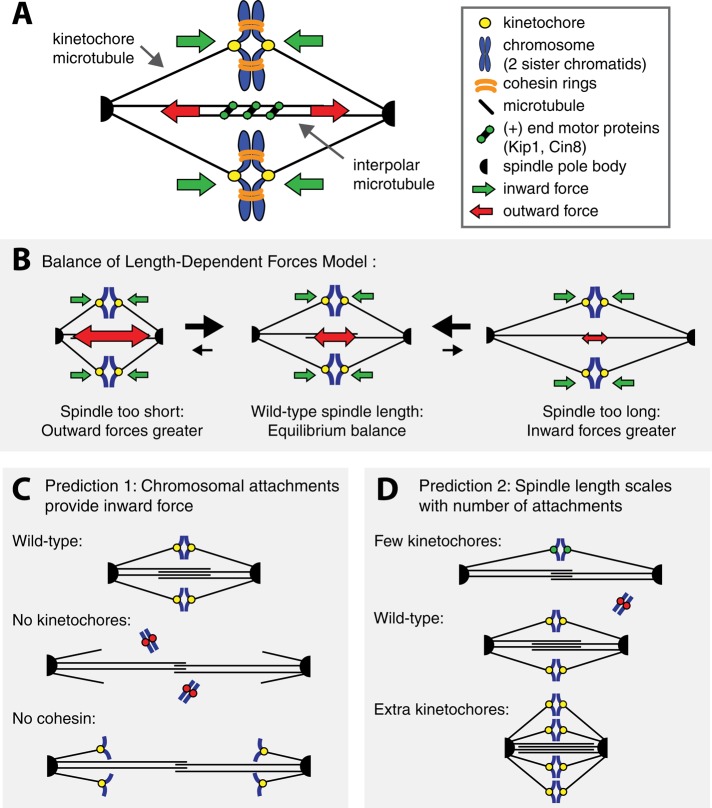
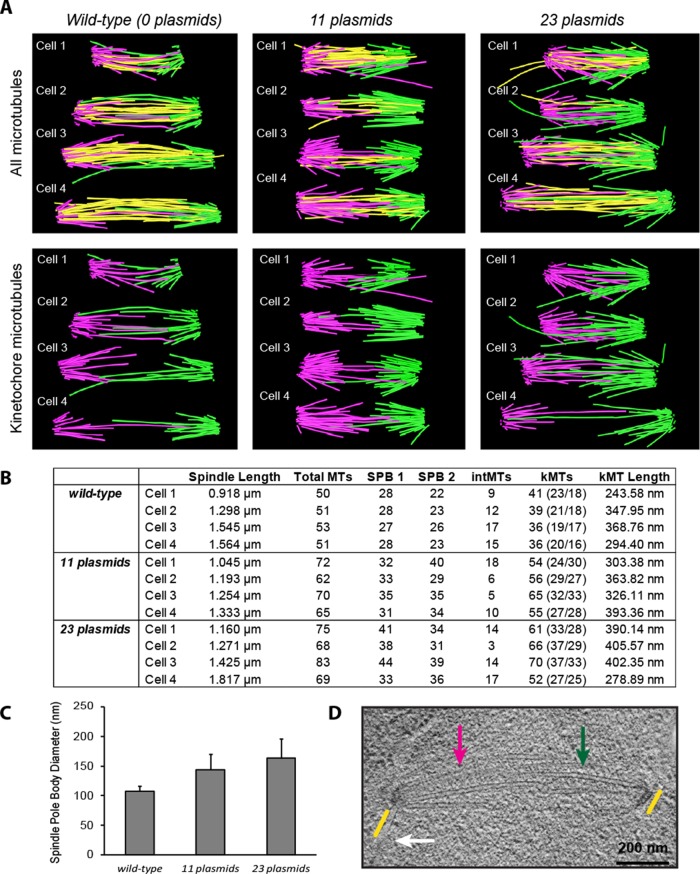
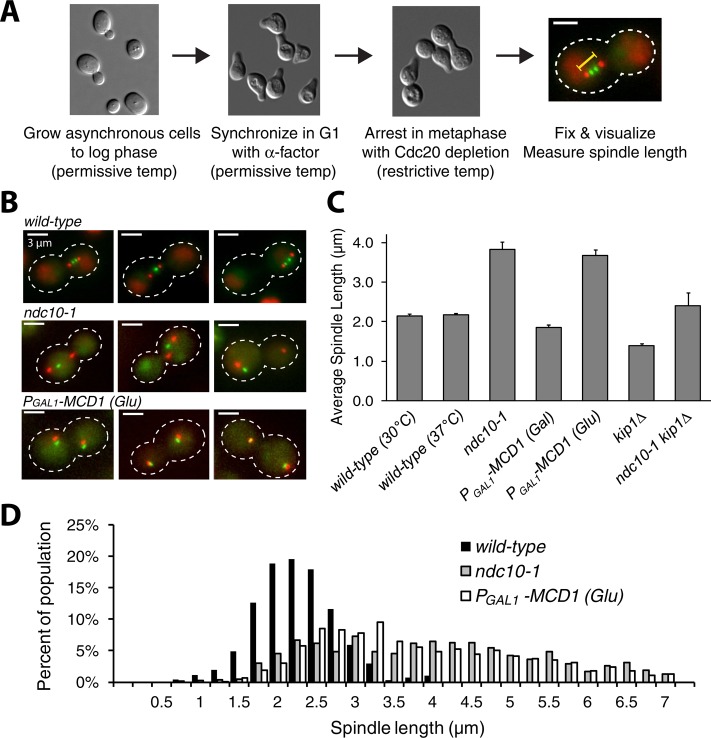
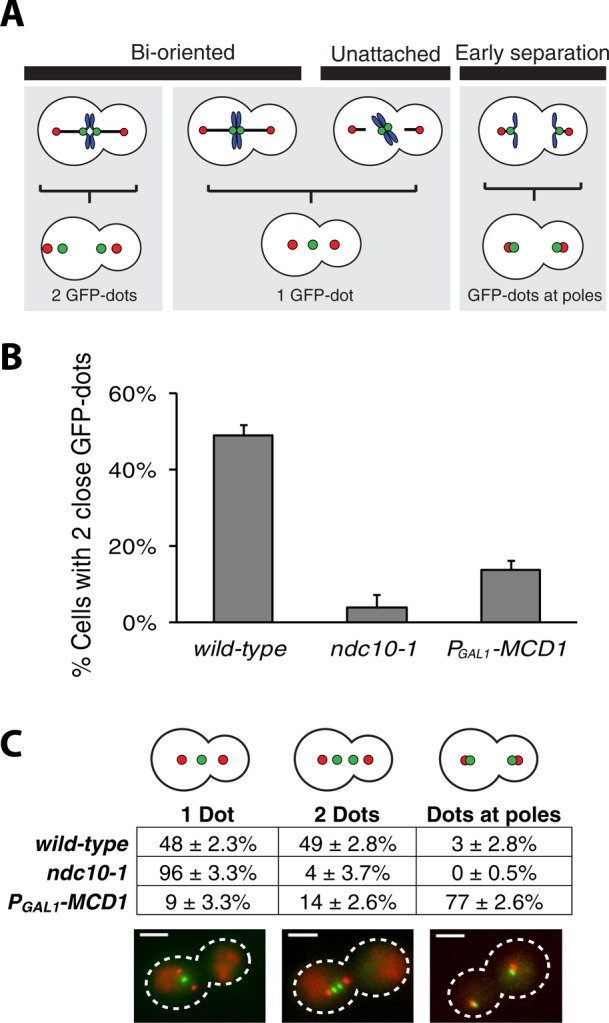
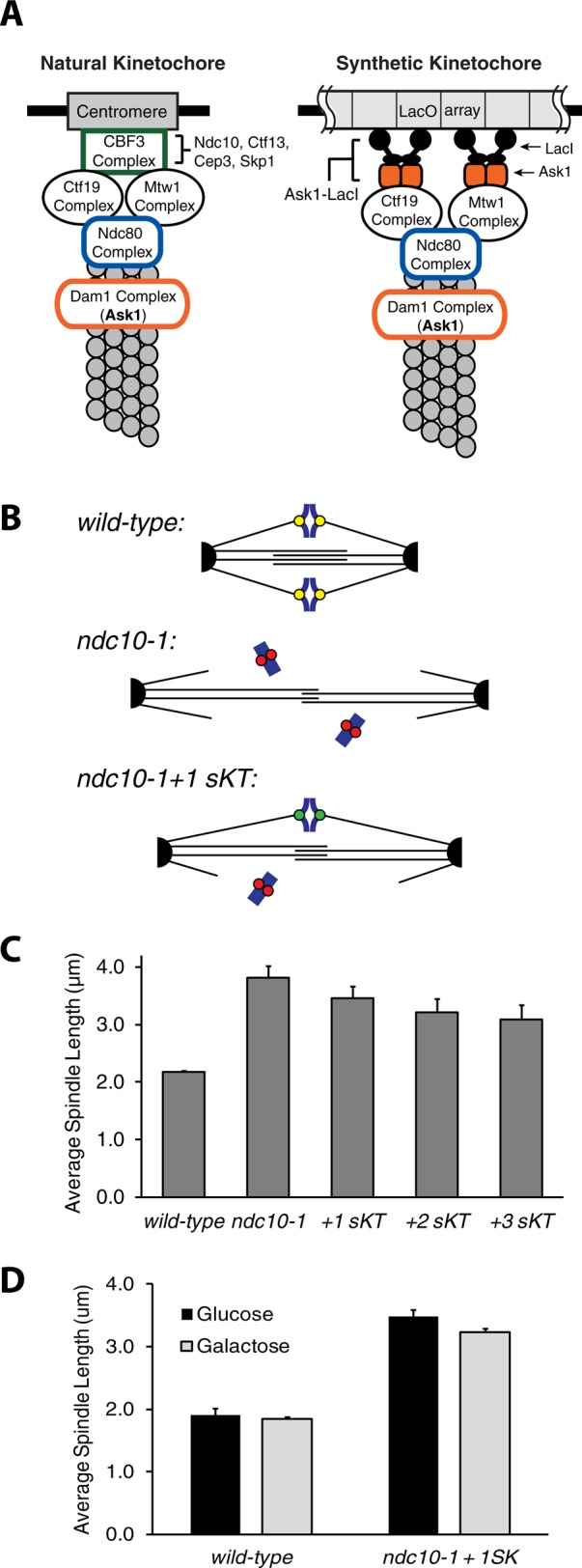
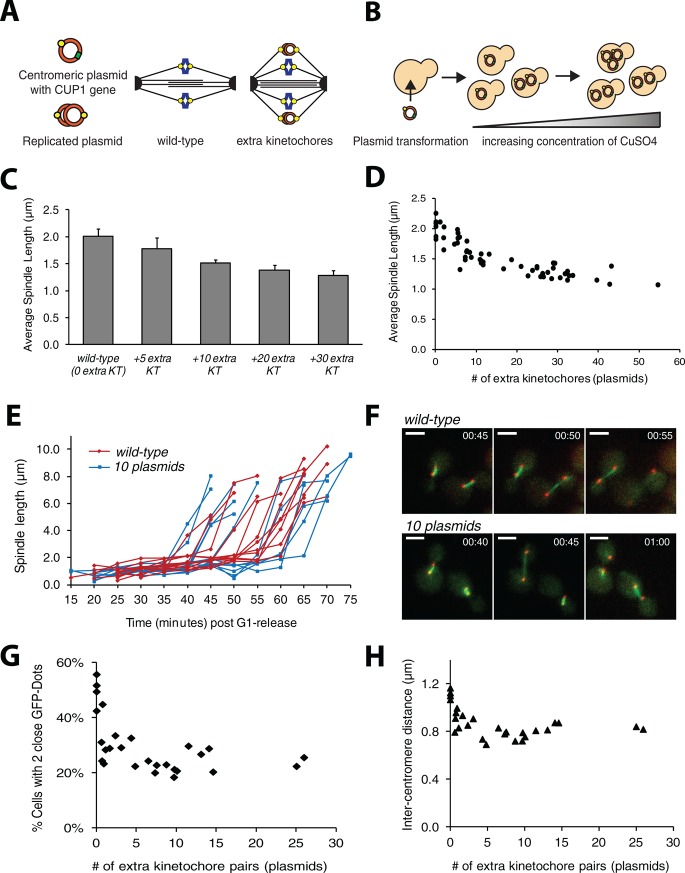
The length of the mitotic spindle varies among different cell types. A simple model for spindle length regulation requires balancing two forces: pulling, due to micro-tubules that attach to the chromosomes at their kinetochores, and pushing, due to interactions between microtubules that emanate from opposite spindle poles. In the budding yeast Saccharomyces cerevisiae, we show that spindle length scales with kinetochore number, increasing when kinetochores are inactivated and shortening on addition of synthetic or natural kinetochores, showing that kinetochore-microtubule interactions generate an inward force to balance forces that elongate the spindle. Electron microscopy shows that manipulating kinetochore number alters the number of spindle microtubules: adding extra kinetochores increases the number of spindle microtubules, suggesting kinetochore-based regulation of microtubule number.
有丝分裂纺锤体的长度在不同细胞类型中有所不同。一个用于纺锤体长度调节的简单模型需要平衡两种力量:一种是拉力,由附着在染色体动粒上的微管产生;另一种是推力,由来自纺锤体两极相对的微管之间的相互作用产生。在出芽酵母酿酒酵母中,我们发现纺锤体长度与动粒数量成比例,当动粒失活时纺锤体长度增加,而添加合成或天然动粒时纺锤体长度缩短,这表明动粒-微管相互作用产生向内的力来平衡使纺锤体伸长的力。电子显微镜显示,操纵动粒数量会改变纺锤体微管的数量:添加额外的动粒会增加纺锤体微管的数量,这表明基于动粒对微管数量进行调节。