• 文献检索
  • 文档翻译
  • 深度研究
  • 学术资讯
  • Suppr Zotero 插件Zotero 插件
  • 邀请有礼
  • 套餐&价格
  • 历史记录
应用&插件
Suppr Zotero 插件Zotero 插件浏览器插件Mac 客户端Windows 客户端微信小程序
定价
高级版会员购买积分包购买API积分包
服务
文献检索文档翻译深度研究API 文档MCP 服务
关于我们
关于 Suppr公司介绍联系我们用户协议隐私条款
关注我们

Suppr 超能文献

核心技术专利:CN118964589B侵权必究
粤ICP备2023148730 号-1Suppr @ 2026

文献检索

告别复杂PubMed语法,用中文像聊天一样搜索,搜遍4000万医学文献。AI智能推荐,让科研检索更轻松。

立即免费搜索

文件翻译

保留排版,准确专业,支持PDF/Word/PPT等文件格式,支持 12+语言互译。

免费翻译文档

深度研究

AI帮你快速写综述,25分钟生成高质量综述,智能提取关键信息,辅助科研写作。

立即免费体验

哺乳动物声音定位的自然史——一个关于神经元抑制的故事。

The natural history of sound localization in mammals--a story of neuronal inhibition.

作者信息

Grothe Benedikt, Pecka Michael

机构信息

Division of Neurobiology, Department of Biology II, Ludwig Maximilians University Munich Munich, Germany.

出版信息

Front Neural Circuits. 2014 Oct 1;8:116. doi: 10.3389/fncir.2014.00116. eCollection 2014.

DOI:10.3389/fncir.2014.00116
PMID:25324726
原文链接:https://pmc.ncbi.nlm.nih.gov/articles/PMC4181121/
Abstract

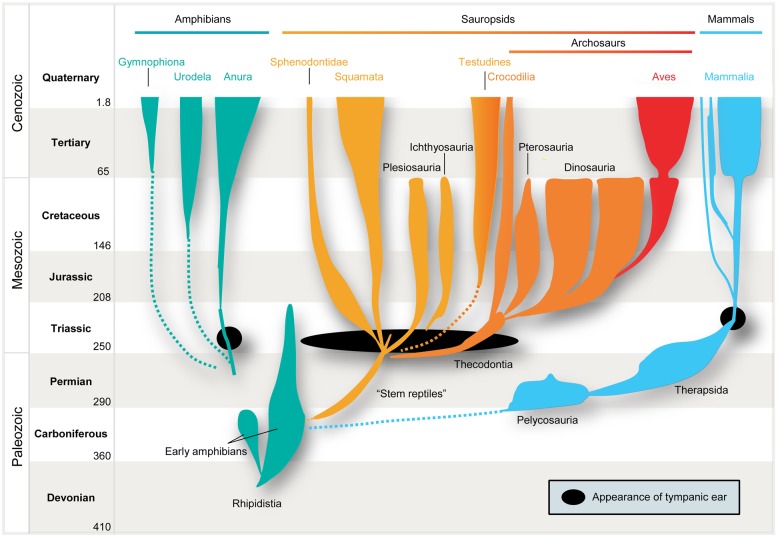
Our concepts of sound localization in the vertebrate brain are widely based on the general assumption that both the ability to detect air-borne sounds and the neuronal processing are homologous in archosaurs (present day crocodiles and birds) and mammals. Yet studies repeatedly report conflicting results on the neuronal circuits and mechanisms, in particular the role of inhibition, as well as the coding strategies between avian and mammalian model systems. Here we argue that mammalian and avian phylogeny of spatial hearing is characterized by a convergent evolution of hearing air-borne sounds rather than by homology. In particular, the different evolutionary origins of tympanic ears and the different availability of binaural cues in early mammals and archosaurs imposed distinct constraints on the respective binaural processing mechanisms. The role of synaptic inhibition in generating binaural spatial sensitivity in mammals is highlighted, as it reveals a unifying principle of mammalian circuit design for encoding sound position. Together, we combine evolutionary, anatomical and physiological arguments for making a clear distinction between mammalian processing mechanisms and coding strategies and those of archosaurs. We emphasize that a consideration of the convergent nature of neuronal mechanisms will significantly increase the explanatory power of studies of spatial processing in both mammals and birds.

摘要

我们关于脊椎动物大脑中声音定位的概念广泛基于这样一个普遍假设

即检测空气传播声音的能力以及神经元处理过程在主龙类(现代鳄鱼和鸟类)和哺乳动物中是同源的。然而,研究反复报告了在神经元回路和机制方面相互矛盾的结果,特别是抑制作用的作用,以及鸟类和哺乳动物模型系统之间的编码策略。在这里,我们认为,哺乳动物和鸟类空间听觉的系统发育特征是对空气传播声音的听觉趋同进化,而非同源。特别是,鼓膜耳的不同进化起源以及早期哺乳动物和主龙类中双耳线索的不同可用性,对各自的双耳处理机制施加了不同的限制。突触抑制在哺乳动物产生双耳空间敏感性中的作用得到了强调,因为它揭示了哺乳动物用于编码声音位置的回路设计的统一原则。我们综合了进化、解剖学和生理学方面的论据,以明确区分哺乳动物和主龙类的处理机制及编码策略。我们强调,考虑神经元机制的趋同性质将显著提高对哺乳动物和鸟类空间处理研究的解释力。
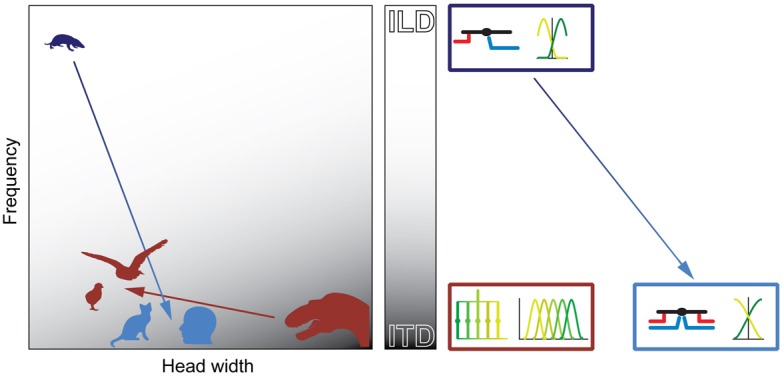
https://cdn.ncbi.nlm.nih.gov/pmc/blobs/1584/4181121/e1f9de82a610/fncir-08-00116-g009.jpg
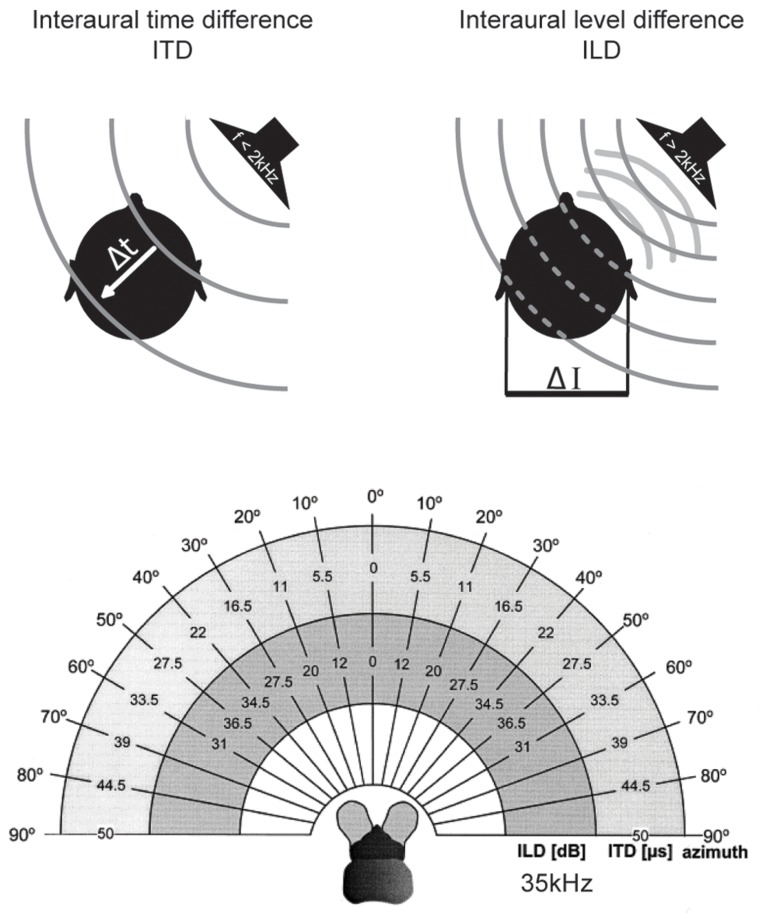
https://cdn.ncbi.nlm.nih.gov/pmc/blobs/1584/4181121/2635913c0c0e/fncir-08-00116-g001.jpg
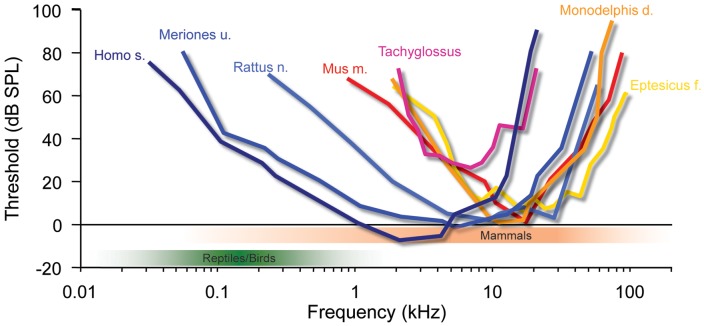
https://cdn.ncbi.nlm.nih.gov/pmc/blobs/1584/4181121/45dcbbf3df8d/fncir-08-00116-g002.jpg
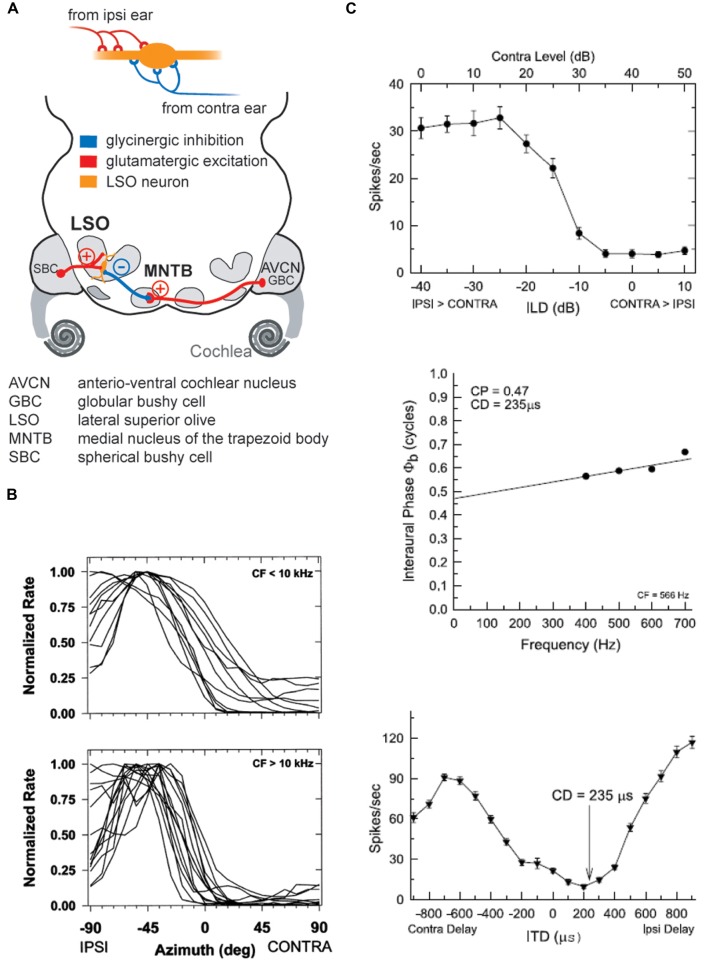
https://cdn.ncbi.nlm.nih.gov/pmc/blobs/1584/4181121/ef2fa79d3b7d/fncir-08-00116-g003.jpg
https://cdn.ncbi.nlm.nih.gov/pmc/blobs/1584/4181121/db70c99b7094/fncir-08-00116-g004.jpg
https://cdn.ncbi.nlm.nih.gov/pmc/blobs/1584/4181121/6701af1e9a85/fncir-08-00116-g005.jpg
https://cdn.ncbi.nlm.nih.gov/pmc/blobs/1584/4181121/836961fac9de/fncir-08-00116-g006.jpg
https://cdn.ncbi.nlm.nih.gov/pmc/blobs/1584/4181121/27e17402026a/fncir-08-00116-g007.jpg
https://cdn.ncbi.nlm.nih.gov/pmc/blobs/1584/4181121/4800e9456b28/fncir-08-00116-g008.jpg
https://cdn.ncbi.nlm.nih.gov/pmc/blobs/1584/4181121/e1f9de82a610/fncir-08-00116-g009.jpg
https://cdn.ncbi.nlm.nih.gov/pmc/blobs/1584/4181121/2635913c0c0e/fncir-08-00116-g001.jpg
https://cdn.ncbi.nlm.nih.gov/pmc/blobs/1584/4181121/45dcbbf3df8d/fncir-08-00116-g002.jpg
https://cdn.ncbi.nlm.nih.gov/pmc/blobs/1584/4181121/ef2fa79d3b7d/fncir-08-00116-g003.jpg
https://cdn.ncbi.nlm.nih.gov/pmc/blobs/1584/4181121/db70c99b7094/fncir-08-00116-g004.jpg
https://cdn.ncbi.nlm.nih.gov/pmc/blobs/1584/4181121/6701af1e9a85/fncir-08-00116-g005.jpg
https://cdn.ncbi.nlm.nih.gov/pmc/blobs/1584/4181121/836961fac9de/fncir-08-00116-g006.jpg
https://cdn.ncbi.nlm.nih.gov/pmc/blobs/1584/4181121/27e17402026a/fncir-08-00116-g007.jpg
https://cdn.ncbi.nlm.nih.gov/pmc/blobs/1584/4181121/4800e9456b28/fncir-08-00116-g008.jpg
https://cdn.ncbi.nlm.nih.gov/pmc/blobs/1584/4181121/e1f9de82a610/fncir-08-00116-g009.jpg

相似文献

1
The natural history of sound localization in mammals--a story of neuronal inhibition.哺乳动物声音定位的自然史——一个关于神经元抑制的故事。
Front Neural Circuits. 2014 Oct 1;8:116. doi: 10.3389/fncir.2014.00116. eCollection 2014.
2
Interdependence of spatial and temporal coding in the auditory midbrain.听觉中脑中空间编码与时间编码的相互依存关系。
J Neurophysiol. 2000 Apr;83(4):2300-14. doi: 10.1152/jn.2000.83.4.2300.
3
Slow Temporal Integration Enables Robust Neural Coding and Perception of a Cue to Sound Source Location.缓慢的时间整合实现稳健的神经编码以及对声源位置线索的感知。
J Neurosci. 2016 Sep 21;36(38):9908-21. doi: 10.1523/JNEUROSCI.1421-16.2016.
4
Neural Maps of Interaural Time Difference in the American Alligator: A Stable Feature in Modern Archosaurs.美洲鳄的两耳时间差的神经图谱:现代恐龙中的一个稳定特征。
J Neurosci. 2019 May 15;39(20):3882-3896. doi: 10.1523/JNEUROSCI.2989-18.2019. Epub 2019 Mar 18.
5
Mechanisms of sound localization in mammals.哺乳动物的声音定位机制。
Physiol Rev. 2010 Jul;90(3):983-1012. doi: 10.1152/physrev.00026.2009.
6
A Temporal Filter for Binaural Hearing Is Dynamically Adjusted by Sound Pressure Level.声压级动态调节双耳听觉的时间滤波器。
Front Neural Circuits. 2019 Feb 13;13:8. doi: 10.3389/fncir.2019.00008. eCollection 2019.
7
Evolution of mammalian sound localization circuits: A developmental perspective.哺乳动物声音定位回路的演化:发育视角
Prog Neurobiol. 2016 Jun;141:1-24. doi: 10.1016/j.pneurobio.2016.02.003. Epub 2016 Mar 28.
8
Interaural time difference processing in the mammalian medial superior olive: the role of glycinergic inhibition.哺乳动物内侧上橄榄核中的双耳时间差处理:甘氨酸能抑制的作用。
J Neurosci. 2008 Jul 2;28(27):6914-25. doi: 10.1523/JNEUROSCI.1660-08.2008.
9
On hearing with more than one ear: lessons from evolution.用多只耳朵聆听:来自进化的启示
Nat Neurosci. 2009 Jun;12(6):692-7. doi: 10.1038/nn.2325. Epub 2009 May 26.
10
Neural Mechanisms of Binaural Processing in the Auditory Brainstem.听觉脑干中双耳处理的神经机制。
Compr Physiol. 2019 Sep 19;9(4):1503-1575. doi: 10.1002/cphy.c180036.

引用本文的文献

1
Spiking Neural Network Models of Interaural Time Difference Extraction via a Massively Collaborative Process.通过大规模协作过程进行耳间时间差提取的脉冲神经网络模型
eNeuro. 2025 Jul 24;12(7). doi: 10.1523/ENEURO.0383-24.2025. Print 2025 Jul.
2
A mammalian inferior colliculus model for sound source separation using interaural time differences.一种利用双耳时间差进行声源分离的哺乳动物下丘模型。
PLoS Comput Biol. 2025 Jun 24;21(6):e1013243. doi: 10.1371/journal.pcbi.1013243. eCollection 2025 Jun.
3
Cellular and synaptic specializations for sub-millisecond precision in the mammalian auditory brainstem.

本文引用的文献

1
A REVIEW OF SOME CURRENT CONCEPTS OF THE FUNCTIONAL EVOLUTION OF THE EAR IN TERRESTRIAL VERTEBRATES.陆地脊椎动物耳朵功能进化的一些当前概念综述。
Evolution. 1972 Dec;26(4):608-621. doi: 10.1111/j.1558-5646.1972.tb01968.x.
2
Glycinergic inhibition tunes coincidence detection in the auditory brainstem.甘氨酸能抑制调节听觉脑干中的同时性检测。
Nat Commun. 2014 May 7;5:3790. doi: 10.1038/ncomms4790.
3
Toward consilience in reptile phylogeny: miRNAs support an archosaur, not lepidosaur, affinity for turtles.在爬行动物系统发育的一致性方面:miRNAs 支持龟鳖类与主龙类而非鳞龙类具有亲缘关系。
哺乳动物听觉脑干中实现亚毫秒精度的细胞和突触特化。
Front Cell Neurosci. 2025 May 19;19:1568506. doi: 10.3389/fncel.2025.1568506. eCollection 2025.
4
Sex-specific loss of mitochondrial membrane integrity in the auditory brainstem of a mouse model of Fragile X Syndrome.脆性X综合征小鼠模型听觉脑干中线粒体膜完整性的性别特异性丧失。
Open Biol. 2025 May;15(5):240384. doi: 10.1098/rsob.240384. Epub 2025 May 14.
5
Limitations on Temporal Processing by Cochlear Implant Users: A Compilation of Viewpoints.人工耳蜗使用者的时间处理局限性:观点汇编
Trends Hear. 2025 Jan-Dec;29:23312165251317006. doi: 10.1177/23312165251317006. Epub 2025 Mar 17.
6
Biological relevance and methodological implications of unexpected hearing thresholds in a diving bird.一种潜水鸟类意外听力阈值的生物学相关性及方法学意义
Sci Rep. 2024 Dec 23;14(1):30592. doi: 10.1038/s41598-024-82942-2.
7
Bilateral Alignment of Receptive Fields in the Olfactory Cortex.嗅皮层感受野的双侧对齐。
eNeuro. 2024 Nov 6;11(11). doi: 10.1523/ENEURO.0155-24.2024. Print 2024 Nov.
8
Population coding of auditory space in the dorsal inferior colliculus persists with altered binaural cues.下丘背侧听觉空间的群体编码在双耳线索改变时依然存在。
bioRxiv. 2024 Sep 13:2024.09.13.612867. doi: 10.1101/2024.09.13.612867.
9
Electrophysiological correlates of divergent projections in the avian superior olivary nucleus.禽类上橄榄核中发散投射的电生理学相关性。
J Neurophysiol. 2024 Nov 1;132(5):1412-1425. doi: 10.1152/jn.00099.2024. Epub 2024 Sep 11.
10
Wide-field calcium imaging of cortical activation and functional connectivity in externally- and internally-driven locomotion.皮层激活和内外驱动运动的功能连接的宽场钙成像。
Nat Commun. 2024 Sep 6;15(1):7792. doi: 10.1038/s41467-024-51816-6.
Evol Dev. 2014 Jul-Aug;16(4):189-96. doi: 10.1111/ede.12081. Epub 2014 May 5.
4
Directing eye gaze enhances auditory spatial cue discrimination.引导目光注视可增强听觉空间线索辨别能力。
Curr Biol. 2014 Mar 31;24(7):748-52. doi: 10.1016/j.cub.2014.02.021. Epub 2014 Mar 13.
5
Emphasis of spatial cues in the temporal fine structure during the rising segments of amplitude-modulated sounds II: single-neuron recordings.调幅声音上升段时间精细结构中空间线索的强调 II:单细胞记录。
J Neurophysiol. 2014 May;111(10):1973-85. doi: 10.1152/jn.00681.2013. Epub 2014 Feb 19.
6
Decoding neural responses to temporal cues for sound localization.解码对用于声音定位的时间线索的神经反应。
Elife. 2013 Dec 3;2:e01312. doi: 10.7554/eLife.01312.
7
Using genes as characters and a parsimony analysis to explore the phylogenetic position of turtles.利用基因作为特征并通过简约分析来探究龟类的系统发育位置。
PLoS One. 2013 Nov 21;8(11):e79348. doi: 10.1371/journal.pone.0079348. eCollection 2013.
8
Adaptation in sound localization: from GABA(B) receptor-mediated synaptic modulation to perception.声音定位中的适应:从 GABA(B)受体介导的突触调制到感知。
Nat Neurosci. 2013 Dec;16(12):1840-7. doi: 10.1038/nn.3548. Epub 2013 Oct 20.
9
Decoding sound source location and separation using neural population activity patterns.利用神经群体活动模式解码声源位置和分离。
J Neurosci. 2013 Oct 2;33(40):15837-47. doi: 10.1523/JNEUROSCI.2034-13.2013.
10
How minute sooglossid frogs hear without a middle ear.无声囊蛙类如何不用中耳听声音。
Proc Natl Acad Sci U S A. 2013 Sep 17;110(38):15360-4. doi: 10.1073/pnas.1302218110. Epub 2013 Sep 3.