An Seong-Bae, Kim Keung-Nyun, Chin Dong-Kyu, Kim Keun-Su, Cho Yong-Eun, Kuh Sung-Uk
Department of Neurosurgery, The Spine and Spinal Cord Institute, Yonsei University College of Medicine, Gangnam Severance Hospital, Seoul, Korea.
Department of Neurosurgery, The Spine and Spinal Cord Institute, Yonsei University College of Medicine, Severance Hospital, Seoul, Korea.
J Korean Neurosurg Soc. 2014 Aug;56(2):108-13. doi: 10.3340/jkns.2014.56.2.108. Epub 2014 Aug 31.
Ankylosing spondylitis is an inflammatory rheumatic disease mainly affecting the axial skeleton. The rigid spine may secondarily develop osteoporosis, further increasing the risk of spinal fracture. In this study, we reviewed fractures in patients with ankylosing spondylitis that had been clinically diagnosed to better define the mechanism of injury, associated neurological deficit, predisposing factors, and management strategies.
Between January 2003 and December 2013, 12 patients with 13 fractures with neurological complications were treated. Neuroimaging evaluation was obtained in all patients by using plain radiography, CT scan, and MR imaging. The ASIA Impairment Scale was used in order to evaluate the neurologic status of the patients. Management was based on the presence or absence of spinal instability.
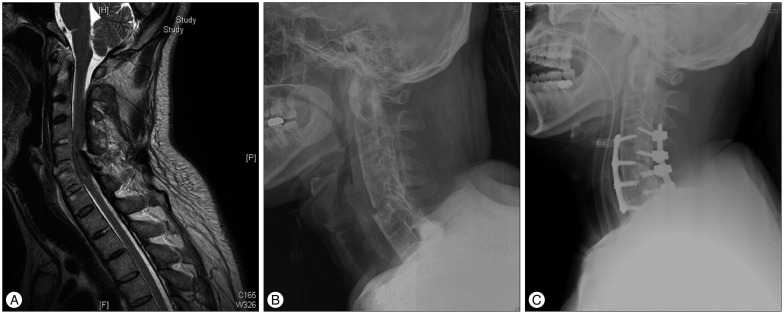
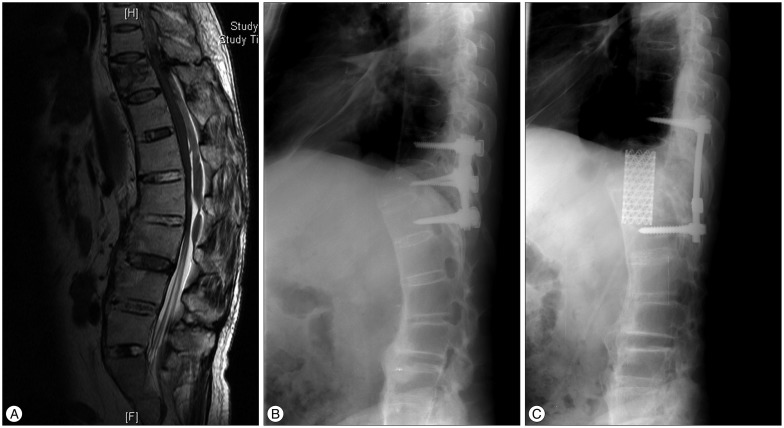
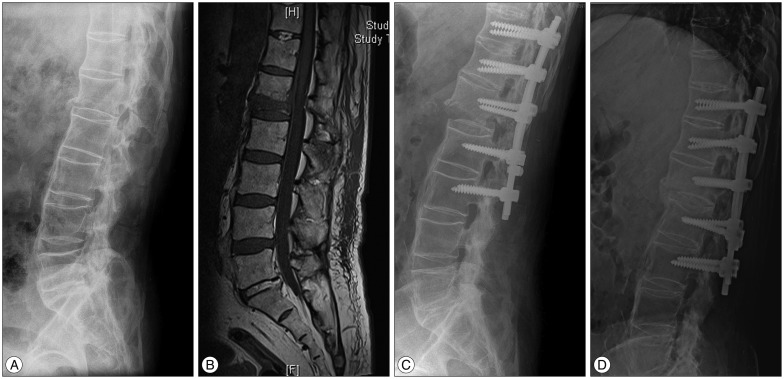
A total of 9 cervical and 4 thoracolumbar fractures were identified in a review of patients in whom ankylosing spondylitis had been diagnosed. Of these, 7 fractures were associated with a hyperextension mechanism. 10 cases resulted in a fracture by minor trauma. Posttraumatic neurological deficits were demonstrated in 11 cases and neurological improvement after surgery was observed in 5 of these cases.
Patients with ankylosing spondylitis are highly susceptible to spinal fracture and spinal cord injury even after only mild trauma. Initial CT or MR imaging of the whole spine is recommended even if the patient's symptoms are mild. The patient should also have early surgical stabilization to correct spinal deformity and avoid worsening of the patient's neurological status.
强直性脊柱炎是一种主要影响中轴骨骼的炎性风湿性疾病。僵硬的脊柱可能继而发展为骨质疏松,进一步增加脊柱骨折的风险。在本研究中,我们回顾了临床诊断为强直性脊柱炎患者的骨折情况,以更好地明确损伤机制、相关神经功能缺损、易感因素及治疗策略。
2003年1月至2013年12月,对12例发生13处伴有神经并发症骨折的患者进行了治疗。所有患者均通过X线平片、CT扫描及磁共振成像进行神经影像学评估。采用美国脊髓损伤协会(ASIA)损伤分级量表评估患者的神经状态。治疗基于脊柱是否存在不稳定情况。
在回顾已诊断为强直性脊柱炎的患者时,共发现9例颈椎骨折和4例胸腰椎骨折。其中,7处骨折与过伸机制有关。10例骨折由轻微外伤导致。11例出现创伤后神经功能缺损,其中5例术后神经功能得到改善。
强直性脊柱炎患者即使仅受到轻微外伤,也极易发生脊柱骨折和脊髓损伤。即使患者症状轻微,也建议对整个脊柱进行初始CT或磁共振成像检查。患者还应尽早进行手术固定,以纠正脊柱畸形,避免神经状态恶化。